Best Books About AI Programming

M Chetmars
Author
Choosing the right AI programming book today feels like searching for a needle in a haystack, and we’ve done the hard work for you.
Artificial intelligence is evolving faster than at any point in recent memory. For developers, analysts and engineers trying to keep up, it’s no longer enough to rely on fragmented tutorials or short-form content. Books remain one of the most reliable ways to understand deep concepts, follow complete learning journeys and build a strong foundation—especially when entering a field as complex as AI programming.
In this guide, we’ve selected the best books across all levels: absolute beginners, working developers transitioning into AI, and advanced engineers diving into deep learning and cutting-edge models. Each book has been chosen for clarity, modern relevance and the practicality of its examples. And because many readers are based in Australia’s growing tech ecosystem, we also consider how global case studies apply to real-world workflows here.

Before diving into the detailed list, here’s a quick overview of the top titles.
Quick Overview of the Top AI Programming Books
Book | Level | Focus Area | Prerequisite Knowledge | Why It Matters |
Artificial Intelligence: A Modern Approach | Intermediate–Advanced | Classical AI, search, reasoning | Python basics, logic | One of the most cited AI textbooks globally |
Hands-On Machine Learning with Scikit-Learn, Keras & TensorFlow | Beginner–Intermediate | ML + Deep Learning | Basic Python | Practical, hands-on and constantly updated |
Deep Learning | Advanced | Neural networks, theory | Linear algebra, Python | The most comprehensive DL theory textbook |
Reinforcement Learning: An Introduction | Advanced | RL theory & applications | Good maths background | The core reference for RL engineers |
The Hundred-Page Machine Learning Book | Beginner | Machine learning basics | Minimal | Fastest way to understand ML fundamentals |
Grokking Deep Learning | Beginner | Deep Learning | Python basics | Ideal conceptual introduction |
Machine Learning Engineering | Intermediate | MLOps, pipelines | Python, ML basics | Bridges theory with production |
NLP with Transformers | Intermediate–Advanced | Transformers, NLP | Python, PyTorch | Highly relevant due to the modern LLM boom |
What Makes a Great AI Programming Book?
Not all AI books are written equally, and not all of them stay relevant as the field rapidly evolves. When selecting titles for this list, we focused on a few characteristics that genuinely help learners build durable skills.
Clear explanations of complex concepts: AI programming involves abstract ideas—optimisation functions, high-dimensional data, neural architectures and probability. A good book breaks these down without oversimplifying.
Practical coding examples: Readers should be able to translate theory into code directly. Books with Python notebooks, TensorFlow/PyTorch examples or end-to-end mini-projects ranked higher.
Real-world case studies: Theory matters, but demonstrating how models apply to healthcare, finance, robotics, or NLP makes the material far more useful.
Updated content: AI evolves quickly. Outdated examples or pre-transformer methodologies can limit a book’s value.
A balance between theory and implementation: Some books are too mathematical; others are too practical. The best ones sit comfortably in the middle.
Best Books About AI Programming (Full List)
1- Artificial Intelligence: A Modern Approach
Authors: Stuart Russell & Peter Norvig
Level: Intermediate–Advanced
Prerequisite Knowledge: Python basics, logic, and some maths
This is often referred to as the “Bible of AI” — and for good reason. Artificial Intelligence: A Modern Approach (AIMA) remains the most widely used university textbook for classical AI. Instead of focusing on deep learning, which dominates modern discussion, this book highlights the foundations: search algorithms, reasoning, planning, constraint satisfaction, decision theory and even robotics. For developers in Australia working in enterprise environments—finance, logistics, government—many of these classical methods still appear in real projects. AIMA offers an unmatched understanding of the “why” behind algorithmic decision-making. While not a light read, it builds a conceptual depth that pays off long-term.
Key takeaway: If you want to understand AI from first principles, this is the strongest place to start.
Read More: The Best Websites a Programmer Should Visit
2- Hands-On Machine Learning with Scikit-Learn, Keras & TensorFlow
Author: Aurélien Géron
Level: Beginner–Intermediate
Prerequisite Knowledge: Basic Python
This is perhaps the most accessible and practical machine learning book ever written. Géron explains ML concepts in plain language, then immediately follows each explanation with hands-on exercises using familiar libraries. It combines clarity with practicality in a way few resources do.
It covers:
supervised and unsupervised learning
linear models and tree-based models
deep learning with TensorFlow
model evaluation
data preprocessing
production considerations
It’s a perfect choice for developers in Australia transitioning from software engineering or data analysis into AI programming. Many local bootcamps and university units even use this book as a primary reference.
Key takeaway: If you want to learn ML by doing, this is the book.
3- Deep Learning
Authors: Ian Goodfellow, Yoshua Bengio, Aaron Courville
Level: Advanced
Prerequisite Knowledge: Linear algebra, calculus, probability, Python
This book is a deep dive—intellectually demanding, mathematically rich and incredibly thorough. If you want to understand how neural networks really work, from theory to architecture design, this is the master reference. Topics include optimisation, regularisation, representation learning and the foundations of ML theory that underpin modern models like transformers. While it lacks lightweight tutorials, its depth makes it a lifelong reference for advanced engineers.
Key takeaway: Best suited for readers who want to master neural networks beyond surface-level intuition.
4- Reinforcement Learning: An Introduction
Authors: Richard Sutton & Andrew Barto
Level: Advanced
Prerequisite Knowledge: Solid maths, Python
Reinforcement learning plays a major role in robotics, gaming, recommendation systems and multi-agent environments. Sutton & Barto’s book is the definitive RL textbook. This book is especially useful for readers in Australia interested in emerging fields like autonomous systems and industrial automation—areas where RL expertise is becoming valuable.
Key takeaway: The essential RL reference for advanced practitioners.
5- Grokking Deep Learning
Author: Andrew Trask
Level: Beginner
Prerequisite Knowledge: Python basics
Grokking Deep Learning is the friendly, easy-to-understand version of Goodfellow's "Deep Learning" for advanced theory. Trask walks readers through the process of building neural networks from the ground up, focusing on common sense rather than complicated math. Its strength comes from taking away the abstraction. It doesn't just jump to high-level frameworks like TensorFlow; it shows readers how gradients, weights, and activations really work. This makes the book great for people who are new to the subject and want to get better at the basics before moving on to more difficult material.
Key takeaway: The best first book for understanding neural network concepts.
6- The Hundred-Page Machine Learning Book
Author: Andriy Burkov
Level: Beginner
Prerequisite Knowledge: Very minimal
Burkov’s short book has become surprisingly influential. In just 100 pages, it concisely explains core ML ideas such as:
supervised learning
unsupervised learning
feature engineering
model evaluation
bias/variance
common pitfalls
It avoids lengthy digressions and cuts straight to what matters. This speed and clarity make it ideal for busy professionals or developers who want to understand machine learning fundamentals without drowning in long academic explanations.
Key takeaway: Fastest way to understand the ML landscape without overwhelm.
Read More: Website Design Ideas for School
7- Machine Learning Engineering
Author: Andriy Burkov
Level: Intermediate
Prerequisite Knowledge: Python, basic ML
This book answers a crucial question: “After I’ve built a model… how do I actually put it into production?” Production-level ML is very different from experimentation. Burkov covers pipelines, data validation, testing, monitoring, deployment, and the complex engineering challenges behind real-world ML systems. For software engineers stepping into AI engineering roles, this is one of the most useful books available. Australian tech teams — especially those building internal tools, SaaS products or enterprise solutions — benefit enormously from these principles.
Key takeaway: Bridges the gap between ML theory and real-world deployment.
8- Natural Language Processing with Transformers
Authors: Lewis, Tunstall, Wolf
Level: Intermediate–Advanced
Prerequisite Knowledge: Python, PyTorch, ML basics
Given the explosion of LLMs and transformer-based systems, this book is extremely timely. It covers the foundations of transformers, fine-tuning, tokenisation, attention mechanisms and modern NLP pipelines. It also includes hands-on projects using the Hugging Face ecosystem — the same tools used widely across the world, including by Australian startups and research teams. This makes the book highly practical and future-ready.
Key takeaway: One of the most relevant books for developers working with modern LLM-based AI.
Future-Proofing Your AI Library: What’s Next?

AI is evolving so fast that staying current isn’t just an advantage; it’s essential. Beyond today’s leading books, there are a few key areas developers should keep an eye on:
AI Safety and Alignment: Books and research coming soon will increasingly focus on the safe deployment of powerful models, a key concern as AI expands in critical industries like healthcare and finance.
Advanced Generative AI: As generative models move from text and images to multi-agent systems, simulations and autonomous workflows, new books are emerging that cover high-level architecture, agent behaviour and evaluation strategies.
Multi-Modal Learning: Models capable of handling text, images, audio and video simultaneously are reshaping AI research. Expect to see more publications focused on multi-modal datasets and architectures.
AI Tooling and MLOps Evolution: Modern AI work requires strong infrastructure like feature stores, scalable training, and inference optimisation. Books covering these emerging tools will become increasingly important.
Best Books for Absolute Beginners
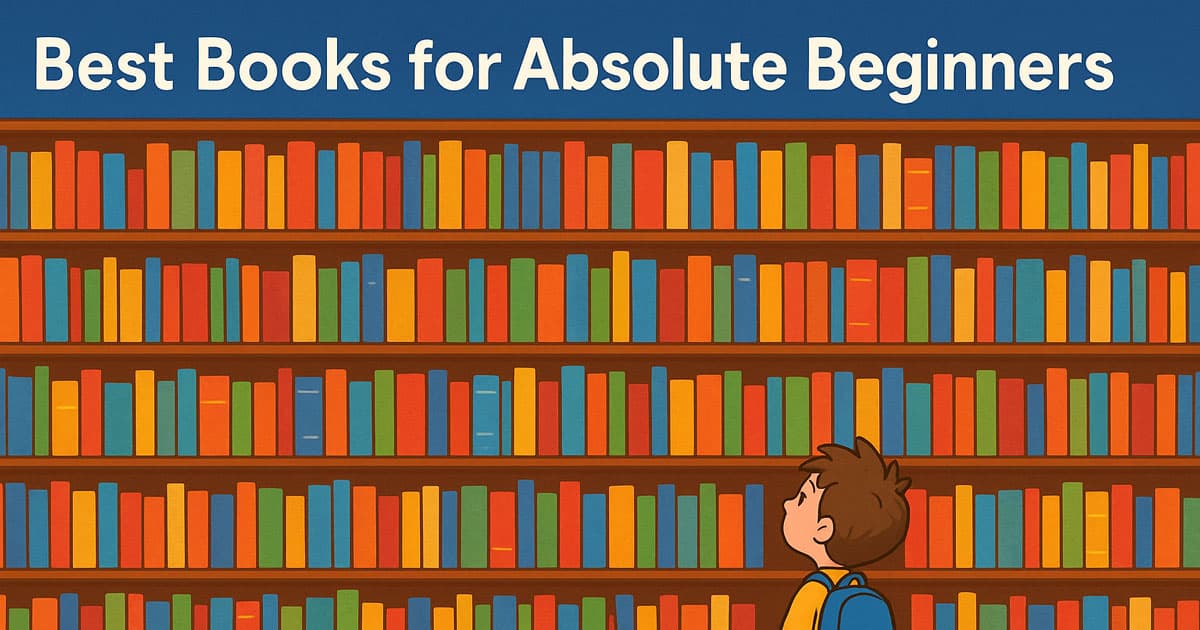
Not everyone entering AI comes from a technical background. These books help beginners build confidence:
Hands-On Machine Learning: Because of its practical approach and step-by-step exercises.
Grokking Deep Learning: Because it teaches intuition, not formulas.
The Hundred-Page ML Book: Because it explains the basics quickly without overwhelming detail.
These three provide a gentle entry point without sacrificing substance.
Best Books for Developers Transitioning Into AI
Developers who already understand Python, software architecture, and problem-solving need books that accelerate their transition:
Hands-On Machine Learning (for practical ML)
Machine Learning Engineering (for production deployment)
NLP with Transformers (for modern LLM workflows)
These resources help software engineers quickly build both foundational and applied skills.
Best Books for Advanced AI & Deep Learning
Engineers seeking mastery over cutting-edge AI should focus on:
Deep Learning (Goodfellow)
Reinforcement Learning: An Introduction (Sutton & Barto)
NLP with Transformers (advanced sections)
These books require mathematical maturity but deliver a deep understanding of modern models and algorithms.
Read More: Best AI for Vibe Coding
How to Choose the Right AI Programming Book (For Australian Developers)
Your goals will have a big impact on which book you choose. Here are some things to think about:
How much experience do you have? Beginners should pick books that focus on common sense and real-world examples. People who are advanced readers should look for resources that are heavy on theory.
The way you like to learn: Choose hands-on books if you learn best by doing. Textbooks are great if you like to learn in a structured way.
Your industry: Developers working in fintech, healthtech or robotics may need theory-heavy content. Web and SaaS developers benefit from MLOps and applied ML books.
Global vs. Local AI case studies: Books with global examples are more relevant to Australian developers building products for international markets. They help align skills with global standards and opportunities.
Books vs Online Courses: Which Works Better Today?
Books offer depth and longevity. Courses offer speed and interactivity. The truth is simple: the best AI engineers use both. Books provide the conceptual backbone, while courses help you apply skills quickly.
Common Mistakes People Make When Learning AI
Jumping into advanced models too early
Ignoring foundational maths
Relying only on tutorials
Not building real projects
Switching topics too quickly
Skipping evaluation and debugging skills
These mistakes slow down learning and cause unnecessary frustration.
Final Recommendations
AI is a huge field, but the right reading pathway makes it accessible. Whether you're just starting or refining advanced skills, the books in this guide offer structure, clarity and real-world value. With AI continuing to shape industries across Australia, investing in strong learning resources today is one of the smartest moves any developer can make.
Reading the right book is just the first step. Are you ready to move from AI theory to production-ready software?
If your organisation in Australia needs to leverage advanced data models for Business Intelligence (BI), connect with us for a strategic discussion on building a future-proof, data-driven tech stack.
FAQs about Best Books About AI Programming
What is the best book to start learning AI programming?
“Hands-On Machine Learning with Scikit-Learn, Keras & TensorFlow” is one of the best starting points because it explains core concepts in simple language and provides practical coding exercises using modern tools.
Do I need strong maths skills to learn AI programming?
You don’t need advanced maths to start. Basic knowledge of algebra and Python is enough for beginner-friendly books. As you progress into deeper topics like neural networks or reinforcement learning, more maths becomes helpful.
Which book is best for understanding deep learning?
“Deep Learning” by Goodfellow, Bengio and Courville is the most comprehensive resource for mastering deep learning theory. For beginners who want an easier introduction, “Grokking Deep Learning” is a better fit.
What book should I read to understand modern AI models like transformers?
“NLP with Transformers” is the most relevant book for learning today’s transformer-based architectures, including how to fine-tune and deploy models using Hugging Face tools.
Are AI books still useful in 2025?
Absolutely. Even though AI evolves quickly, foundational concepts don’t change. Books provide depth, structure and long-term understanding — something short tutorials can’t replace.
How long does it take to learn AI from these books?
It depends on your background. Beginners usually gain confidence within a few months, while advanced skills may take six months to a year. Consistency matters more than speed.
Which books are best for software developers transitioning into AI?
“Hands-On Machine Learning,” “Machine Learning Engineering,” and “NLP with Transformers” are strong choices because they connect programming experience with real AI implementation.

Admin
Mostafa is a Wordsmith, storyteller, and language artisan weaving narratives and painting vivid imagery across digital landscapes with a spirited pen, he embraces the art of crafting compelling content as a copywriter, and content manager.
Comments

Looks like a solid list! Always good to see practical resources for tackling AI's complexity.
Based in
Melbourne, Australia
Your software dev partner, smooth process, exceptional results
Contacts
contact@flamincode.com.au
© All rights reserved to Flamincode