Why Service Businesses Need an Online Booking System

M Chetmars
Author
Many service businesses do not lose customers because their service is bad. They lose customers because the booking process feels slow, unclear, or inconvenient.
A potential client lands on the website, likes what they see, and is interested enough to take action. Then the friction starts. They need to call during business hours. Or send a message and wait. Or jump between a website, Instagram, and text messages to work out something as simple as availability.
That is where many businesses quietly lose revenue.
In 2026, customers expect a faster path. They want to check availability, choose a time, and move forward without unnecessary back-and-forth. If your business still relies too heavily on calls, DMs, or manual scheduling, the problem is no longer just convenience. It becomes a conversion issue.
At Flamincode, this is one of the clearest patterns we see in service websites. Businesses often spend time and money trying to get more traffic, while the real leak sits lower in the funnel. People are arriving, but the website is not helping them take the next step.
An online booking system helps service businesses reduce friction, improve lead conversion, save admin time, and create a smoother customer journey. In many cases, it is one of the simplest ways to turn a passive website into a more useful business tool.
Without Online Booking | With Online Booking |
Customers need to call or message | Customers book instantly |
More admin back-and-forth | Fewer manual scheduling tasks |
Higher chance of losing leads | More completed bookings |
Website traffic often goes nowhere | Website traffic has a clear action path |
Staff time gets consumed by coordination | Teams stay more focused on delivery |
The Real Problem Is Not Visibility, It Is Friction
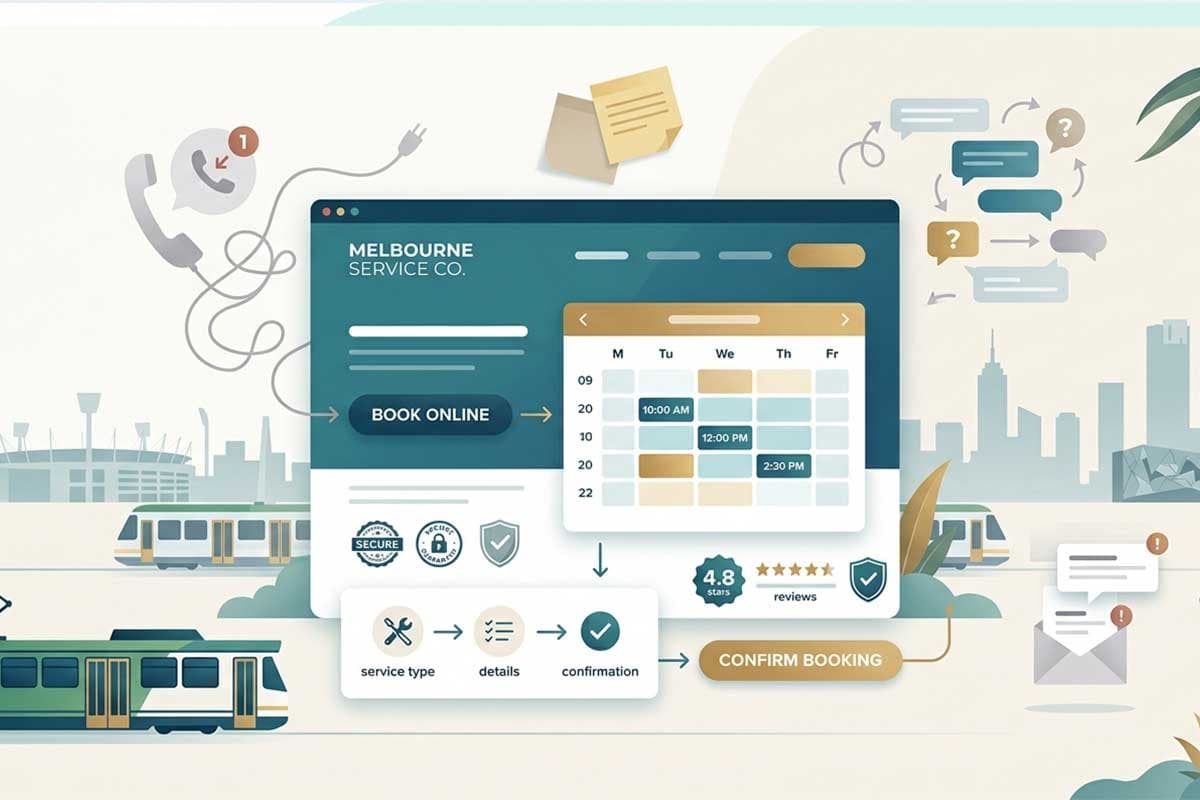
A lot of service businesses assume their main issue is exposure.
They think they need more Instagram reach, better Google rankings, more ads, or more followers. Sometimes that is true. But often the real issue is simpler than that. The business is already getting attention, but the system between interest and action is weak.
That gap matters more than most owners realise.
A customer who is ready to book is in a completely different state from someone who is only browsing. They are not looking for content anymore. They are looking for clarity. They want to know what happens next, whether there is availability, and how quickly they can move forward.
If the answer to that is hidden behind messages, vague forms, or phone calls, the momentum drops fast.
This is where service businesses often confuse traffic with conversion.
A website can look polished and still underperform if the next step feels clunky. A customer might like the brand, trust the service, and still leave simply because the process asks too much of them. Every extra step creates more friction. Every delay gives them more time to postpone, forget, or book somewhere else.
This is especially true for businesses where timing is part of the purchase decision.
Think about how people behave when booking a:
cleaner
barber or salon appointment
consultation
fitness session
tutoring session
repair service
physiotherapy appointment
photography session
legal consultation
trades booking
In most of these cases, the customer is not only choosing the business. They are also trying to solve a scheduling problem.
That means your service is not being judged only on trust or price. It is also being judged on how easy it feels to take action.
This is one of the reasons why so many businesses search for the best online booking system for small businesses. They are not simply looking for software. They are trying to fix a conversion bottleneck they feel every week, even if they do not describe it that way.
When someone visits your site and cannot easily move from “I’m interested” to “I’ve booked”, the website is no longer doing enough.
That is the real issue.
Why Manual Booking Starts to Break as the Business Grows
At a small scale, manual booking feels manageable.
A few calls a day. A handful of Instagram messages. A couple of text threads. In the beginning, it does not seem like a major problem. In fact, many business owners prefer it because it feels personal and familiar.
But as demand increases, manual booking stops being simple and starts becoming operational drag.
The first problem is inconsistency.
One enquiry comes through the website. Another comes through Instagram. Another arrives by phone. Someone else sends a message on Facebook. A returning customer texts directly. Availability gets checked manually, often in different places, by different people, at different times.
That setup creates small failures everywhere.
A message gets missed. A callback happens too late. Two customers ask for the same slot. A staff member forgets to confirm. A customer loses interest while waiting. None of these issues feel dramatic on their own. But together, they quietly erode revenue and trust.
The second problem is time.
Most owners underestimate how much mental and operational energy gets consumed by repetitive coordination. A large part of manual scheduling is not strategic work. It is admin.
You are answering the same questions repeatedly:
“What times do you have this week?”
“Do you do evenings?”
“How long does the appointment take?”
“Can I reschedule?”
“Do you have anything on Saturday?”
When this happens every day, the business slowly becomes dependent on human availability to manage demand.
That is not efficient growth.
A good system should reduce unnecessary handling, not increase it.
This is where online scheduling software becomes valuable. Not because software is automatically better, but because it creates structure where the business previously relied on scattered communication.
A proper booking flow helps standardise what happens next.
Instead of every enquiry becoming a mini conversation, the system handles the predictable part of the process. The customer sees availability. They choose a service. They select a time. They receive confirmation. The business stays in control without needing to manually coordinate every small step.
That changes more than people think.
It improves responsiveness without forcing someone on your team to always be “on”.
It reduces admin without making the business feel robotic.
And it creates something many service businesses do not realise they are missing until it is installed: operational breathing room.
An Online Booking System Is Not Just a Convenience Feature
This is where many businesses underestimate the role of booking.
They treat it like a nice extra. Something optional. Something useful if there is time later.
But for a lot of service businesses in 2026, booking is no longer a side feature. It is part of how the business functions online.
That matters because websites are no longer judged only by how they look.
They are judged by whether they help customers act.
A website that explains your services but does not help people book efficiently is still doing only part of the job. It might create interest, but it is not fully supporting conversion.
That is why booking should not be seen as a plugin decision alone. It is part of business infrastructure.
A well-implemented booking system helps with:
lead capture
service selection
scheduling clarity
customer commitment
reminders and confirmations
fewer missed appointments
smoother customer flow
When built properly, it also supports trust.
Customers feel more comfortable moving forward when the process looks structured and easy to follow. It signals that the business is organised, responsive, and prepared to deliver.
That trust effect is often underestimated.
People do not only judge professionalism based on branding. They judge it based on experience. If the process of booking feels confusing, slow, or disjointed, confidence drops. If the process feels clean and simple, confidence rises.
This is one of the reasons so many businesses start asking how to add booking to website once they realise their existing site is not converting as well as it should.
They are often not asking a technical question first.
They are asking a business question:
“How do I make this website do more than just sit there?”
And that is the right question.
Because once your website becomes part of the operational flow, it starts behaving less like a brochure and more like a working system.
Why Phone Calls and DMs No Longer Scale Well
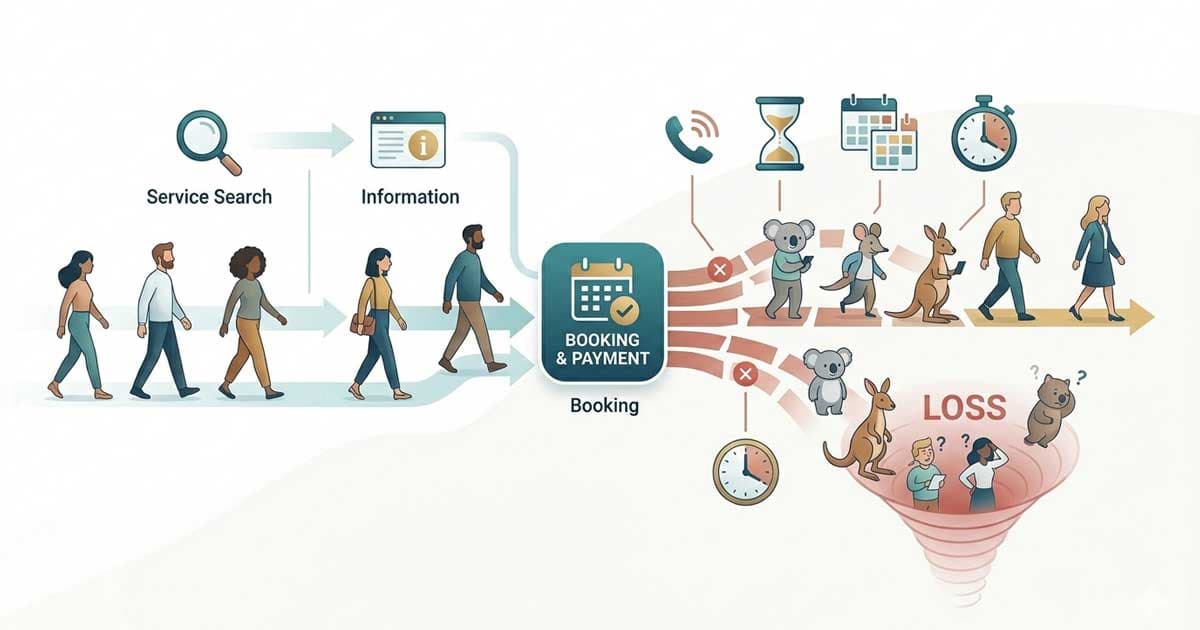
Phone calls and direct messages still work. Many customers still use them. The issue is not that they are useless. The issue is that they do not scale cleanly as demand grows.
Phone calls depend on timing. If the call comes in while you are busy, you miss it. If you return it later, the customer might have already moved on.
Direct messages feel easier at first, but they quickly become messy. Conversations stack up. Details get buried. Availability has to be checked manually. Different team members may respond in different ways.
Over time, this creates small inefficiencies that compound.
A customer asks for a time. You check availability. You reply. They respond later. You recheck. Another booking happens in between. Now you need to adjust again. What should have been a simple action turns into multiple steps.
This slows everything down.
It also affects how the business feels from the customer’s perspective. If the process takes too long, even a good service starts to feel harder to access.
Booking Channel | Main Weakness |
Phone | Missed calls, limited availability |
Instagram DMs | Disorganised conversations, slow follow-up |
Easy chat, weak scheduling structure | |
Too slow for high-intent actions | |
Online Booking System | Clear, immediate, structured booking |
The shift here is simple.
Customers no longer want to ask if they can book. They want to book.
What the Best Online Booking Systems Actually Include
When businesses search for the best online booking system for small businesses, they often focus on features.
But features alone do not solve the problem. The value comes from how those features support a clean booking flow.
A strong system usually includes:
Clear service selection so customers know what they are booking
Real-time availability to avoid back-and-forth
Time slot logic that reflects how your business actually operates
Automatic confirmations so nothing is left uncertain
Reminders to reduce no-shows
Simple rescheduling and cancellation options
Optional deposits or prepayments to improve commitment
Basic customer data capture for future follow-up
Individually, these look simple.
Together, they remove most of the friction that exists in manual booking.
This is where online scheduling software becomes more than a tool. It becomes part of your workflow. It connects customer intent with a structured next step.
The difference is not just operational. It is commercial.
More completed bookings. Fewer dropped enquiries. Less wasted time.
How to Add Booking to Website Properly

Many businesses reach the point where they start asking how to add booking to website.
The mistake is treating it as a technical add-on instead of a strategic layer.
Adding a booking widget alone is not enough.
The placement, flow, and context matter just as much as the tool itself.
Booking should sit naturally inside the customer journey.
If a visitor is reading about a service, the next step should feel obvious. They should not need to hunt for a booking button. They should not need to switch platforms. They should not need to restart the process somewhere else.
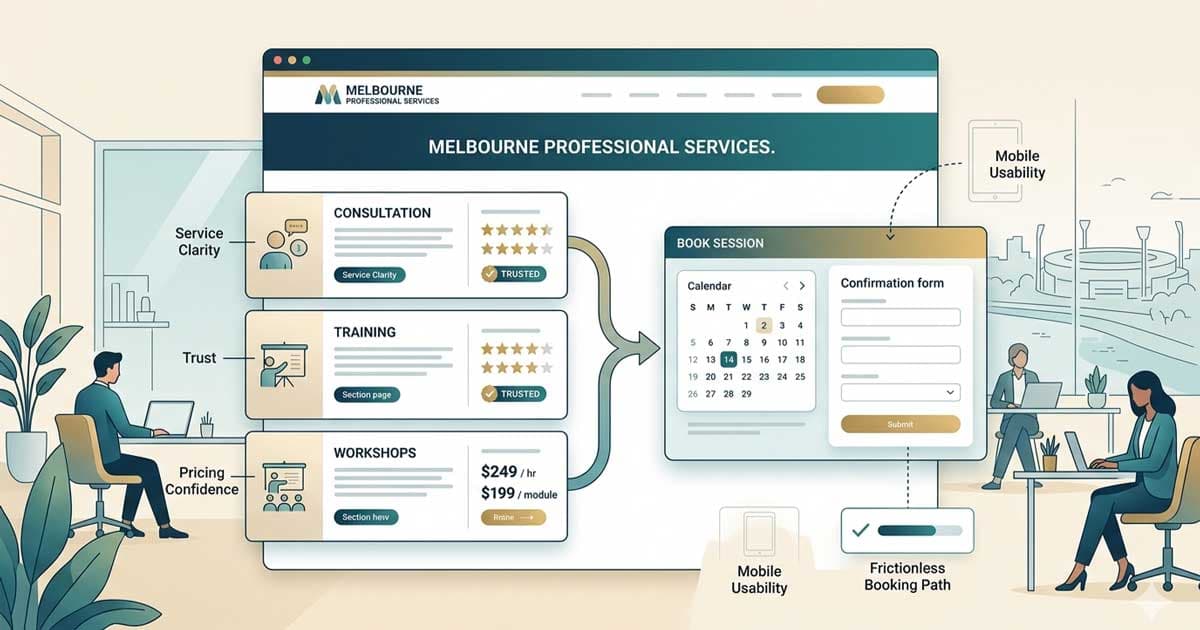
A strong implementation usually follows a simple logic:
The user understands the service
The user sees pricing or structure clearly
The user trusts the business
The user is offered a clear booking action at the right moment
If any of these steps feel unclear, conversion drops.
Mobile experience matters here as well. A large portion of service bookings now happen on phones. If the booking flow is slow, cluttered, or hard to navigate on mobile, you lose a significant share of potential customers.
This is why the question is not only how to add booking to website.
It is how to integrate booking into the way your website already guides people.
At Flamincode, this is where most of the improvement happens. Not by adding more tools, but by connecting the right parts of the journey so the user does not need to think too much about what to do next.
Which Service Businesses Benefit the Most
Online booking has the strongest impact in businesses where scheduling is part of the purchase.
This includes businesses where customers need to choose a time before the service can happen.
Clinics, salons, fitness services, tutors, consultants, trades, and home services all fall into this category. So do photographers, repair services, and many appointment-based providers.
In these cases, booking is not a secondary step. It is the core action.
If that action is slow or unclear, the entire system underperforms.
Even service businesses that rely on quotes or custom work still benefit. Booking can be used for consultations, site visits, or initial assessments. It gives structure to the first step instead of leaving it open-ended.
The more frequently customers need to coordinate time with your business, the more valuable a structured booking system becomes.
Signs Your Business Needs an Online Booking System
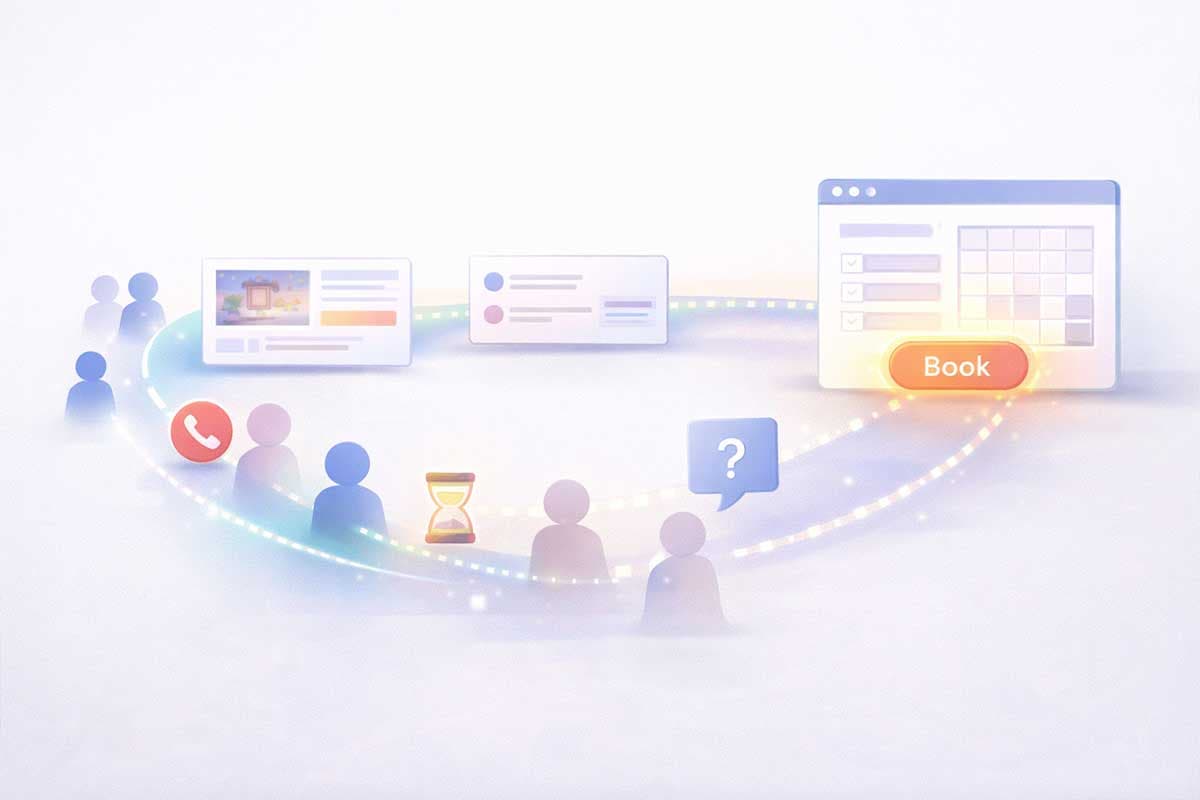
Some businesses already feel the need without naming it clearly.
You might notice it in small daily patterns.
You are answering the same scheduling questions again and again. Customers keep asking about availability. You miss calls and try to follow up later. Conversations are spread across different platforms. Some leads disappear before confirming.
You might also see it in your website performance.
Traffic is there, but bookings are lower than expected. People show interest, but fewer take action. The gap between enquiry and confirmed booking feels larger than it should be.
Another sign is internal.
Your team spends time coordinating instead of delivering. Scheduling becomes a constant background task. It interrupts focus and slows down operations.
None of these issues look dramatic on their own.
Together, they point to the same underlying problem. The system for turning interest into action is not strong enough.
Online Booking Is Part of Modern Service Delivery
Customer behaviour has shifted.
People now expect to find, evaluate, and act within a short window of time. If the process takes too long or feels unclear, they move on.
This does not mean every interaction must be automated. It means the first step should be easy.
Booking is part of that first step.
When a business removes unnecessary friction, it becomes easier for customers to move forward. When the process feels structured, trust increases. When booking is simple, more people complete it.
This is not about replacing human interaction.
It is about removing avoidable delays so that human interaction can happen where it matters most.
Final Thoughts
For many service businesses, growth does not stall because demand is low. It stalls because the path from interest to action is inefficient.
An online booking system helps fix that.
It reduces the need for manual coordination. It gives customers a faster way to act. It brings structure to a part of the business that is often scattered across calls and messages.
In 2026, a service website should not only explain what you do.
It should help people take the next step without hesitation.
At Flamincode, we design websites with that in mind. Not as static pages, but as systems that support real customer action and consistent growth.
If your service business is still relying on calls, messages, and manual scheduling to convert website visitors into clients, the issue may not be traffic. It may be the system behind the conversion.
At Flamincode, we build service business websites that do more than look professional. We design them to support real customer action, cleaner operations, and stronger lead conversion.
If your website is getting attention but not generating enough bookings, it may be time to fix the part that sits between interest and action.
Frequently Asked Questions
Do small service businesses really need an online booking system?
Yes. Even small businesses lose potential bookings when the process depends too much on manual replies and availability checks.
Does online booking replace phone calls completely?
No. Some customers still prefer to call. The goal is to reduce unnecessary friction for those who want a faster option.
Can an online booking system improve conversions?
Yes. It creates a clear next step for visitors, which often increases the number of completed bookings.
What should I look for in online scheduling software?
Look for clear availability, easy service selection, confirmations, reminders, and a simple mobile-friendly experience.
Is it better to use a separate booking tool or integrate it into the website?
Integration usually leads to better results because the booking flow becomes part of the overall user journey rather than a disconnected step.

Admin
Mostafa is a Wordsmith, storyteller, and language artisan weaving narratives and painting vivid imagery across digital landscapes with a spirited pen, he embraces the art of crafting compelling content as a copywriter, and content manager.

Based in
Melbourne, Australia
Your software dev partner, smooth process, exceptional results
Contacts
contact@flamincode.com.au
© All rights reserved to Flamincode