The Best Website to Check for AI Detection

M Chetmars
Author
AI-generated content is no longer a niche phenomenon—it’s everywhere. We see it in blog posts, academic essays, SEO articles, internal documentation, and even policy drafts. As AI writing tools become more accessible and eerily human-like, a critical question has emerged across Australian industries: how can you reliably tell whether a piece of text was written by AI?
This question is exactly why searches for the best website to check for AI detection have increased so sharply. Educators need fairness and academic integrity. Editors demand quality control and an authentic voice. SEO teams require consistency and risk management. But here’s the reality that many articles avoid saying clearly: AI detection is not about certainty. It’s about probabilities, patterns, and responsible human interpretation.
This guide gives you a direct answer first, then expands into how these AI detection tools actually work, when they’re useful, when they fail, and how to responsibly integrate them into your workflow alongside supporting tools like Grammarly and QuillBot.
Quick Answer: What Is the Best AI Content Detector Website?
If you need the fastest possible answer, tailored to your specific use case:
Best overall for long-form publishing, SEO, and content agencies: Originality.ai
Best for quick screening and general academic use: GPTZero
Best for universities and formal academic submission checks: Turnitin AI Detection
Best for enterprise compliance and large-scale audits: Copyleaks
There is no single "perfect" AI detector—the technology is constantly evolving. The best choice depends entirely on why you're checking the content, not just whether it might be machine-generated.
Comparison of Leading AI Detection Websites
Website | Best For | Strength | Weakness | Typical Users (Aussie Focus) |
Originality.ai | Publishing & SEO Agencies | Strong long-form analysis; built to detect modern hybrid AI models. | Paid only, which can restrict use for small checks. | Content agencies, SEO specialists, and digital publishers. |
GPTZero | Education & Quick Screening | Simple, clean interface; provides clear explanations for results. | Less reliable on heavily edited or short text snippets. | Teachers, TAFE students, general public for fast checks. |
Turnitin AI | Academia & Integrity Checks | Deeply integrated into existing plagiarism and grading workflows. | Not publicly accessible for general use; results require an institutional licence. | Universities, high schools, and academic institutions. |
Copyleaks | Enterprise & Compliance | Highly detailed reports; good for large-scale document audits. | Higher rate of false positives compared to publishing tools. | Large organisations, corporate compliance teams. |
Writer.com Detector | Marketing Copy & Speed | Free, fast, and simple for checking short content blocks. | Limited depth; not designed for comprehensive article audits. | Content teams, social media managers. |
How AI Detection Tools Actually Work (Perplexity and Burstiness)
AI detection tools don’t "recognise" AI text the way plagiarism checkers recognise copied sentences from a database. There is no central, secret database of AI-generated writing.
Instead, detectors analyse the statistical and linguistic patterns that frequently appear in machine-generated text. These signals include:
Perplexity: This measures how "surprised" the model is by the next word. Human writing is often highly perplexed (unpredictable), while AI writing often follows predictable, low-perplexity patterns.
Burstiness: This measures the variation in sentence length and structure. Human authors jump between short, punchy sentences and long, complex ones. AI text, when unedited, often maintains a uniform "rhythm."
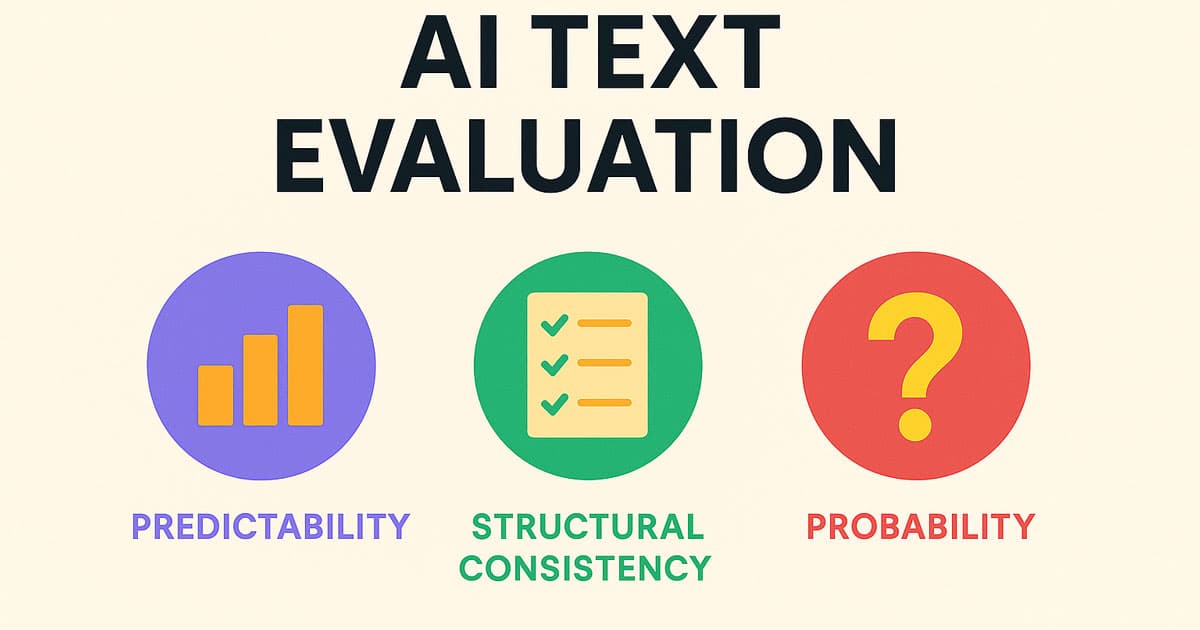
Detection tools analyse these differences and produce a likelihood score (a probability), not a definitive verdict. This is why short texts are unreliable, heavily edited AI content often passes undetected, and highly formal, structured human writing can sometimes be flagged incorrectly.
What Makes an AI Detection Website Reliable

A trustworthy AI detection website usually avoids absolute claims and focuses on transparency—a crucial point for responsible use in Australia's competitive media and education sectors.
Reliable tools share a few important characteristics:
They provide probability ranges (e.g., 85% likely to be AI) instead of binary labels (AI or Human).
They support long-form text analysis across entire articles, rather than just short snippets.
They explain why content was flagged, rather than hiding behind a single, opaque number.
They update models regularly as AI writing evolves (often called "detecting the latest GPT models").
They position their output as a signal for human review, not a final judgment.
Any website claiming near-perfect, 100% accuracy should be treated with extreme caution.
Read More: Best Websites for AI Video Generation
The Best Website to Check for AI Detection, Reviewed

Originality.ai – Best Overall for Publishing and SEO
Originality.ai stands out because it was built specifically for modern publishing workflows, where hybrid (human-edited AI) content is common. It performs best when analysing full articles rather than isolated paragraphs, which aligns with how content is actually created today.
It examines structural consistency, predictability, and stylistic patterns across entire documents and allows repeated scans after manual editing. This makes it particularly useful for Australian SEO teams, editors, and digital agencies working to maintain brand voice and editorial quality. While it’s not flawless, it offers one of the strongest balances between depth, usability, and consistency currently available on the market.
GPTZero – Best for Education and Fast Screening
GPTZero became popular quickly, especially in educational environments, due to its speed and clarity. Its results are easy to interpret, making it a valuable tool for TAFE instructors and university students as an early screening mechanism.
However, its primary limitation is its performance on heavily edited drafts. Once AI-generated text is edited and humanised, GPTZero’s accuracy can drop significantly. It works best as a first pass or a simple, free check, not a final decision maker in formal academic settings.
Turnitin and Copyleaks – Academic and Enterprise Use
Turnitin’s AI detection is the standard in many universities worldwide, including across Australia. It is highly valued because it integrates directly into existing academic plagiarism workflows. Importantly, it is not a publicly accessible tool, and its institutional use should always be paired with mandatory human review by educators.
Copyleaks focuses on enterprise compliance and large-scale audits. Its detailed reports and API functionality can be incredibly helpful when auditing vast amounts of outsourced or internal documentation. However, its slightly higher false-positive rate means results require careful, professional interpretation.
AI Detection Features Inside Writing Tools
Grammarly AI Detector – Quick Checks Inside a Writing Assistant
Grammarly now includes an AI detection feature, but it’s important to understand its role correctly. Grammarly’s core product is a writing assistant, not a dedicated detection system. Its AI detector provides a high-level signal, typically categorising text as low, medium, or high likelihood of AI generation.
This makes Grammarly useful for quick, on-the-fly checks on short to medium-length content during the editing phase. However, it lacks deep structural analysis and is not designed for the long-form audits, SEO reviews, or academic decision-making required by professionals. Grammarly works best as a supporting signal, not as a primary detection authority.
What People Use After AI Detection Flags Their Content: QuillBot

One of the most common secondary user intentions is rarely addressed clearly: what happens after content is flagged? In practice, many users turn to tools like QuillBot—not necessarily to deceive detectors, but to refine tone, clarity, and structure.
QuillBot is not an AI detection tool. It’s a paraphrasing and rewriting platform used to restructure sentences, reduce uniformity, and introduce more natural, "human-sounding" variation into text. Editors and writers often use it to polish AI-assisted drafts, making them clearer, more concise, and more readable before publication. Including this reality makes an article more honest and more useful, reflecting how modern content workflows actually function today.
Integrating AI Detection: Building the Modern Content Workflow
The most effective content operations—especially at enterprise scale—rarely rely on just one tool. They build a strategic pipeline that leverages the specific strengths of each AI detection and editing platform. This integrated approach ensures both high efficiency and maximum compliance.
A typical professional content workflow looks like this:
Drafting Phase (AI-Assisted)
The writer uses an LLM (e.g., GPT-4 or Claude) to create a rough draft or structure.
Initial Polish (Grammarly)
The text is passed through Grammarly for immediate language and grammar fixes, and to get the first high-level AI likelihood signal.
Refinement and Humanising (QuillBot)
If the Grammarly signal is high, the writer uses QuillBot to naturally restructure sentences, reducing predictability and enhancing the human voice. This is a crucial step for quality control and readability.
Final Audit (Originality.ai / Copyleaks)
The full, human-edited article is submitted to a primary detection tool (like Originality.ai for publishing houses) for a detailed, long-form analysis before final approval by an editor.
Archiving and Compliance
The final score and the editor's sign-off are archived alongside the content for future audit purposes—a growing standard for Australian compliance teams.
By treating AI tools as specialised stages within a comprehensive system, organisations ensure that content is not only generated quickly but is also fully vetted against compliance and editorial standards before hitting the public domain.
Read More: Best Books About AI Prompts Engineering
Where AI Detection Tools Fail and Why

AI detection tools work best when they are used to screen people, not judge them. They are helpful for editorial review, academic screening with supervision, SEO content audits, internal compliance checks, and risk assessment. They help find patterns that need more study, not figure out what someone meant or if they are guilty.
But even the best website for checking for AI detection has a lot of trouble with:
Short Texts: Very short paragraphs don't have the statistical information that is needed for reliable pattern analysis.
Heavily Edited Content: "Humanising" or "human editing" effectively messes up the AI patterns that the detector is looking for.
Writing in Many Languages: Models that are mostly trained on English may have trouble accurately judging content in other languages.
Highly Structured Human Prose: Formal, consistent writing (like legal documents or technical reports) can be falsely flagged because it doesn't have the "burstiness" that makes human writing unique.
As large language models (LLMs) get better, it gets harder to keep detection accuracy high. This creates a gap that will always be there, and no tool can completely close it.
How to Use AI Detection Responsibly
Here’s the perspective many competitors miss: AI detection does not measure intent, quality, or true originality. A flagged text is not automatically unethical. An unflagged text is not automatically human-written. Detection tools cannot determine whether AI assistance was appropriate or transparent.
The most responsible organisations, especially in the sensitive academic and journalism sectors, are shifting focus away from authorship policing and toward editorial standards, accuracy, and disclosure. That shift reflects the future of content, not a temporary trend.
A realistic and responsible workflow looks like this:
Use detection tools as an initial signal for concern.
Review flagged sections manually for clarity, accuracy, and voice.
Apply consistent editorial standards (does the content meet the brief?).
Avoid automated penalties; treat the tool's output as evidence for discussion, not proof of misconduct.
This approach reduces risk while acknowledging the reality of AI-assisted writing.
Read More: The Best Websites a Programmer Should Visit
The Future of AI Detection: What’s Coming Next

The pace of development in both AI generation and detection is a continuous arms race. The next 12 to 18 months will bring significant changes that will profoundly affect content strategies and regulatory oversight, especially in markets like Australia:
Focus on Watermarking (The Inevitable Shift)
Instead of relying on statistical pattern detection, the industry is moving toward digital watermarking. This means AI models will embed an invisible, non-removable signal directly into the generated text (or video/audio). This "proof of origin" will eventually become the definitive way to identify AI content, making current pattern-based detectors obsolete for new models.
Regulatory Compliance and Transparency
Governments, including those in Australia, are moving toward mandating transparency. This will likely require content creators and platforms to explicitly disclose when content is AI-assisted, shifting the focus from detection (guessing) to mandatory disclosure (fact). For businesses, the focus will soon be less on detecting AI and more on complying with disclosure rules.
Deep Integration and Custom Models
Detection tools will become more integrated directly into Enterprise CMS and LLM platforms. Furthermore, organisations will train custom detection models tailored specifically to their proprietary brand voice, allowing them to differentiate easily between their own style and generic, low-effort AI output.
Staying informed about this shift—from pattern detection to mandatory digital watermarking—is crucial for any creator or business aiming to maintain a competitive edge and regulatory compliance in the digital content landscape.
Final Thoughts
AI detection will never be perfect, and expecting it to be creates more problems than it solves. The best website to check for AI detection is one that supports informed human judgment rather than attempting to replace it. When used carefully, AI detectors improve workflows, increase confidence, and reduce risk—but only when paired with context, transparency, and editorial responsibility.
We are Flamincode, and we hope you enjoyed reading this article. Please check our other posts and service page, like app development.
FAQs
What is the most accurate AI detection website?
No tool is fully accurate, but Originality.ai performs best for comprehensive, long-form content analysis tailored for publishing and SEO audits.
Can AI detection tools be bypassed?
Yes. Heavily edited (or "humanised") content, often achieved through rewriting tools like QuillBot, frequently avoids detection by scrambling the machine-generated patterns.
Is Grammarly a reliable AI detector?
It provides quick, high-level signals but is not suitable for deep structural analysis, academic integrity checks, or long-form publishing audits.
Do Australian universities rely on AI detection tools?
Many use Turnitin integrated into their submission systems, but official policies almost always mandate that the tool's findings must be verified by human review and context.
Should AI detection be used for penalties?
No. It should be treated as a signal to open a conversation or trigger a closer human editorial review, not as definitive proof of misconduct or automatic grounds for penalty.

Admin
Mostafa is a Wordsmith, storyteller, and language artisan weaving narratives and painting vivid imagery across digital landscapes with a spirited pen, he embraces the art of crafting compelling content as a copywriter, and content manager.
Comments

AI detection tools are super handy, but I wonder how they handle heavily edited content. Guess it's a mixed bag!

Based in
Melbourne, Australia
Your software dev partner, smooth process, exceptional results
Contacts
contact@flamincode.com.au
© All rights reserved to Flamincode