Best Books About AI Prompts Engineering

M Chetmars
Author
March 2026 Update: Prompt engineering has shifted from "word-smithing" to Architectural Design. We have updated this guide to include resources that cover Reasoning-based Models and Agentic Workflows, ensuring you stay ahead in an era where AI can now "think" before it speaks.
If you’ve ever tried to get an AI model to do exactly what you want, you already know why people rush to find the best books about AI prompt engineering. It’s one of those skills that looks simple from a distance—just type something, right?—until you start working on real-world tasks. Suddenly, you need structure, clarity, frameworks, and techniques that go way beyond “write me a paragraph about X.” That’s why a growing number of authors, researchers, and AI educators have started producing books focused entirely on prompt design. In this guide, I’ll walk you through the most useful ones—books that actually help, whether you’re a curious beginner or someone who already works with advanced AI models every day. By the end, you’ll know which book matches your learning style, what each offers, and how they differ.
Summary of the Best Books About AI Prompt Engineering
Book Title | Best For | Main Strength | Level |
The Art of Prompt Engineering | Beginners learning fundamentals | Clear thinking + step-by-step frameworks | Beginner |
Prompt Engineering for Everyone | General users | Real examples + easy workflows | Beginner – Intermediate |
Mastering Language Models | Technical readers | Deep dives into model behaviour | Intermediate – Advanced |
The Prompt Engineering Handbook | Professionals | Use-case-based templates | Intermediate |
Advanced Prompt Engineering | Power users | Multi-step chains + system-level prompting | Advanced |
Designing with Large Language Models | Designers & builders | UX thinking + applied prompt patterns | All levels |
Applied Prompt Craft | People who want practical exercises | Real-world tasks + practice sets | Beginner – Advanced |
Why These Books Matter for Modern AI Work
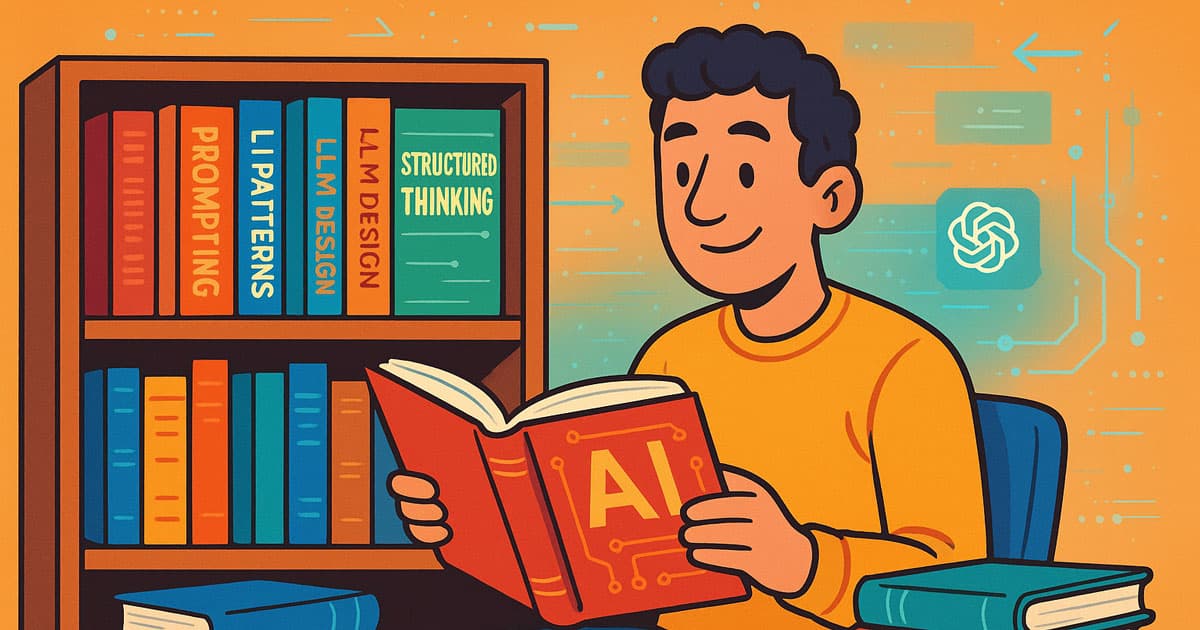
Prompt engineering has stopped being a “nice bonus skill” and has quickly become a core requirement across industries—software development, content creation, research, operations, and product design. The strongest AI models respond far better to structured prompts than casual text, so books that teach these structures are incredibly valuable. This list is not based on hype but on usefulness: books that genuinely improve the way people think about prompts, break down complex systems, and offer patterns that stay relevant even as models evolve.
Many readers picking up the best books about AI prompt engineering are looking for reliability in a landscape that changes every few months. Good prompt-engineering books don’t try to teach tricks tied to a single model version—they show thinking frameworks that work across OpenAI, Anthropic, Meta, and future models. The books in this article follow that philosophy.
Exploring the Top Books

The Art of Prompt Engineering: A Foundation for Clear Thinking
This is one of the most accessible books for people who want to understand what a “good prompt” actually looks like. The author simplifies complex ideas by showing how small changes in wording, structure, or context can radically change model outputs. The book focuses heavily on:
role-based prompting
structured instructions
improving clarity
avoiding ambiguity
crafting multi-step instructions
The strength of this book is that it doesn't overwhelm beginners with jargon. Instead, it builds a mental model for how AI interprets text, which is the foundation of everything else.
Read More: Best Books About AI Programming
Prompt Engineering for Everyone: Practical, Real-World Methods
This book is excellent for people who want to learn through examples. It contains dozens of real tasks—summaries, brainstorming, rewriting, persona generation, analysis, coding assistance—and shows how to iterate prompts step by step. It’s extremely approachable.
The book’s biggest value is its simplicity. Readers learn everything through patterns:
“If you need A, use structure B.”
“If the model does X, fix it with Y.”
Beginners love it because it doesn’t assume technical knowledge. Professionals love it because the examples are fast to apply.
Mastering Language Models: A Deep Dive into Model Behaviour
This book is for the technical mind. If you like understanding why a model behaves a certain way instead of just copying a template, you’ll enjoy this one. It covers:
token and context behaviour
reasoning sequences
chain-of-thought dynamics
model failures and recovery methods
the difference between instruction-based and open-ended models
It’s written with clarity, but it assumes you’re ready for depth. There’s a lot about the underlying mechanics, which helps prompt engineers to understand how far they can push a model—and where its limits show.
The Prompt Engineering Handbook: Templates for Professionals
This is essentially a toolbox. If you want ready-to-use templates for business, marketing, development, or research tasks, this is your book. It includes structured instructions for:
generating system prompts
building reusable workflows
complex multi-turn tasks
debugging poor model outputs
using memory and constraints effectively
It's a favourite among professionals who need reliable output and don’t have time to reverse-engineer every prompt from scratch.
Advanced Prompt Engineering: Multi-Step Logic and Complex Systems

This book is for people who already know the basics and want to upgrade their skills to an expert level. It focuses on:
multi-agent systems
chained reasoning
system-level prompts
role fusion and switching
constraints and rule hierarchies
It reads like a developer’s manual rather than a beginner’s guide, and that’s why advanced users love it. If you build AI tools, assistants, or internal automation systems, this is easily one of the most valuable books.
Designing with Large Language Models: The UX Perspective
A completely different angle from most books. Instead of focusing only on instructions, this one connects prompting to the user experience. If you’re building anything that people will interact with—apps, chatbots, tutoring systems—this book is gold.
It teaches:
designing conversation flows
reducing user friction
anticipating misunderstandings
creating safe and robust instructions
writing prompts that feel natural
It bridges prompt engineering with design thinking, which is an approach missing in many technical books.
Applied Prompt Craft: Learn by Doing
If you prefer practice over theory, this is your book. It contains exercises, real-world problems, and step-by-step solutions. Readers learn by watching prompts evolve and by fixing flawed outputs through iteration.
Some standout chapters include:
how to get models to think before answering
transforming vague inputs into high-quality outputs
working with long context windows
improving factual reliability
It’s suitable for every level because the exercises scale.
The Science of Structured Prompting: Beyond the Basics
While many beginners focus on the exact words to use, the best prompt engineers understand that prompting is essentially applied cognitive science. It's about making inputs that make the model's internal reasoning structure work. This is when more complicated ideas like Chain-of-Thought (CoT), Tree-of-Thought (ToT), and Self-Correction come into play. A really good prompt is less about what you want the AI to do and more about how you want it to think.
As an example, asking the model to "Think step-by-step" before giving the final answer is a simple CoT technique that makes it much more accurate, especially when the task is hard and involves math, logic, or code generation. Books aimed at advanced users, such as Mastering Language Models and Advanced Prompt Engineering, spend a lot of time going into detail about these scientific methods. They show you how to write specific meta-prompts that tell the model not only what to output but also how to process the information. This turns a single prompt into a mini-algorithm. This focus on meta-prompting is very important for getting reliable, high-quality results at scale, so anyone who wants to work with production AI systems needs to learn this skill.
Prompting: More Than Just Typing—The Role of Data and APIs

As AI integration moves beyond simple chat windows, the concept of AI prompts engineering has broadened dramatically. It now includes techniques like Retrieval-Augmented Generation (RAG) and Function Calling. These are methods that allow the language model to interact with external systems and proprietary data sources. This means a prompt engineer isn't just writing instructions for the model itself; they are designing the entire workflow.
RAG, for example, lets a model get the most recent, specific documents from a company's database before it gives an answer. This fixes the big problem of model hallucination and makes sure the data is right.
Intermediate and advanced books that talk about this kind of API-level interaction can help you learn how to connect prompts to other tools and code.
This integration is very important for making apps that work in the real world, where getting things right and having access to expert knowledge are very important.
Also, knowing how to structure data inputs in a prompt, usually with JSON or XML schemas, makes sure that the model outputs structured data that is easy to read. You need to do this if you want to make apps that use LLMs.
Read More: Best AI for Vibe Coding
What Makes a Good Prompt Engineering Book?
With dozens of books now entering the market, not all of them are helpful. The best ones share these qualities:
Clarity
They explain concepts in plain language and avoid unnecessary academic complexity.
Patterns
They give readers reusable frameworks and templates.
Future-proof lessons
They teach mental models, not temporary hacks tied to old model versions.
Real-world demonstrations
They show practical, applicable examples.
Depth where needed
Advanced readers should find strategic thinking; beginners should find clear guidance.
Best Books About AI Prompts Engineering for Beginners

This is the first required H2 containing your exact keyword phrase.
Beginners need books that make the landscape feel less confusing. The best entry-level books remove fear and replace it with intuition. Some readers want simple examples; others want step-by-step instructions; others need reassurance that there’s no “perfect prompt” but plenty of great patterns.
For newcomers, the standout beginner books are:
The Art of Prompt Engineering
Prompt Engineering for Everyone
Applied Prompt Craft
These books explain prompting from the ground up, making it easy for new users to avoid common mistakes—like giving vague instructions, mixing roles incorrectly, or expecting models to guess missing context.
Best Books About AI Prompts Engineering for Advanced Users
This is the second required H2 containing your exact keyword phrase.
Advanced readers need depth: how to structure multi-step chains, how to build system prompts for entire products, and how to push reasoning boundaries. Books written for advanced users go beyond simple template usage and explore:
multi-turn planning
uncertainties in reasoning
constraint-based prompts
high-level orchestration
debugging model hallucination
hybrid prompting for large tasks
The standout advanced books include:
Mastering Language Models
Advanced Prompt Engineering
The Prompt Engineering Handbook
These resources help professionals who design AI workflows, assistants, chat interfaces, or production-level automation systems.
Read More: Best AI Tools for Making Presentations
Prompt Engineering Is Becoming a Core Skill, Not a Niche
One important shift worth highlighting is how quickly prompt engineering has moved from experimentation to expectation. A few years ago, knowing how to “talk to AI” was optional. Today, teams across marketing, development, operations, and research are expected to produce reliable AI outputs on demand. That reliability doesn’t come from clever wording—it comes from structured thinking.
This is why the best books on prompt engineering matter. They don’t teach isolated tricks or viral prompt formats. Instead, they help readers develop mental models: how to break tasks into steps, how to reduce ambiguity, and how to design prompts that scale beyond a single use case. As models evolve, those mental models remain useful, even when syntax changes.
From Prompts to Systems: Where the Field Is Heading
Another trend these books increasingly reflect is the move from single prompts to prompt‑driven systems. Modern AI work often involves chaining prompts, enforcing constraints, integrating external data, and validating outputs automatically. In this context, prompt engineering becomes less about writing and more about orchestration.
Books that address system prompts, structured outputs, and workflow design prepare readers for real production environments—not just chat interfaces. Whether you’re building internal tools, AI‑assisted products, or repeatable workflows, this systems‑level approach is becoming essential.
Taken together, the books covered in this guide offer more than techniques. They provide ways of thinking that help professionals work with AI models rather than fighting their limitations—an advantage that compounds over time.
The 2026 Shift: Prompting for Reasoning Models
In 2026, we are no longer just prompting "Chatbots"; we are guiding Reasoning Engines. Traditional techniques are being supplemented by methods that leverage the internal "Chain of Thought" of advanced models.
1. Advanced Reasoning & Systematic Chain-of-Thought
Modern books in 2026 now focus on Latent Space Guidance. Instead of just telling the AI what to do, these resources teach you how to structure the "hidden" reasoning steps. This is crucial for complex coding and mathematical tasks where the model needs to verify its own logic before delivering the final output.
2. Prompting for AI Agents (Agentic Workflows)
The newest addition to the "Best Books" list involves Multi-Agent Orchestration. Prompt engineering is now about writing System Instructions that allow different AI agents to talk to each other. Understanding how to set constraints and "handoff" protocols between agents is the high-level skill that separates a pro from a hobbyist this year.
How to Choose the Right Book for You
Choosing the right prompt engineering book depends entirely on what you plan to do with AI.
If you're a beginner: Pick a book with real examples, not too much theory.
If you're a creative professional: Choose a book with storytelling, writing, brainstorming, and ideation prompts.
If you're technical or engineering-focused: Choose a book that dives into model behaviour and system prompts.
If you're building AI tools for clients or your own business: Pick a book that has templates you can adapt quickly.
If you're a UX or product person: Look for books that teach human–AI interaction patterns.
The right book feels almost personalised—it meets you exactly where you are in your learning journey.
Final Thoughts
Prompt engineering will keep evolving, but these books give you a strong starting point for using AI more effectively. And if your company isn’t looking to build AI systems yet but simply needs reliable support with websites, apps, data management, or BI reporting, that’s where we can help.
We don’t build AI platforms—we focus on the practical digital services businesses use every day. If you need a solid, dependable team for those parts of your workflow, we’d be glad to work with you.
FAQs
What is the best book for learning prompt engineering from scratch?
Beginners usually find The Art of Prompt Engineering the easiest to start with.
Which book helps with advanced AI prompt strategies?
Advanced Prompt Engineering is ideal for deep, multi-step workflows.
What book is best for real-world prompt examples?
Prompt Engineering for Everyone includes the most practical examples.
Is there a book that teaches prompting for product or UX design?
Designing with Large Language Models focuses on interaction and user experience.
Which book is best for technical readers wanting model-level understanding?
Mastering Language Models explains model behaviour at a deeper level.
How have Reasoning Models (like OpenAI o1) changed prompt engineering?
In 2026, we’ve moved from "Instructional Prompting" to "Constraint-Based Guidance." Reasoning models perform their own internal Chain-of-Thought (CoT), so providing too many intermediate steps can actually hinder their logic. Modern books now teach you how to set high-level goals and "guardrails" rather than micro-managing every word.
Is prompt engineering still relevant with AI's improved "intuition"?
Absolutely. While models are smarter, the focus has shifted to System Prompting and Agentic Workflows. Professionals now use prompts to define how multiple AI agents interact, handle data handoffs, and use external APIs (Function Calling). It’s less about "chatting" and more about Architecting an automated solution.
What is "Prompt Injection" and do these books cover it?
Yes, advanced 2026 resources like Advanced Prompt Engineering focus heavily on Security Prompting. This involves designing prompts that are resilient against "Jailbreaking" or "Injection" attacks—where malicious users try to bypass the AI’s safety filters. Learning to write "Defensive Prompts" is now a mandatory skill for any enterprise-level developer.

Admin
Mostafa is a Wordsmith, storyteller, and language artisan weaving narratives and painting vivid imagery across digital landscapes with a spirited pen, he embraces the art of crafting compelling content as a copywriter, and content manager.
Comments

Sounds like prompt engineering's evolving fast! Curious to see how these new approaches play out in real-world projects.
Based in
Melbourne, Australia
Your software dev partner, smooth process, exceptional results
Contacts
contact@flamincode.com.au
© All rights reserved to Flamincode