Fun Activities in Melbourne for Adults

M Chetmars
Author
Melbourne isn’t short on things to do; it’s short on things worth doing
If you’ve lived in Melbourne long enough, you already know the problem isn’t boredom.
It’s fatigue. Too many “fun” activities demand energy, noise, or enthusiasm you don’t always have. As an adult, you’re not looking for more stimulation — you’re looking for better‑designed experiences.
The Short Answer (What You’re Actually Looking For)
The best adult activities in Melbourne aren’t about spectacle or hype.
They’re experiences designed around choice, pacing, and participation — where you can engage deeply, stay casual, or leave early without feeling like you’ve missed something.
That’s why locals keep returning to immersive games, after‑hours cultural events, and social spaces that feel intentional rather than overwhelming.
At a Glance: Adult Activities That Actually Work in Melbourne
Experience Type | Local Examples | Why They Work for Adults |
Immersive Games | Zero Latency VR (North Melbourne), Escape Hunt CBD | Clear goals, teamwork, fair challenge |
Cultural Nights | NGV Friday Nights, Melbourne Museum after dark | Flexible pacing, atmosphere without pressure |
Social Play | Fortress Melbourne, B. Lucky & Sons | Casual competition, optional engagement |
Creative Workshops | Cooking schools, paint & wine studios | Side‑by‑side interaction, low social friction |
Experiential Theatre | Laneway audio walks, site‑specific performances | Personal pacing, emotional immersion |
What This Article Is Really About
This guide isn’t a checklist of tourist attractions.
It’s a local lens on why certain adult activities in Melbourne succeed — and why others quietly fade out.
You’ll notice a pattern across all the recommendations:
Clear onboarding
Flexible engagement
Structured interaction
Graceful exits
Those aren’t accidental.
They’re UX principles, applied to real‑world leisure.
And once you see that pattern, Melbourne’s adult entertainment scene starts to make a lot more sense.
A Local Perspective on Experiences That Feel Worth the Time
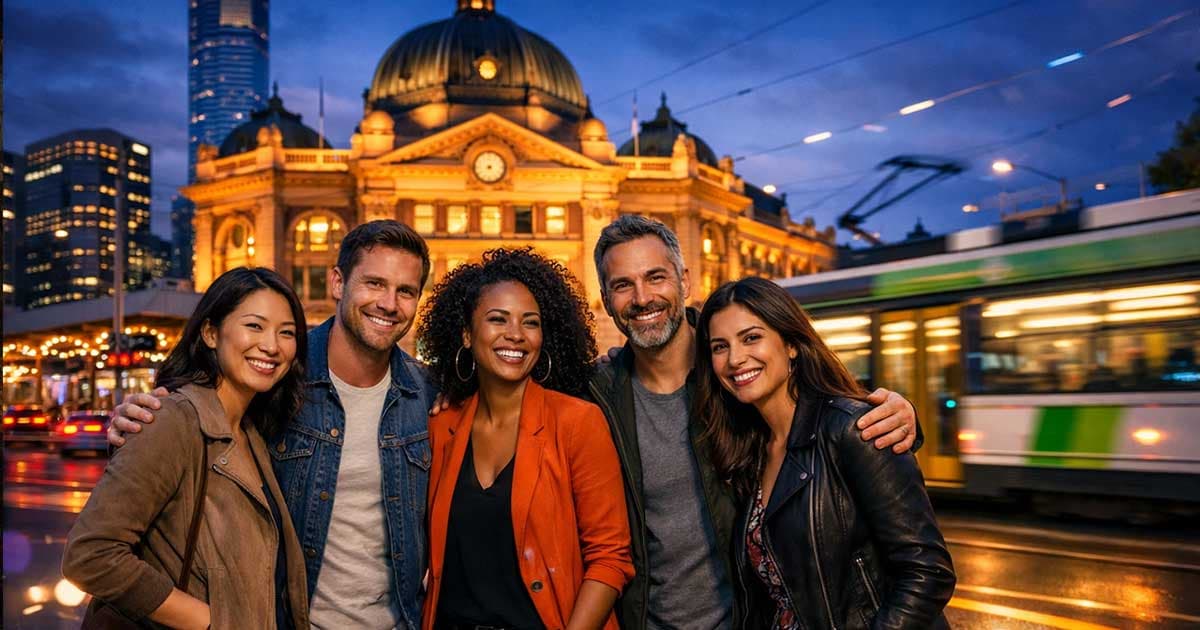
Living in Melbourne for a while changes how you define “fun.” At first, everything feels exciting. New bars every month, exhibitions opening constantly, events stacked on top of each other every weekend. But after a few years, something shifts. You stop chasing novelty and start looking for experiences that justify the time you give them.
As a local, the question isn’t “What’s on?”
It’s “Will this feel worth it when I leave?”
That question has quietly reshaped adult entertainment in Melbourne. The city hasn’t become louder or flashier; it has become more intentional.
Read More: Best Video Chat Apps with Strangers
From Passive Entertainment to Designed Experiences
Melbourne adults still go to pubs, concerts, and restaurants. None of that has disappeared. What has changed is the expectation.
Passive entertainment — where you sit, watch, and leave — feels incomplete for many adults now. After a full workweek of meetings, screens, and notifications, people don’t necessarily want more stimulation. They want engagement with boundaries.
That’s why experience‑driven activities have taken hold. These aren’t about spectacle. They’re about participation that feels structured, fair, and optional.
You see this shift everywhere once you know what to look for.
Digital & Tech‑Enabled Experiences That Respect Adult Attention
Technology works best in Melbourne when it stops trying to impress and starts trying to support.
Take Zero Latency VR in North Melbourne. Locals don’t talk about it as “VR.” They talk about it as an activity you book with intent. You arrive, get a clear briefing, suit up, and enter a shared mission where awareness and communication matter more than reflexes.
What makes it adult‑friendly is the pacing. You’re not rushed into chaos, and you’re not left confused. Within minutes, the technology fades into the background, and the experience becomes social and strategic.
At the other end of the spectrum is ACMI. Its interactive exhibitions rarely demand attention outright. Instead, they allow visitors to drift, stop, engage deeply, or move on. Locals appreciate this kind of autonomy. It mirrors how adults actually consume information — selectively, not linearly.
Both examples succeed because they treat users as competent. There’s no over‑explaining, no sensory overload. Just clear systems and room to explore.
Strategy‑Based Activities as Leisure, Not a Gimmick

Escape rooms have become a surprisingly strong signal of how adult fun works in Melbourne.
Places like Escape Hunt Melbourne (CBD) attract people who enjoy thinking together. Office teams, long‑term friends, couples — all looking for something that feels collaborative without being awkward.
The rooms are built around logic rather than shock. You’re rewarded for paying attention, sharing information, and staying calm. When you fail, it’s usually obvious why. When you succeed, it feels earned.
Locals return to these places because the challenge feels fair. There’s a clear beginning, middle, and end — something adults value more than they often admit.
Gamified Social Spaces That Don’t Talk Down to You
Melbourne’s best social gaming venues succeed because they respect adult autonomy.
Places like Fortress Melbourne and B. Lucky & Sons are designed so participation is optional, not performative. You can watch, join halfway, or leave after one round without friction.
The environments avoid sensory overload: controlled lighting, zoned sound, and curated games with clear rules and short sessions. This lowers the cognitive barrier to entry and makes social interaction feel safe rather than awkward.
These spaces work because they give adults something to share without forcing conversation.
The design doesn’t demand enthusiasm — it quietly makes engagement easy.
Experience‑Based Nights That Aren’t About Clubs
One thing Melbourne does exceptionally well is giving adults places to go at night that aren’t just bars or nightclubs.
The idea isn’t to replace nightlife, but to broaden it — to build environments that deliver atmosphere without exhaustion.
The flagship example is NGV Friday Nights.
To outsiders, it’s an art exhibition with music.
To locals, it’s a ritual: the weekly reminder that culture doesn’t have to be quiet. You move from gallery to gallery with a drink in hand, chatting, pausing when the music drifts across the atrium, and disappearing into a pocket of artwork when you need space. The event never demands energy; it matches it.
Then there’s Melbourne Museum’s “Nocturnal” sessions — occasional evenings curated specifically for adults. They open the museum after dark, serve drinks, and program live music amid dinosaur skeletons and digital displays. The effect is oddly intimate: part nostalgia, part discovery. You learn something, you talk, you laugh, and you go home without feeling wrecked.
Both venues succeed because they treat adults as autonomous participants rather than audience members. You decide how social or reflective the night becomes. That freedom is addictive — and distinctly Melbourne.
Activities for Couples That Feel Natural

Couples here often search for things that let them connect side‑by‑side instead of across a dinner table.
There’s a growing shift from performative “date nights” to shared creative or cooperative play.
Collaborative Classes
Workshops such as Brush & Bubbles or Pinot & Picasso place paintbrushes, wine, and light guidance together. The formula works not because it’s quirky, but because it dissolves pressure. The task gives you something to focus on, while conversation fills the quiet pieces in between.
Similarly, cooking schools like Otao Kitchen (Richmond) and Trupp Cook School (Prahran) turn skill development into a social loop. You’re learning something practical while building rhythm as a team. It’s structured enough to avoid awkwardness, open enough to stay genuine.
Puzzle‑based Bonding
Escape rooms like Rush Escape Game (South Yarra) or LOST Australia Station deliver a cooperative high without alcohol or small talk. The game models how you communicate under pressure — playful research for relationships, but still fun.
In all these scenarios, design matters. There’s a balance between clarity and flexibility, between direction and choice. That’s the UX core of intimacy‑based experiences: reduce cognitive friction, amplify shared agency.
Quietly Competitive, Casually Social
Some adults find joy not in clubs or puzzles, but in games that sit neatly between play and conversation.
Holey Moley Golf Club, Strike Bowling Bar, and rooftop mini‑golf venues like Par none Fitzroy embody this spirit.
They don’t require skill; they offer gentle competition wrapped in leisure. Drinks flow, laughter fills the air, but no one’s keeping a serious score.
What makes these appealing is simple UX wisdom: visibility of progress without consequence. You can see how you’re doing, but you’re never punished for failure. It’s performance without pressure — which, for overworked adults, feels refreshingly sustainable.
Creative Digital Culture as Day‑to‑Day Enjoyment
Melbourne’s cultural institutions increasingly embed interaction at their core. Digital art, projection, and soundscapes invite agency.
Digital Immersions
Events like Light: Works from the Tate Collection at ACMI or Artvo Immersive Gallery (Docklands) allow visitors to blend into the exhibit. You choose angles, pacing, and even participation level. The line between observer and contributor disappears.
Experiential Theatre
Independent groups—like one step at a time , like this or Small and Quiet—craft site‑specific performances across alleys and laneways. You follow whispered instructions through headphones, guided by story fragments that reshape the city around you. These aren’t shows you watch; they’re frameworks you inhabit.
Adults engage deeply because these experiences lean on UX principles: clear onboarding, micro‑rewards, and freedom to wander. The cognitive satisfaction mirrors good digital design — exploratory, self‑paced, feedback‑rich.
Read More: Best Website for Renting a Car in Australia
Why These Experiences Work: Shared UX Foundations

All these activities, from VR missions to wine‑tinted art nights, might appear wildly different on the surface.
Yet underneath, they share a handful of invisible design decisions — decisions that mirror exactly what makes good user experience design succeed.
Design Element | How It Appears in Melbourne Activities | User Value |
Clear entry point | Briefings, intuitive signage, transparent pricing | Removes hesitation; adults dislike guesswork |
Flexible engagement | Dip‑in/dip‑out pacing at ACMI, optional side activities at Fortress | Respects autonomy and attention span |
Structured interaction | Clear tasks in escape rooms, progress markers in games | Provides rhythm and a sense of mastery |
Fair challenge | Logical puzzle flows, difficulty gradients | Builds trust and replay value |
Graceful exit | Ability to leave when energy fades (museums, VR sessions) | Preserves dignity and control |
This table could double as a set of UX heuristics — just applied to nightlife and leisure instead of software.
UX Lessons Hidden in Melbourne’s Adult Entertainment
Let’s dig into that a little deeper.
1. Onboarding Should Be Invisible
A good experience opens gently.
Zero Latency’s five‑minute briefing does what solid onboarding should: convey just enough to start confidently. There’s no manual, no overwhelm — only relevance and reassurance. Adults with busy brains appreciate this brevity.
2. Give Control Early
At NGV nights or ACMI installations, participants self‑navigate. That mirrors interface autonomy in digital contexts — when users pick order and depth themselves. Adults equate autonomy with respect.
3. Design for Variable Attention
Unlike children, adults carry cognitive baggage. Work, fatigue, and emotional load — all alter focus. Melbourne’s better venues build for that by offering multi‑layered design: a quick loop for casual drop‑ins, a deep loop for those who linger.
UX parallel: adaptive pathways.
4. Make Failure Acceptable
Escape Hunt or Rush Escape exemplifies graceful failure. When players get stuck, hints come naturally, without shame.
Digital analogy: helpful error states. Good design corrects without condescension.
5. Reward Engagement, Not Duration
Fortress Melbourne’s system of short, replayable games gives satisfaction in bursts. Adults often can’t give three uninterrupted hours, but they’ll give thirty minutes if it feels complete.
Responsive UX: micro‑successes yield macro‑loyalty.
In essence, Melbourne’s adult fun industry has absorbed design logic once reserved for software — recognising that attention is the new currency, and friction is the enemy.
Why These Experiences Age Well

The most fascinating thing about this shift is sustainability.
Flashy novelties fade, but experiences constructed on UX fundamentals tend to age gracefully.
They scale with time.
You can revisit the same escape room with new people and get a different social dynamic.
NGV Fridays evolves its program but retains structure.They adapt to mood.
Whether you’re in the mood for quiet observation or active play, you can modulate participation.
Adults cherish that flexibility.They welcome diversity.
Melbourne’s inclusivity ethos means these designs consider accessibility, gender comfort, and cultural sensitivity by default — an unspoken UX principle: designing for everyone without signalling tokenism.
This maturity will likely define the decade ahead: entertainment not shouting for attention, but quietly earning it.
For Visiting Tourists, Why Locals’ Favourites Matter
Tourists often stumble onto these same spots — NGV, ACMI, Fortress Melbourne — but they experience them differently. They see novelty. Locals see consistency.
That’s an important distinction: the repeatable design of engagement.
Tourists might photograph a light installation once. Locals bookmark the feeling to return to later, because the feedback loop (choice → action → reward) is satisfying each time. This is, again, UX literacy translated into leisure.
The Bigger Picture: Melbourne’s Design Mindset Comes to Play
Every city talks about “experience economy,” but Melbourne lives it daily.
Our cafes, festivals, and even transport systems embody quiet UX logic — clarity, tone, touch, and flow.
Adult entertainment simply extends this to leisure.
The core truth?
Fun here isn’t an escape. It’s an interaction done well.
Whether you’re solving puzzles in the CBD, drifting through lights in the Docklands, or painting abstract chaos in Fitzroy, the same pattern emerges: clarity, autonomy, rhythm, closure.
You leave not exhausted, but restored.
That’s what makes people stay loyal — to venues, to each other, to the city itself.
Read More: Best Dating Apps in Australia
A City That Designs Its Fun (Alternative Ending)
Melbourne doesn’t entertain adults by trying harder.
It does so by designing better.
The experiences locals return to — from immersive games to after‑dark galleries — aren’t loud, fast, or overwhelming. They’re clear, flexible, and respectful of attention. You’re given structure without pressure, choice without confusion, and the freedom to leave without guilt.
That’s not accidental. It’s the same design logic that makes good software feel invisible when it works — now applied to real life.
Most cities sell fun as an escape.
Melbourne treats it as an interaction.
And once you notice that difference, it becomes hard to enjoy anything that isn’t designed with the same care.
We are Flamincode, and in our blog posts, sometimes we discuss different topics related to tech in some unusual ways. But generally, our work is app development and web design for Australian businesses.
Frequently Asked Questions
What are the best adult activities in Melbourne beyond bars and restaurants?
The best adult activities in Melbourne are experience‑driven rather than consumption‑focused. Immersive games, after‑hours museum events, curated social gaming venues, and interactive cultural nights offer structured engagement without relying on alcohol or loud nightlife.
Are these activities designed for locals or mainly for tourists?
These activities are popular with Melbourne locals because they are built for repeat visits. Venues like Fortress Melbourne, NGV Friday Nights, and Zero Latency VR regularly refresh content and prioritise comfort, pacing, and flexibility rather than one‑off novelty.
What makes an activity truly “adult‑friendly” in Melbourne?
Adult‑friendly activities respect time, energy, and personal choice. They offer clear structure, optional participation, manageable session lengths, and environments that don’t pressure people to perform, socialise constantly, or stay longer than they want.
Can you enjoy these experiences alone or without a large group?
Yes. Many immersive and gamified venues in Melbourne are designed so individuals, couples, or small groups can participate comfortably. Interaction is facilitated through the experience itself, reducing the need for forced conversation or group coordination.
Why are immersive and gamified experiences so popular with Melbourne adults?
Because they follow strong UX principles: clear rules, low-friction entry, immediate feedback, and controlled sensory environments. These design choices make participation feel intuitive, low‑pressure, and rewarding — even after a long workday.

Admin
Mostafa is a Wordsmith, storyteller, and language artisan weaving narratives and painting vivid imagery across digital landscapes with a spirited pen, he embraces the art of crafting compelling content as a copywriter, and content manager.
Comments

Sounds like Melbourne's shifting from loud parties to more chill, thoughtful hangouts, definitely aligns with adult vibes these days.

Based in
Melbourne, Australia
Your software dev partner, smooth process, exceptional results
Contacts
contact@flamincode.com.au
© All rights reserved to Flamincode