Why Green Web Development Matters in Australia

M Chetmars
Author
The web feels weightless, but every click moves data through servers that run on electricity. When pages are bloated or poorly optimised, they demand more energy, more time, and more money. In Australia—where energy prices bite and sustainability is a board-level topic—those invisible costs now show up on both the balance sheet and the brand story.
That’s where green web development solutions in Australia come in. The plan is simple: make sites that load quickly, don't take up too much space, and use renewable energy whenever possible. The end result is a cleaner digital footprint and a much better experience for users: faster loading, fewer bounces, and more conversions. Search engines also tend to reward efficient pages, so performance and sustainability pull in the same direction.
This article opens with clear definitions, then moves to the practical steps any business can take—whether you’re running an e-commerce store, a healthcare portal, or a real estate listings site. Expect concrete tactics you can act on today, not abstract pledges. By the end, you’ll know exactly how to make your site lighter on the planet and faster for your users.
What Is Green Web Development?
Green web development is the practice of designing, building, and running websites in a way that minimises energy use and carbon emissions—without sacrificing functionality or aesthetics. Think of it as digital sustainability: treat bandwidth, CPU cycles, and storage as scarce resources, and spend them wisely.
In practical terms, it focuses on four pillars:
Hosting: Choose data centres powered by renewable energy or with credible carbon-neutral commitments.
Code: Send less JavaScript and CSS, get rid of unused dependencies, turn on HTTP compression, and cache a lot.
Design: Use modern formats and compressed images that are easy on the eyes. Use fewer custom fonts and layouts that don't use heavy effects.
Delivery: Automate builds and only deploy what you need (code-splitting, smart CDNs, and image resizing at the edge).
Why it matters: When pages are smaller, fewer bytes are sent, which means servers and devices use less electricity.. Users get speed; the business gets lower infrastructure costs and stronger SEO; the planet gets a reduced digital footprint. Sustainable web development practices in Australia are therefore not a niche ethic—they’re a performance strategy with environmental benefits.
Read More: 5 Unexpected Challenges Only Web Developers Face in Melbourne
Why Australia is Embracing Green Web Practices
Australia is at a unique point where sustainability is no longer just a buzzword; it is becoming a part of the country's digital and economic strategy. Bushfires, floods, and rising energy costs are all signs of climate change that are affecting people in their own communities. This is making more and more people want businesses to lower their environmental impact in all areas, including online services.
The main causes of this change are:
Rising energy costs – Powering inefficient websites isn’t just bad for the planet; it’s costly for businesses, especially those running high-traffic e-commerce platforms or large-scale apps.
Government programs and incentives – Programmes like the Australian Carbon Credit Units (ACCUs) push businesses to cut down on emissions and keep track of their progress.
Consumer demand – Shoppers are more eco-conscious than ever, and brands that can demonstrate sustainable practices gain trust and loyalty.
Industries like e-commerce, real estate, and healthcare are leading the way. For example, real estate companies are offering virtual inspections and 3D property tours to reduce travel emissions, while e-commerce businesses are optimising logistics and digital storefronts to cut waste both online and offline.
For Australian companies, going green digitally isn’t just an ethical move — it’s a smart competitive strategy that attracts customers and reduces operating costs.
Important Tips for Building a Green Website
It's not just a theory that green web development is possible; it's also practical. Here are four tried-and-true ways to make websites use less energy and last longer.
1. Eco-Friendly Hosting
Your hosting provider has one of the largest impacts on your site’s overall footprint.
Choose data centres powered by renewable energies.
Look for certifications like Green Power Pass or verified carbon-neutral policies.
Australian examples include VentraIP, DigitalPacific, and SiteGround, all of which emphasise eco-friendly practices.
Switching hosting providers often takes less than a day and delivers immediate results.
2. Code Optimization & Performance
Every unnecessary line of code consumes energy.
Minify JavaScript and CSS automatically in your build process.
Use lazy loading so images and videos load only when needed.
Audit third-party scripts and remove ones that add no clear value.
Test regularly using Google Lighthouse or WebPageTest to track improvements.
A healthcare provider we worked with cut page weight by 50% through optimisation alone — a direct boost to both performance and sustainability.
3. Sustainable Design Principles
Effective design can save energy while improving usability.
Use modern image formats like WebP for smaller file sizes.
Limit font families and styles to reduce load times.
Simpler layouts minimise the number of assets required.
Implement dark mode, which saves energy on many screens.
Minimalist design isn’t just trendy — it’s more sustainable.
4. Progressive Web Apps (PWAs)
PWAs provide app-like features through the browser, reducing the need for separate native apps.
Lower development and maintenance costs.
Reduce device storage and energy consumption.
Offer offline access and push notifications without heavy installations.
This is the best way for Australian businesses in e-commerce, travel, or healthcare to make their online presence more efficient.
Measuring and Improving Your Website’s Carbon Footprint
To make your website more eco-friendly, you need to know where you are right now. A lot of free and easy-to-use tools make it easier than most businesses think to find out how a website affects the environment.
The goal isn't just to get a number; it's also to figure out where energy is being wasted and how to fix it. This process makes it easy to see how to make things better.
Read More: What Is Web Development Strategy, and Why Should You Even Care?
Tools to Track Your Website’s Impact
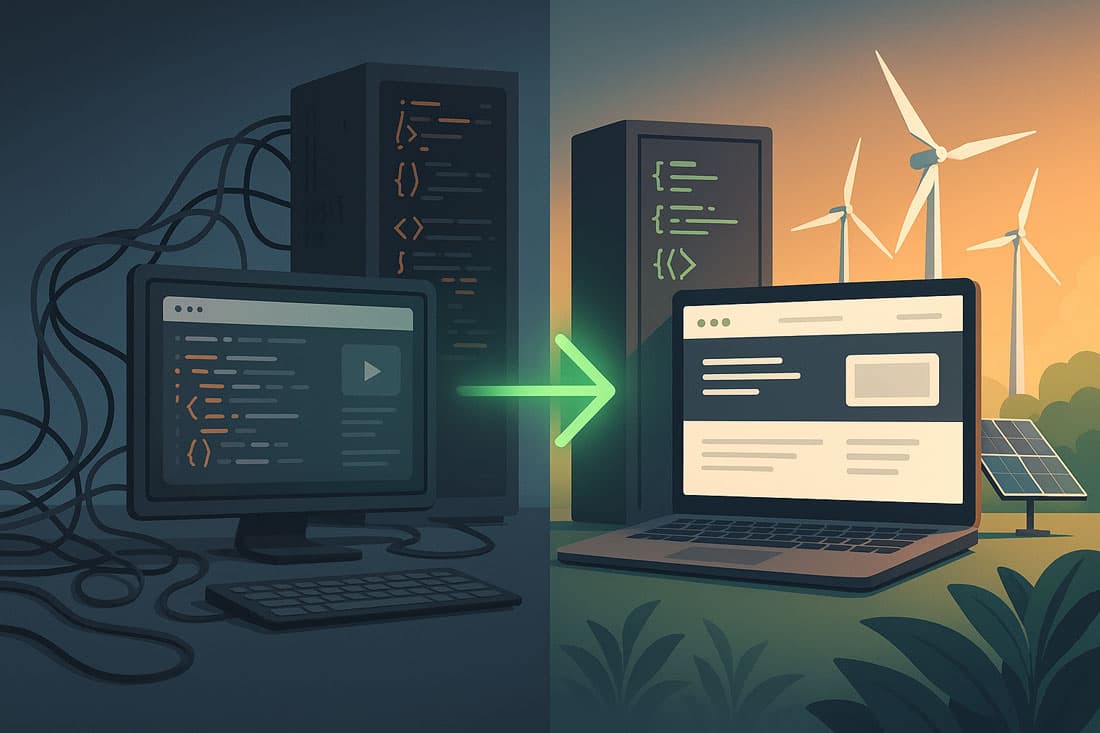
Website Carbon Calculator: Estimates the CO₂ emissions per page view and suggests ways to lower them.
Ecograder: It provides a sustainability score by analysing hosting, code efficiency, and overall performance.
Google Lighthouse: While not explicitly green-focused, it highlights performance issues that indirectly affect energy consumption.
By regularly testing your site, you can track improvements over time and prove progress to stakeholders.
Key Metrics to Watch
Here are the most important metrics for sustainable website performance and what to aim for:
Metric | Target Goal | Why It Matters |
CO₂ per page load | Under 0.5g | Lower emissions equal less environmental impact |
Load time | Under 2 seconds | Faster pages use less energy and boost SEO |
Image optimization | 90% or higher | Fewer bytes transferred means lower power usage |
Pro Tip:
Concentrate on little victories. Even making images smaller or getting rid of scripts that aren't used can cut down on a site's energy use by a lot without a big redesign.
Future Trends in Green Web Development for Australia
Green web development is changing quickly, and in the next few years, Australian businesses will have to make even bigger changes to how they design and keep their digital platforms. It's not just about being environmentally conscious to stay ahead of these trends; it's also about getting ready for new technology, rules, and customer expectations that are already on the way.
1. Government Regulations and Standards
Australia is likely to make stricter rules about how digital energy is used and reported as sustainability becomes a national priority.
Like how companies report on their physical supply chains, businesses may soon have to say how their websites affect the environment.
There may be new rules about how data centres get their renewable energy, which could lead more hosting companies to go green.
Companies that take early action will be ready to meet these requirements without a rushed, costly transition later.
2. Rise of Carbon-Neutral Tech Stacks
Developers are beginning to think about more than just hosting and are looking at whole tech stacks from a sustainability point of view.
Frameworks like Next.js, Svelte, and Astro are gaining popularity because they generate lighter, faster websites.
Serverless architectures and edge computing can reduce data transfer distances, lowering energy usage per request.
Australian startups are already experimenting with carbon-neutral development workflows, combining green hosting with efficient code and automated reporting.
3. Consumer-Driven Sustainability
Customers are a big part of what is pushing businesses to adopt more environmentally friendly digital practices.
Studies show that Australians are more and more likely to choose brands that are open about their environmental commitments.
More websites will likely have certifications, sustainability badges, and performance transparency reports to gain trust.
Companies that fail to adapt risk losing market share to competitors who embrace digital sustainability.
4. Integration with Broader Business Goals
Green web development will no longer be just a "tech project," but will be part of the whole business plan.
As part of brand messaging, marketing teams will talk about eco-friendly web practices.
Energy savings will be a key performance indicator for operations teams.
People who make decisions will see digital sustainability as a core value, not just a side project.
The companies that see this change coming first will be the leaders in their fields and will encourage others to do the same.
Conclusion
In Australia's digital world, green web development is no longer an option. Sustainable websites are necessary because energy prices are going up, environmental standards are getting stricter, and more people want them.
Businesses can reduce their digital footprint while improving their performance and user experience by using eco-friendly hosting, cleaning up their code, and following sustainable design practices.
The first step doesn't have to be too much. Start small, track your progress, and keep making changes. Every change, like switching to hosting that runs on renewable energy or compressing images, makes a real difference.
Going green online isn't just about saving the planet; it's also about doing things right. It's about making digital experiences that are faster, smarter, and more profitable that will last.
Green Web Development FAQs
1. What is green web development?
Green web development is the practice of building websites and online platforms that use less energy and resources. It focuses on efficient code, eco-friendly hosting, and lightweight design to reduce environmental impact while improving performance.
2. Is green hosting available in Australia?
Yes, several hosting companies in Australia operate using renewable energy or have carbon offsetting programmes. Providers like VentraIP and Digital Pacific are known for their commitment to sustainability and clean energy.
3. Will a greener website also perform better?
Absolutely. Websites optimised for sustainability tend to be faster, more reliable, and user-friendly. Lightweight pages not only lower energy consumption but also improve SEO rankings and conversion rates.
4. Is going green expensive for small businesses?
Not necessarily. Many steps, like image compression, caching, and code clean-up, cost very little or nothing at all. Even switching to green hosting can be affordable and often pays off through reduced server costs over time.
5. How can a business get started with sustainable web practices?
Start small by measuring your website’s performance with free tools like Google Lighthouse or Website Carbon Calculator. Then, move on to simple changes like optimising images, enabling lazy loading, and migrating to a green hosting provider.

Admin
Mostafa is a Wordsmith, storyteller, and language artisan weaving narratives and painting vivid imagery across digital landscapes with a spirited pen, he embraces the art of crafting compelling content as a copywriter, and content manager.
Comments

Wonder if more businesses will jump on this green bandwagon.
Replies

@Sullivan McGrath We’re already seeing more Australian businesses start to adopt green web practices

Based in
Melbourne, Australia
Your software dev partner, smooth process, exceptional results
Contacts
contact@flamincode.com.au
© All rights reserved to Flamincode