Local SEO Services in Australia

M Chetmars
Author
March 2026 Strategy Update
Local SEO has evolved. We have updated this guide to include AI-Powered Search (SGE) and Conversational Voice Search optimization—the two most critical factors for ranking in the Australian market this year.
For a long time, local SEO in Australia was simple. You created a page for each suburb. You added the city name to your keywords. You optimised a Google Business Profile and waited.
And for a while, that worked.
Today, that same approach quietly fails — especially in cities like Melbourne, where competition is dense, services overlap, and Google has far more data than it used to.
The reason isn’t that local SEO has become more complex. It’s that businesses are solving the wrong problem. They’re optimising pages when Google is evaluating presence.
The short answer
Local SEO doesn’t fail because businesses don’t invest enough time or money.
It fails because most local SEO strategies are still built around isolated optimisations — individual pages, individual locations, individual listings — while Google now evaluates businesses as connected systems.
Google no longer asks:
“Is this page relevant to this suburb?”
It asks:
“Does this business make sense here?”
That difference sounds subtle. It isn’t.
What Changed (and Why It Matters)
Then | Now |
Location pages as the strategy | Location architecture as the foundation |
Keywords + suburb names | Entity understanding + service relevance |
GBP as the main lever | GBP as a reflection of underlying signals |
Content-first local SEO | Technical and structural clarity first |
Rankings as success | Visibility stability across locations |
The shift didn’t happen overnight, which is why it’s often missed.
Many Australian businesses are still doing what used to work, just more aggressively. More pages. More locations. More “local SEO packages.”
But scale exposes weakness.
And nowhere does that happen faster than in Melbourne.
Why Melbourne Exposes Broken Local SEO Faster Than Anywhere Else

Melbourne isn’t short on local businesses.
For almost every service, in almost every suburb, Google has dozens of options that look broadly similar on the surface. Same services. Same language. Same promises.
When that happens, Google stops relying on page‑level optimisation. There’s no value in it anymore.
Instead, it zooms out.
It looks for consistency between:
What a business claims to offer
Where it claims to offer it
How it’s represented across the web
How users interact with it over time
This is why two businesses with near‑identical location pages can see wildly different results. One stabilises and grows. The other plateaus disappear entirely.
The difference isn’t content quality.
It’s coherence.
The Fundamental Mistake: Treating Local SEO as Content
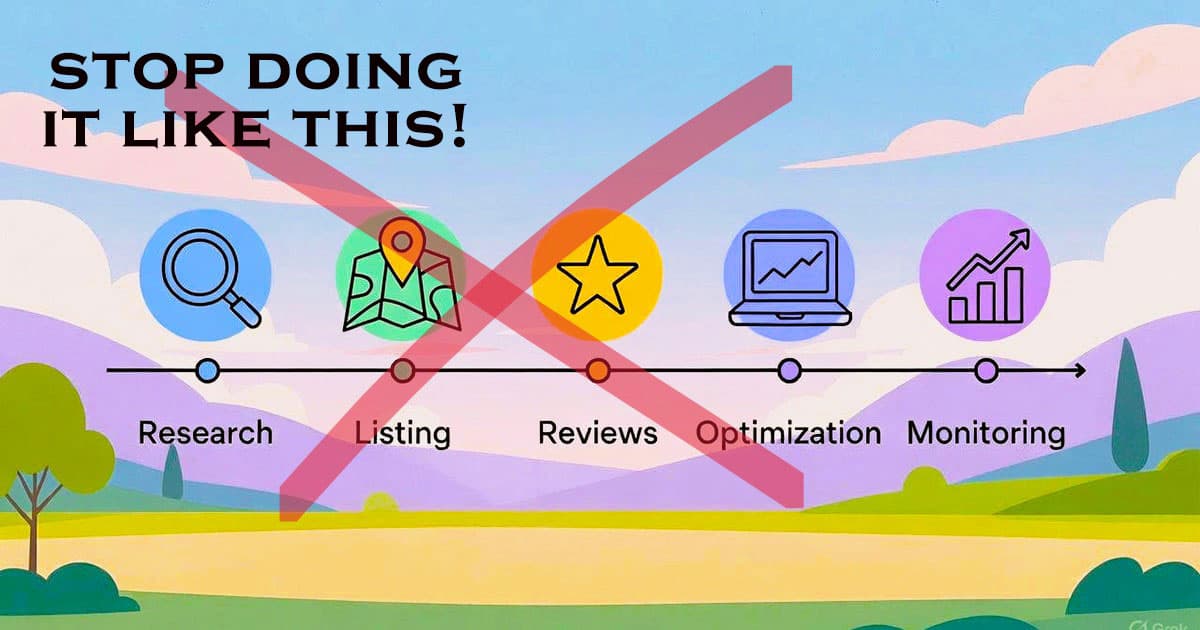
Most local SEO strategies still start with writing. New pages. More suburbs. Service + location combinations. But content is no longer the driver of local visibility. It’s the expression of something deeper.
When businesses create location pages without a clear underlying structure, those pages don’t reinforce relevance — they fragment it.
Google sees:
Locations that don’t align with real service areas
Pages competing internally
Signals that contradict Google Business Profiles
Reviews that cluster in ways the site architecture doesn’t explain
From Google’s perspective, the business doesn’t look larger or more relevant. It looks uncertain.
And uncertainty doesn’t rank.
Read More: After React, What Should I Learn?
Local SEO Is No Longer a Tactic — It’s an Architecture Problem
This is where local SEO quietly becomes uncomfortable. Because architecture can’t be faked.
A coherent local presence requires decisions:
Which locations actually matter
How services are distributed geographically
How locations relate to each other
How internal links reflect real‑world operations
How entities are defined, not just pages
When these decisions aren’t made deliberately, local SEO becomes accidental. Pages exist, but they don’t support each other. Locations appear, but they don’t form a system. Google understands systems very well.
It understands when something has been designed — and when it’s been assembled.
Why Google Business Profile Isn’t the Centre of Local SEO
Another idea that refuses to die is that Google Business Profile is local SEO. It isn’t. GBP is closer to a mirror than a control panel.
It reflects what Google already believes about a business, based on:
Website structure
Entity clarity
Reviews and reputation signals
External consistency
User behaviour
When those signals align, GBP performs. When they don’t, no amount of optimisation holds for long.
This is why businesses often see short‑term gains followed by sudden drops. The profile improved, but the system underneath didn’t.
Read More: Security Threats Web Devs Are Facing In 2026
The Quiet Role of Technical SEO in Local Visibility
Local SEO is often discussed as if it sits outside technical SEO. In reality, technical clarity is what allows local relevance to compound.
Crawlability determines whether Google even sees your locations properly.
Indexation determines whether they persist.
Schema determines whether Google understands how your business fits together.
For single‑location businesses, weaknesses here are sometimes masked. For multi‑location or growing businesses, they’re fatal. This is where local SEO stops being a marketing task and starts being an engineering one.
Why “Local SEO Services” Mean Something Different Now

This is where expectations and reality diverge: Many businesses still expect local SEO services to deliver fast, visible wins. Rankings. Map pack movement. Immediate leads.
But modern local SEO is slower — and more durable.
It builds presence that doesn’t collapse when:
Competitors add more pages
Google updates its local algorithm
Service areas expand
Locations multiply
That kind of stability doesn’t come from tactics. It comes from systems.
Reputation Is Not a Growth Hack
Reviews are usually treated as a conversion layer, something that matters after visibility is already earned. Google treats them very differently. In local search, reputation helps explain why a business appears where it does and whether that visibility makes sense over time. In competitive Australian markets, especially where service areas overlap, reviews function as structural signals rather than marketing assets.
Google pays attention to patterns, not just volume. Where reviews come from, what services they mention, and how consistently they align with location pages all matter. When reviews reinforce a business’s geographic footprint, visibility stabilises. When they contradict it, rankings fluctuate or quietly disappear.
Why Local SEO Reporting Usually Misses the Point
Most local SEO reports are designed to show progress, not understanding. They track rankings, impressions, and clicks, but rarely explain why visibility behaves the way it does. Local SEO doesn’t usually fail dramatically; it erodes through inconsistency, volatility, and uneven coverage.
Effective reporting works more like a diagnosis than proof of work. It reveals where Google is confident, where it is uncertain, and where signals conflict. For multi‑location and growing businesses, this is often the difference between controlled expansion and invisible decay.
When Growth Turns Local SEO Into a Systems Problem

Single‑location businesses can survive with an imperfect structure because Google fills in the gaps. As soon as a second location or wider service area is added, those gaps turn into contradictions. Pages compete internally, reviews cluster unevenly, and entity signals become ambiguous.
At that point, local SEO stops behaving like a marketing channel. It becomes a systems problem, where relationships between locations, services, and signals matter more than individual optimisations. Growth doesn’t just add pages; it multiplies complexity.
Why Local SEO Breaks Without Developer Involvement
Many local SEO strategies fail because they live entirely inside marketing teams. Local presence, however, is implemented through technical decisions: URL structures, internal linking logic, rendering behaviour, schema, and indexation rules. These choices determine whether Google can understand and trust a business’s footprint.
When local SEO is layered on without developer involvement, results are often temporary. Pages rank briefly, locations fluctuate, and fixes create new problems elsewhere. Stability only appears when strategy and implementation are aligned.
Read More: Debugging in 2026: Tools & Techniques
What Actually Changed in Local SEO
When businesses say local SEO stopped working, they’re usually reacting to scale. The tactics didn’t suddenly fail; they stopped compounding. Google now evaluates whether a business’s footprint is believable, whether its locations are clearly defined, and whether its reputation supports its claims over time.
This isn’t a harsher algorithm. It’s a stricter one. And strict systems punish shortcuts.
What “Local SEO Services” Really Mean Now
Done properly, local SEO is not a list of tasks performed each month. It’s an ongoing process of alignment between services, locations, technical structure, and real‑world signals. When that alignment exists, visibility compounds quietly and resists volatility.
When it doesn’t, effort fragments, no matter how much content or optimisation is added. The difference is not budget or aggressiveness. Its intent.
The Overlooked Factor: Local Intent Is Not Evenly Distributed

One of the most misunderstood aspects of local SEO — especially in Australia’s service-based industries — is that local intent is not evenly distributed across suburbs. Google doesn’t treat every area as equally valuable or equally relevant to every business. Some suburbs generate strong commercial intent for a service, others generate informational intent, and many generate none at all. When businesses create identical location pages for every suburb without understanding this distribution, they misalign their structure with the way demand actually exists. Google notices that disconnect. It sees a business trying to be relevant everywhere, even when user behaviour suggests otherwise. The result isn’t broader visibility — it’s diluted visibility. Local SEO becomes dramatically more stable when location architecture matches real demand patterns rather than imaginary coverage maps. The goal is not to appear everywhere, but to appear where intent naturally flows.
The Future of Local Search: AI & Voice Optimization (2026)
The traditional "Map Pack" is no longer the only way customers find you. In 2026, Local SEO in Australia is driven by how AI agents and voice assistants interpret your business data.
1. Optimizing for AI Overviews (SGE)
Google’s Search Generative Experience (SGE) now provides direct answers to local queries. To stay ahead, we focus on Entity-Based SEO. This means ensuring your business is recognized as a trusted entity in Google’s Knowledge Graph. We optimize your content to be the "source of truth" that AI models use when recommending services in Melbourne, Sydney, and beyond.
2. Conversational & Voice Search Readiness
With the surge in smart devices and AI assistants, local searches are now conversational. Users don't just type "SEO Sydney"; they ask, "Where is the best-rated software agency near me that handles custom APIs?" We optimize your local presence for Natural Language Processing (NLP). By targeting long-tail, intent-based questions, we ensure your business is the top voice-activated recommendation for local customers on the move.
Where Flamincode Fits
Flamincode operates in the space where local strategy meets technical reality, not at the level of content production or marketing promises, but at the level of structure, systems, and implementation. Working alongside the app and web development team allows local SEO to be built into the foundation rather than layered on top.
That approach rarely produces dramatic early spikes. It creates something more valuable: visibility that survives growth, competition, and algorithm change. The goal isn’t to win Google’s attention, but to make sense to it consistently.
The Right Question to Ask
The most useful question in local SEO is no longer, “How do we rank in this suburb?” It is, “Does our presence make sense here?” When the answer is yes, rankings follow naturally. When it isn’t, no tactic will hold for long.
Local SEO Services in Australia: Reality
Local SEO in Australia hasn’t become more complicated; it has become more honest. Google rewards coherence, not effort, and systems, not slogans. The businesses that understand this stop chasing rankings and start building presence.
That is the difference between optimising pages and being locally visible.
FAQs
Why does local SEO fail even when pages, keywords, and citations are optimised?
Because Google evaluates local businesses as entities, not pages. Optimisation without structural alignment creates isolated signals that never reinforce each other. Over time, Google loses confidence even if individual elements look correct.
Why did our local rankings disappear after initially improving?
Short‑term gains often come from surface optimisation. When deeper inconsistencies exist across locations, services, or technical signals, rankings fade as Google re‑evaluates trust. Stability only comes from coherence, not momentum.
Why do some business locations rank locally while others never gain traction?
Google compares locations within the same brand against each other. When architecture, reputation signals, or internal linking are uneven, stronger locations absorb authority while weaker ones stagnate. The issue is systemic, not page‑specific.
Is Google Business Profile enough to rank in competitive local markets?
No, especially in cities like Melbourne. A strong profile supports visibility, but it cannot compensate for unclear services, weak location structure, or conflicting off‑site signals. In competitive markets, profiles reflect trust rather than create it.
Can a service‑area business rank locally without physical offices everywhere?
Yes, but only when service claims are supported by consistent signals elsewhere. Google looks for believable coverage through content, reviews, technical structure, and real‑world references. Over‑claiming locations without support reduces overall trust.

Admin
Mostafa is a Wordsmith, storyteller, and language artisan weaving narratives and painting vivid imagery across digital landscapes with a spirited pen, he embraces the art of crafting compelling content as a copywriter, and content manager.
Comments

So, local SEO’s shifting focus on coherence over pages makes sense, especially with all the competition in Melbourne.

Based in
Melbourne, Australia
Your software dev partner, smooth process, exceptional results
Contacts
contact@flamincode.com.au
© All rights reserved to Flamincode