10 Things I Wish I Knew Before Becoming a Content Writer (2025 Guide)

M Chetmars
Author
First, when I started my journey as a content writer, I thought it would be easy. I loved writing, had a decent grasp of grammar, had some writing awards from my childhood, and assumed having these was enough to build a career. But I couldn’t have been more wrong.
What I didn’t know was that content writing isn’t just about playing with words — it’s about strategy, psychology, storytelling, and even business skills. I learned through trial and error, late nights, missed deadlines, and a few embarrassing calls to clients over the years.

I'm going to share the 10 things I wish I had known earlier in this article. These tips will help you avoid the mistakes I made and get off to a good start, whether you're just starting or thinking about changing careers.
1. The Misconception About “Easy Money” Writing
When I first told friends and family that I wanted to be a content writer, I heard it all: “Wow, you can work from home and make money writing? That’s so easy!”
It does sound easy, right? You sit at your laptop, type a few hundred words, send them to a client, and get paid. The reality? It’s far more complex.
Good content writing involves:
Deep research into topics you might not know well.
Recognising the psychology, desires, pain points, and behaviours of the audience.
Making content that is SEO-friendly and ranks well in search engines while still being interesting.
Meeting tight deadlines and juggling multiple clients at once.
When I first started, I charged too little for my work and took on too many low-paying jobs. I got tired of it quickly and almost quit. If I could go back, I’d tell myself this:
“Writing is a skill. Content writing is a business. Treat it like one from the start.”
2. SEO Isn’t Optional — It’s a Core Skill
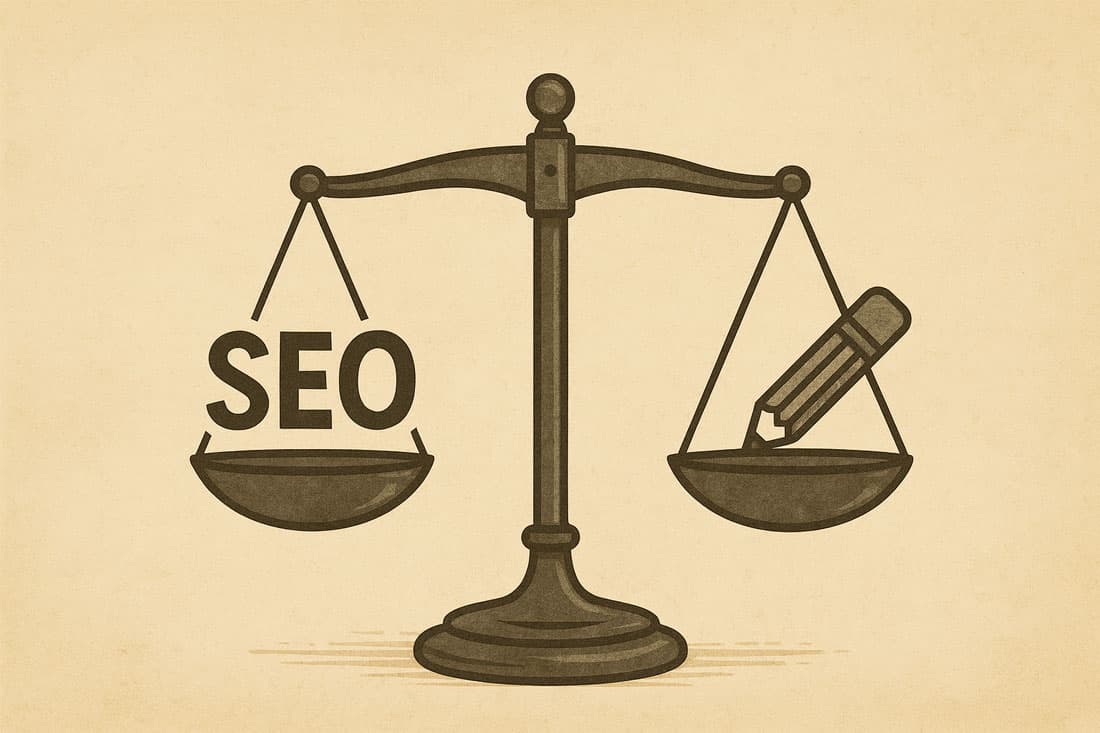
Here’s something no one told me in the beginning: “Great writing is invisible if nobody can find it.”
You can craft the most compelling, beautifully written piece, but if it doesn’t show up in search results, it might as well not exist. When I first started, I focused only on creativity and voice. SEO felt intimidating and technical, so I ignored it. Big mistake.
The first time I saw one of my articles buried on page five of Google — while a poorly written competitor’s piece ranked first — I realised my words alone weren’t enough. My writing was a Shakespeare compared to that, but even that, without applied SEO, wasn't worth a look for Google.
What I wish I’d learnt earlier:
Keyword intent matters: It’s not just about using keywords but understanding why someone is searching.
On-page basics count: Title tags, meta descriptions, headers, and internal linking make a huge difference.
Structure boosts ranking: Google prefers articles with distinct H2 and H3 hierarchies, such as this one.
Free tools are your friends: Start with Google Search Console and Ubersuggest to learn the ropes.
Today, SEO isn’t a “nice-to-have” for writers — it’s the backbone of content strategy. Learning even the basics early will set you apart from 90% of beginners.
Read More: Best SEO Agencies in Melbourne 2025
3. Writing for Humans vs. Algorithms
When I first discovered SEO, I went all-in. Suddenly, every piece I wrote was packed with keywords, headings, and links. I was obsessed with ranking. It worked—my articles started climbing Google’s results. But there was one problem: nobody actually wanted to read them.
The truth is, there’s a delicate balance between writing for search engines and writing for real people. When you swing too far in either direction, you lose.
Here’s what I learned the hard way:
Keyword stuffing kills trust. A sentence that exists only to fit in keywords feels robotic, and readers notice.
Stories matter. Even in technical niches, storytelling keeps readers engaged and builds connection.
Data + creativity = win. To make your writing memorable, use research to inform it and then add your own voice.
The journey itself should feel organic and human, but SEO serves as a map that indicates where you need to go. Your content’s goal isn’t just to rank. It’s to convert, inspire, and resonate.
Quick checklist for balance:
Would a human enjoy reading this?
Does every keyword fit naturally into the flow?
Does the structure make sense even without SEO knowledge?
If the answer is “yes”, you've struck the right balance.
Read More: From Fear to Flow: My AI Journey as a Content Writer
4. Your Portfolio Matters More Than Your Resume
Early on, I spent hours tweaking my resume — polishing bullet points and adjusting fonts — thinking that would land me clients. Spoiler alert: it didn’t.
In content writing, clients hire what they can see, not what you say you can do. That means your portfolio is far more important than your resume.
Why a portfolio matters:
It proves your skills in a way no list of job titles can.
It shows versatility — different formats like blogs, web copy, and case studies.
It lets potential clients imagine you writing for them.
When I finally created my portfolio, things changed overnight. Suddenly, instead of chasing clients, they started reaching out to me.
How to start building yours:
Use free platforms like Medium, WordPress, or even LinkedIn articles.
Create samples. If you don’t have a client yet, write about industries you’d love to work in.
Include a mix of evergreen content (how-tos, guides) and conversion-focused writing (sales pages, emails).
Keep it focused. If you want to write for tech companies, don’t showcase random lifestyle pieces.
Your portfolio is your proof of concept. Consider it your most important marketing tool.
5. Niches Pay Better Than General Writing
When I started, I wrote about anything and everything — sports, tech, travel, finance, you name it. I thought being a generalist would bring in more clients. In reality, it left me overwhelmed and underpaid.
Here’s the thing: specialisation attracts higher-paying clients. When you position yourself as “just a writer”, you’re competing with thousands of other freelancers. But when you’re the go-to writer for SaaS companies or the trusted voice in healthcare content, you stand out instantly.
Why niches work:
You become an expert, not just a service provider.
Clients trust you faster because you “get” their industry.
You can charge premium rates because you bring specialised knowledge.
How to choose your niche:
Follow your curiosity. What topics do you enjoy learning about?
Consider demand. Industries like tech, finance, healthcare, and e-commerce are always hiring writers.
Experiment. Write in 2–3 areas before fully committing.
Pro tip: Don’t rush into a niche. Test different topics until you find one where passion and profit align.
Content Writing Growth Roadmap
Stage | Focus Area | Typical Income (AUD) | Key Goals | Mistakes to Avoid |
Beginner (0–6 months) | Building portfolio, learning SEO basics | $25–$40/hr | Gain first clients, practise skills, and publish samples | Taking every gig, underpricing |
Intermediate (6–18 months) | Specializing in a niche, strategy skills | $40–$70/hr | Create case studies, refine portfolio, grow network | Staying a generalist too long |
Advanced (18+ months) | High-level strategy, premium clients | $80+/hr | Retainers, long-term partnerships, thought leadership | Ignoring business systems |
6. Editing Takes Longer Than Writing
Here’s a truth I wish someone had told me early: your first draft isn’t done—it’s just the beginning.
As a new writer, I assumed the hardest part was getting words on the page. But I quickly learned that editing takes just as long, if not longer, than writing itself.
Correcting typos and grammatical errors is only one aspect of editing. Restructuring content to make it logically flow is the main goal. This procedure includes:
Cutting unnecessary fluff so every sentence earns its place.
Optimising for SEO without breaking the reader’s experience.
Checking voice and tone to match the client’s brand.
At first, I rushed through editing and sent pieces off too quickly. Clients would return them with pages of feedback, which was frustrating for both of us.
Now, I build editing into my timeline. If a piece takes two hours to write, I set aside another two hours to edit carefully. This extra time has improved my reputation and cut down on endless revision cycles.
Editing tools I rely on:
Grammarly for grammar and clarity.
Hemingway App for readability.
SurferSEO for SEO optimisation.
Remember: great content isn’t written — it’s rewritten.
Read More: How War Affected My Freelance SEO Business: A Personal Story of Crisis and Resilience
7. Understanding Client Psychology Is Half the Job

I believed my job was straightforward when I first started writing for clients: create excellent content, deliver it on schedule, and get paid. But I quickly learned that content writing is as much about people as it is about words.
Your clients aren’t just paying you for content. They’re paying you to solve a problem. Maybe they need more traffic, more sales, or stronger brand visibility. If you don’t understand their underlying goals, you’ll miss the mark — even if your writing is flawless.
Questions to ask before every project:
Who is the target audience? Knowing their pain points and desires shapes everything you write.
What is the business objective? Are we building awareness, generating leads, or boosting conversions?
What tone and style does the brand need? A playful Instagram caption feels very different from a corporate white paper.
I once wrote a beautiful blog series for a client, only to find out later that it didn’t align with their marketing goals. The content itself was fine, but it didn’t move the needle for their business. That was on me because I hadn’t asked enough questions up front.
Takeaway: The more you understand your client’s psychology, the better you can deliver content that truly serves their needs.
8. Content Strategy > Random Content

Early in my career, I worked with clients who just wanted to “publish more content”. They’d ask for five blog posts, three landing pages, and a handful of emails—with no plan in place. I didn’t question it. I just wrote. The result? A lot of words with very little impact.
That’s when I realised something important: Publishing without a strategy is like shouting into the void.
Every piece of writing is connected to a larger picture by a solid content strategy. It guarantees that your work has a defined goal and quantifiable outcomes.
Basic elements of a content strategy:
Goal alignment: What is this content supposed to achieve?
Keyword mapping: Which topics and search terms matter most?
Content calendar: Planning publication dates for consistency.
Distribution channels: How and where the content will be shared.
I once worked with a client who switched from random posting to a focused strategy. Within three months, their traffic doubled — not because we created more content, but because we created the right content.
Lesson learned: As a writer, you don’t need to be a strategist, but understanding strategy makes you far more valuable to clients.
9. The Business Side of Writing Is as Important as the Craft
When I first started, my only goal was to get better at writing. I devoured every writing tip I could find, read books, and practiced every day. The business side of content writing, however, was a crucial component that I failed to notice.
Writing content is a professional service as well as a creative endeavor. You run the risk of burnout, frustration, and unstable finances if you don't handle it like a business.
Key business elements I wish I’d mastered earlier:
Contracts are non-negotiable. Always have clear terms outlining payment, revisions, and deadlines. It protects both you and your client.
Invoices and payment systems matter. Use reliable tools like PayPal, Wise, or Xero to track payments and avoid late invoices.
Boundaries are essential. Define your working hours and revision limits to prevent clients from overstepping.
Pricing reflects value. Don’t charge just for words. Charge for your expertise, research, and strategy.
I used to undercharge out of fear of losing clients. Ironically, I could draw in better clients and more satisfying projects after I increased my prices and established a more professional image.
In summary, having excellent writing skills won't help you if you don't comprehend the business aspects of freelancing.
10. The Mental Game: Resilience and Burnout
Content writing can be very fulfilling, but it also requires a lot of mental energy. You constantly work alone while juggling deadlines, responding to client feedback, and maintaining your creativity.
At first, I didn’t think about my mental well-being. I pushed through exhaustion, accepted every project that came my way, and told myself burnout was “just part of the hustle.” Big mistake.
Over time, I learned that mental resilience is just as important as writing skill. Without it, you won’t last long in this field.
Tips for staying mentally strong:
Set boundaries. Your laptop isn’t a 24/7 hotline. Respect your off-hours.
Celebrate small wins. Finished a challenging project? Hit a traffic milestone? Take a moment to appreciate it.
Build a support network. To meet people who are familiar with the journey, join forums, writing groups, or local meetups.
Take breaks before burnout hits. A rested mind produces far better work than a drained one.
There will be difficult customers, slow months, and annoying edits. Resilience, however, will enable you to persevere and emerge stronger.
Keep in mind that writing is a journey rather than a race. To continue playing for many years to come, pace yourself.
Conclusion: Lessons for the Long Road Ahead
In retrospect, I see that one of the most fulfilling — and difficult — career paths I've ever followed has been content writing. Writing catchy headlines and elegant sentences isn't enough. It has to do with mindset, business, and strategy.
If I've learned anything, it's that progress requires time. You will rewrite innumerable drafts, make mistakes, and occasionally doubt your decisions. However, every assignment, every customer, and every late-night editing session makes you a better, more competent writer.
The good news is that you don't have to solve everything at once. By applying even a few of the lessons in this article—from building a portfolio to mastering SEO, from setting boundaries to understanding strategy—you’ll skip many of the struggles I faced early on.
Be patient, keep learning, and treat your writing career like the business it is. The opportunities are endless for those who stick with it.
If you liked this article, check our website and our services, such as Web Development.
FAQs
1. How long does it take to become a skilled content writer?
It depends on how much time you dedicate to learning and practising. Most people start feeling confident after 6–12 months of consistent writing, studying SEO, and getting client feedback. Real mastery comes with years of experience and refining your craft.
2. Do I need a degree to start a career in content writing?
No, you don’t need a formal degree. Many successful content writers are self-taught. What matters most is your portfolio, your ability to deliver results, and your willingness to keep learning. Courses, mentorships, and workshops can speed up your progress, but they aren’t mandatory.
3. What’s the average income for content writers in Melbourne?
Income varies widely based on experience, niche, and whether you freelance or work in-house.
Entry-level writers: $25–$40 AUD per hour or $50–$150 per article.
Experienced niche writers: $60–$120 AUD per hour or $200–$500 per article.
Freelancers with specialised expertise can earn significantly more through retainer agreements.
4. How do I find my first paying client?
Start by building a small portfolio of sample pieces, even if they aren’t client projects yet. Then, try these approaches:
Freelance platforms like Upwork or Freelancer.
Local businesses that need help with blogs or social media.
Networking through LinkedIn, forums, and writing groups.
Offering value first — like a free audit or a sample piece — can help you build trust and land your first gig.
5. Which tools are essential for content writers in 2025?
Here are some must-have tools to make your work faster and more effective:
Grammarly or Hemingway for editing and readability.
SurferSEO or Ubersuggest for keyword research and optimisation.
Google Docs for collaboration and easy editing.
Notion or Trello for project management and planning.
Canva for creating simple visuals to complement your content.
Tools for Writers
Category | Tool | Purpose |
Writing & Editing | Grammarly, Hemingway | Clean and polish drafts |
SEO & Keywords | SurferSEO, Ubersuggest | Optimize for search engines |
Project Management | Notion, Trello | Track projects and deadlines |
Collaboration | Google Docs, Slack | Teamwork and client communication |
Visuals | Canva | Simple graphics for content |

Admin
Mostafa is a Wordsmith, storyteller, and language artisan weaving narratives and painting vivid imagery across digital landscapes with a spirited pen, he embraces the art of crafting compelling content as a copywriter, and content manager.
Comments

definitely not just about stringing words together! Sounds like a wild ride.

Based in
Melbourne, Australia
Your software dev partner, smooth process, exceptional results
Contacts
contact@flamincode.com.au
© All rights reserved to Flamincode