Web Development Trends 2026: How Websites Are Changing and What Comes Next

M Chetmars
Author
Web development in 2026 is characterized by a limited number of structural changes rather than dozens of fleeting trends. Websites are becoming more adaptive, more performance-sensitive, and more tightly integrated with AI-driven search and discovery systems. The core shift is straightforward: websites are no longer evaluated as individual pages, but as integrated systems.
The trends that matter most in 2026 are those that affect how a website is structured, interpreted, and maintained over time—not how it looks or which tools are used.
Web Development in 2026: The Big Picture
Area | What’s Changing by 2026 |
Website structure | From page-based to system-based architecture |
User experience | From fixed UX to adaptive, context-aware behaviour |
Performance | From optimisation to baseline requirement |
Search visibility | From keyword ranking to AI-driven interpretation |
Interfaces | From screen-first to multi-interface interaction |
These changes explain why many websites that still “work” today struggle to stay visible or competitive. The issue is rarely a single feature or technology. It is usually a mismatch between how the site is built and how the web now operates.
What Modern Web Development Really Means in 2026
Modern web development in 2026 is defined by how well a website can adapt to change without being rebuilt. This includes changes in user intent, search behaviour, performance expectations, and interaction models.
Instead of starting with pages and layouts, modern web development starts with structure. Content is organised so it can be reused and interpreted across contexts. Performance considerations influence architecture early. SEO is treated as part of system design rather than a layer added later.
This definition provides the foundation for understanding the trends that follow. Each major shift—AI-first design, adaptive UX, performance as infrastructure, and AI-driven search—builds on this structural approach.
AI-First Web Development
By 2026, artificial intelligence is no longer something that enhances a website. It increasingly defines how a website is structured, how it behaves, and how it is interpreted by both users and search systems. This shift is subtle from the outside, but fundamental at the architectural level.
AI-first web development does not mean that every website actively runs complex models. It means the website is designed with the assumption that AI systems are always involved—whether as search intermediaries, summarisation engines, recommendation layers, or autonomous agents acting on behalf of users.
The result is a change in priorities. Instead of optimising pages for fixed journeys, websites are built to communicate meaning clearly and adapt behaviour intelligently.
AI-Powered vs AI-First Thinking
One of the most common sources of confusion is the difference between using AI and designing for it. Many websites today are AI-powered in limited ways, but very few are genuinely AI-first.
AI-Powered Websites | AI-First Websites |
AI used as a feature or tool | AI is assumed as a constant presence |
Automation focused on workflows | Intelligence embedded in behaviour |
Pages remain the primary unit | Structure and intent are primary |
Optimised for human readers | Designed for humans and AI systems |
This distinction matters because AI-driven systems do not consume content the way humans do. They extract meaning, compare concepts, and recombine information across contexts. A website that is not structured for this form of consumption becomes increasingly opaque, even if its content quality is high.
Read More: Website Design Ideas for School
How AI Changes Website Behaviour
In an AI-first model, behaviour replaces rigidity. The website does not rely on a single, predefined hierarchy to serve all users. Instead, it responds to signals such as intent, interaction patterns, and context.
This does not mean unpredictable experiences. It means prioritised experiences. Information that is clearly relevant is surfaced earlier. Supporting content is made available without forcing linear navigation. Over time, this reduces friction and increases confidence—for both users and the systems interpreting their behaviour.
From a search perspective, this behavioural clarity is critical. AI-driven search engines reward content that is easy to interpret and reuse. When a website presents its knowledge consistently and transparently, it becomes a reliable source rather than just another result.
Why AI-First Design Improves Long-Term Visibility
The most important benefit of AI-first web development is not automation or novelty. It is resilience. Websites designed this way are less sensitive to changes in interfaces, algorithms, or discovery mechanisms.
As search shifts toward summaries, comparisons, and zero-click answers, AI-first sites remain legible. Their content can be extracted without distortion. Their structure signals relevance and authority more clearly. Their performance remains predictable even as behaviour becomes more adaptive.
By 2026, the question will not be whether a website uses AI internally. The more important question will be whether the website was designed to exist in an ecosystem where AI continuously interprets, filters, and redistributes information.
Websites that answer yes to that question tend to age well. Those who do not often struggle without understanding why.
Read More: What Happens When a Domain Name Expires?
The End of Static Websites: Why Fixed UX No Longer Works

Adaptive UX does not mean constant visual change or unpredictable layouts. In practice, adaptivity is mostly about intelligent prioritisation rather than visible redesign. The goal is not to surprise users, but to reduce friction by surfacing the most relevant information at the right moment.
Well-designed adaptive systems preserve simplicity. Layouts remain familiar, branding stays consistent, and visual stability is maintained. What changes is emphasis—what content appears first, which paths are shortened, and how quickly users reach what they actually need.
This distinction matters because many static websites fail not due to poor design, but because they force every user through the same structure regardless of intent.
Static vs Adaptive Behaviour
Static Websites | Adaptive Websites |
Fixed structure for all users | Structure responds to context |
Content hierarchy never changes | Content priority adjusts |
UX defined at launch | UX refined continuously |
Linear journeys assumed | Fragmented intent accommodated |
From an SEO perspective, adaptive behaviour aligns more closely with modern discovery. Users arrive with partial answers and specific follow-up intent. Websites that surface relevant information quickly tend to perform better, even when overall traffic volumes fluctuate.
Why Static Sites Age Poorly
Static websites often perform well initially. They load, they rank, and they convert at acceptable levels. The problem appears over time. As expectations rise and discovery mechanisms evolve, static experiences accumulate small points of friction that compound.
Adaptive systems age differently. Because they respond to behaviour rather than resist it, they absorb change more gradually. This does not make them future-proof, but it makes them future-tolerant.
By 2026, the divide is not between “static” and “dynamic” technology. It is between websites that can adapt without being rebuilt and those that cannot.
Why Performance and Core Web Vitals Matter in 2026
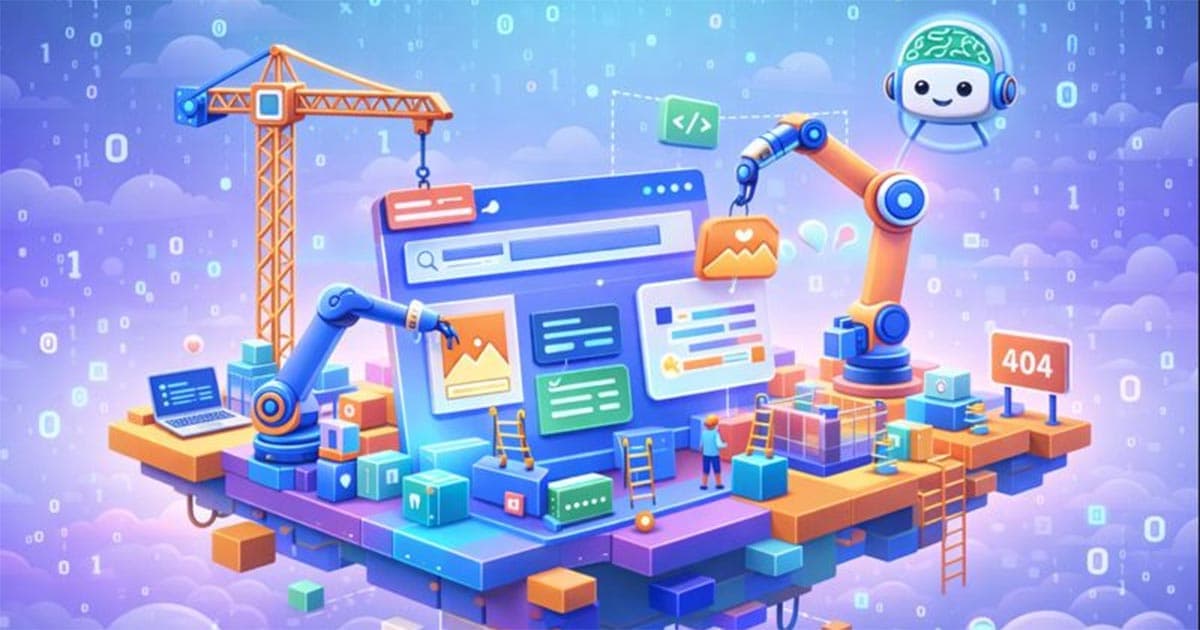
By 2026, performance is no longer something users consciously appreciate. It is something they subconsciously expect—and something search systems increasingly enforce. A website that feels slow, unstable, or inconsistent is not interpreted as unfinished or poorly optimised. It is interpreted as unreliable.
This shift changes where performance sits in the development process. It moves from optimisation to infrastructure.
Performance Is No Longer a Front-End Problem
Historically, performance was treated as a front-end concern. Compress assets, optimise images, reduce scripts, and the problem was considered solved. That approach breaks down as websites become more adaptive and intelligence-driven.
In modern systems, performance is shaped by architectural decisions: where rendering happens, how data flows, how much logic runs on the client, and how predictable the system remains under variable conditions. Once these decisions are made, no amount of surface-level optimisation can fully compensate.
This is why many sites “pass” performance tests yet feel slow in practice. The issue is not speed in isolation, but consistency under real-world conditions.
Core Web Vitals as Signals, Not Targets
Core Web Vitals are often misunderstood as thresholds to hit and forget. In reality, they act as signals that reflect deeper qualities of a system: stability, responsiveness, and predictability.
As search engines rely more heavily on behavioural interpretation, these signals become filters rather than differentiators. Sites that consistently fail to meet expectations are not aggressively penalised; they are quietly deprioritised.
Performance Expectations: Past vs 2026
Earlier Perspective | 2026 Reality |
Performance tuned after launch | Performance designed from the start |
Metrics measured in isolation | Metrics reflect system reliability |
Desktop-centric assumptions | Network- and device-aware delivery |
Speed as a competitive edge | Speed and stability as baseline |
This explains why performance improvements often stop producing visible ranking gains. By 2026, performance is assumed. Its absence is what stands out.
Why Performance Gates Everything Else
Adaptive UX, AI-driven behaviour, and rich interfaces all depend on predictable performance. Without it, systems become fragile. Latency introduces hesitation. Instability erodes trust. Over time, both users and search systems adjust expectations downward.
The most effective websites treat performance as invisible infrastructure. When it works, it disappears. When it fails, nothing else matters. By 2026, performance is not about being faster than competitors. It is about being consistently reliable enough to remain visible at all.
Read More: Top 50 Creative Website Design Ideas
SEO After Google: How AI Is Changing Search Visibility

SEO in 2026 no longer revolves around ranking pages alone. Search engines increasingly operate as interpretation layers that summarise, compare, and contextualise information before users ever reach a website. Visibility now depends less on position and more on how clearly a website communicates meaning.
Traditional SEO focused on pages as isolated units. AI-driven search shifts the focus toward concepts, entities, and relationships. When the structure is unclear, even high-quality content becomes harder to reuse and trust.
Modern SEO is no longer about optimisation tactics—it is about interpretability.
In practical terms, AI-driven search systems reward websites that:
define their core concepts clearly
maintain consistent structure across content
make relationships between topics explicit
Zero-click visibility is often misunderstood as a lost opportunity. In reality, it functions as a sign of trust. Even if there isn't any direct traffic, a website becomes an authority when people keep using it to get summaries and answers. High-intent users still click, but only when they can see that the site is clear and trustworthy. This is why SEO should be thought of as part of system design in 2026, not as something to do after publishing.
Trust and visibility signals that don't require a click
People often think that zero-click results are bad, but they can also show that you can trust them. When search engines use a website's content to give direct answers, it gives the site authority even if no one visits it.
High-intent searches still lead to clicks, but only on sites that seem trustworthy and clear. By the time a user arrives, expectations are higher. Poor structure or weak performance at this stage is far more damaging than it was in the past. By 2026, effective SEO accepts this trade-off. It prioritises clarity and trust over aggressive click optimisation. Websites that do this remain visible even as search continues to change.
Traditional SEO vs AI-Driven SEO
Traditional SEO | AI-Driven SEO |
Pages as ranking units | Concepts and entities as units |
Keywords signal relevance | Context signals relevance |
Optimisation at the page level | Optimisation at the structural level |
Clicks as primary outcome | Visibility across answers and summaries |
This is why SEO increasingly overlaps with architecture and content modelling. The clearer the structure, the easier it is for search systems to trust the information.
The Web Beyond Screens: Voice, AI, and New Interfaces
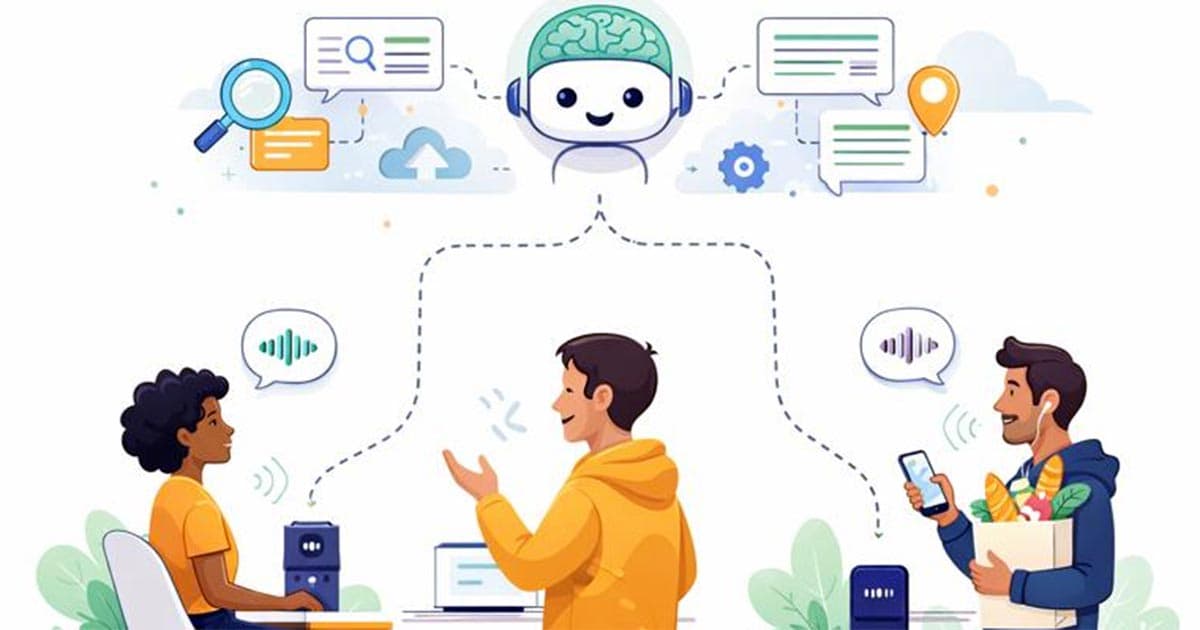
Screens are no longer the only way to get to the web. Voice assistants, conversational interfaces, and AI agents are becoming more and more important in how people find and act on information. Websites are changing from places to go to places to get organised information.
Users browse and compare things on a screen. In conversational and agent-driven environments, intent is expressed directly, and responses are expected immediately. This changes what makes a website effective. In these environments, content is rarely consumed as full pages. Instead, it is:
extracted in fragments
summarised dynamically
recombined across contexts
This means that clarity is more important than how it looks.
Websites that use a lot of pictures or long stories to tell their stories have trouble when people read them in a different way than they were meant to be read. On the other hand, sites that clearly define concepts and separate core ideas from supporting details are easier to adapt.
As AI agents do more and more for users, websites are judged less on how persuasive they are and more on how reliable they are. Being able to convey meaning without a screen is a competitive edge.
Web Development Trends 2026 in Australia

The forces reshaping web development in 2026 are global, but Australia amplifies certain risks and expectations that are easier to overlook elsewhere. High digital maturity, strong competition, and uneven real-world conditions combine to make structural weaknesses surface faster.
One defining factor is variability. Outside of big cities, network performance is less stable. Websites that depend a lot on client-side logic or big JavaScript payloads often don't fail completely, but they do get worse over time. Pages load, but interactions are slow. Content shows up, but it doesn't feel stable. This inconsistency will become a trust issue, not just a technical one, by 2026.
Performance and Reliability as Trust Signals
Australian users are accustomed to high-quality digital services. When a website feels unreliable—even briefly—confidence drops quickly. This makes performance consistency more important than peak optimisation. Systems designed to tolerate variability tend to outperform those tuned only for ideal conditions.
Global Design Assumption | Australian Reality |
Uniform high-speed access | Variable real-world conditions |
Metro-centric optimisation | Regional usage is still significant |
Performance as a metric | Performance as perceived reliability |
Websites that internalise this reality tend to age better locally and globally.
Accessibility and Structural Clarity
Accessibility standards play a stronger role in the Australian market, particularly across the public sector, education, and enterprise platforms. By 2026, accessibility is no longer treated as a separate requirement. It is embedded into structure, navigation, and content clarity.
This aligns closely with modern SEO. Both assistive technologies and AI-driven search systems work better when there is a clear hierarchy, predictable interaction, and well-defined content boundaries. Sites that see accessibility as part of the design process rather than just a requirement tend to work better.
Competitive Pressure and AI Adoption
Australia’s rapid adoption of AI across industries increases expectations quickly. Users encounter intelligent systems elsewhere and bring those expectations with them. Websites that fail to adapt feel outdated faster, even if they follow global best practices.
Addressing these market-specific realities does not narrow relevance. It strengthens it. Sites built to withstand Australian conditions tend to perform well anywhere.
What Web Development Will Really Look Like in 2026
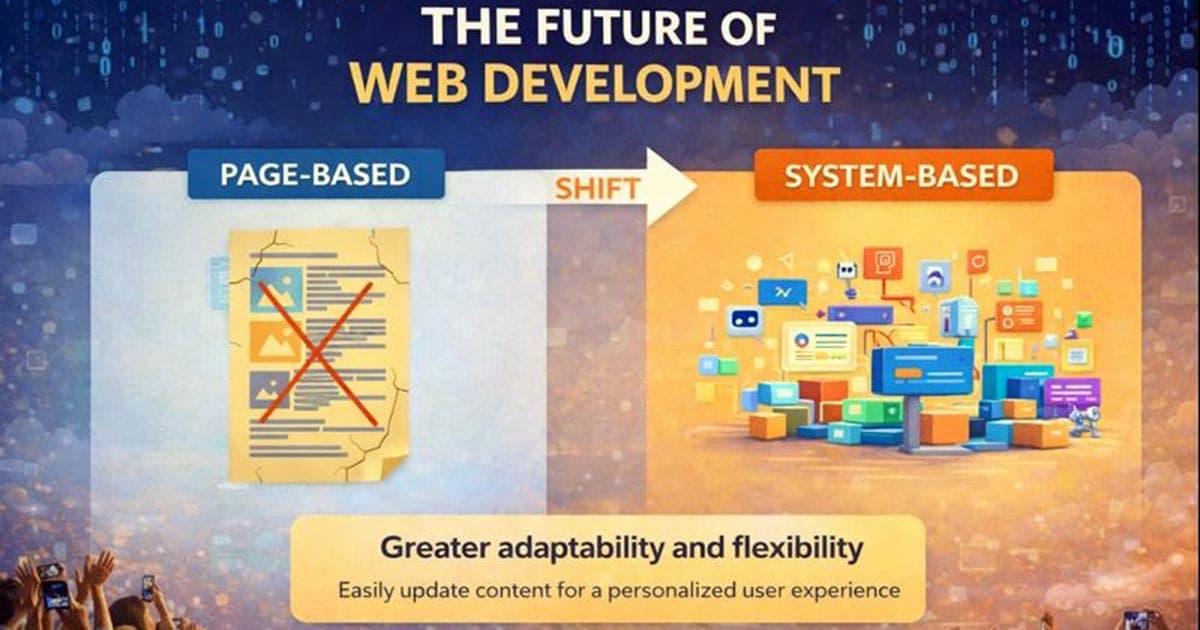
Web development in 2026 is not defined by individual trends, tools, or frameworks. It is defined by a shift in how websites are conceived. Pages give way to systems. Fixed experiences give way to adaptive behaviour. Optimisation gives way to structural design.
Across AI-first thinking, adaptive UX, performance as infrastructure, AI-driven search, and interaction beyond screens, the same principle appears repeatedly: clarity scales, rigidity does not. Websites that communicate meaning clearly, perform predictably, and adapt without constant rebuilding remain visible as the web continues to change.
This shift does not require chasing novelty. It requires discipline—clear structure, intentional architecture, and respect for real-world constraints. For markets like Australia, where expectations are high and tolerance for friction is low, these qualities become decisive.
By 2026, the most successful websites will not be the most complex. They will be the most legible, reliable, and adaptable.
These trends matter most when applied to real websites. At Flamincode, web development is approached with a focus on structure, performance, and long-term adaptability.
Frequently Asked Questions About Web Development Trends 2026
Is AI going to replace web developers by 2026?
No. AI is changing how web development is done, not removing the need for developers. By 2026, the role shifts away from repetitive implementation and towards system design, architecture, performance decisions, and integration. Developers who understand structure, behaviour, and search-aware design become more valuable, not less.
Are static websites still viable in 2026?
Static websites are not obsolete, but their use cases are narrower. For simple informational needs, they may still work. However, for competitive search visibility, adaptive UX, and AI-driven discovery, purely static experiences struggle to keep up. Most successful sites in 2026 combine static efficiency with dynamic, context-aware behaviour.
How important is performance for SEO in 2026?
Performance is no longer an optimisation advantage; it is a baseline requirement. Search engines increasingly treat poor performance as a trust issue rather than a technical flaw. Websites that load inconsistently or feel unstable tend to lose visibility over time, regardless of content quality.
Does zero-click search mean SEO is becoming less valuable?
No. Zero-click search changes how visibility works, not whether it matters. Appearing in AI-generated answers, summaries, and comparisons builds authority even without a direct visit. High-intent queries still generate clicks, but only for sites that are clear, fast, and trustworthy.
What skills will matter most for web developers in 2026?
The most useful skills are based on how systems work, not on how to use tools. It's more important to know about performance architecture, content structure, accessibility, and how search engines understand meaning than to know everything about one framework.
Do these trends in web development matter to businesses in Australia?
Yes. They matter more in Australia in a lot of cases because network conditions change, users have high expectations, and there is more focus on accessibility and compliance. Websites that don't pay attention to these things often don't do well in their own area, even if they follow best practices around the world.

Admin
Mostafa is a Wordsmith, storyteller, and language artisan weaving narratives and painting vivid imagery across digital landscapes with a spirited pen, he embraces the art of crafting compelling content as a copywriter, and content manager.
Comments

Interesting insights! Adapting to AI and performance changes really seems crucial for web development moving forward.

Based in
Melbourne, Australia
Your software dev partner, smooth process, exceptional results
Contacts
contact@flamincode.com.au
© All rights reserved to Flamincode