What Happens When a Domain Name Expires?

M Chetmars
Author
It usually starts quietly. Nothing dramatic, no warning signs you can’t ignore. One day, your website loads just a little slower. The next day, an email doesn’t go through. And then suddenly, your domain — the name your customers know, trust, and type without thinking — is no longer fully under your control.
Domain expiration is one of those issues most businesses assume will never happen to them. Until it does.
Short Answer:
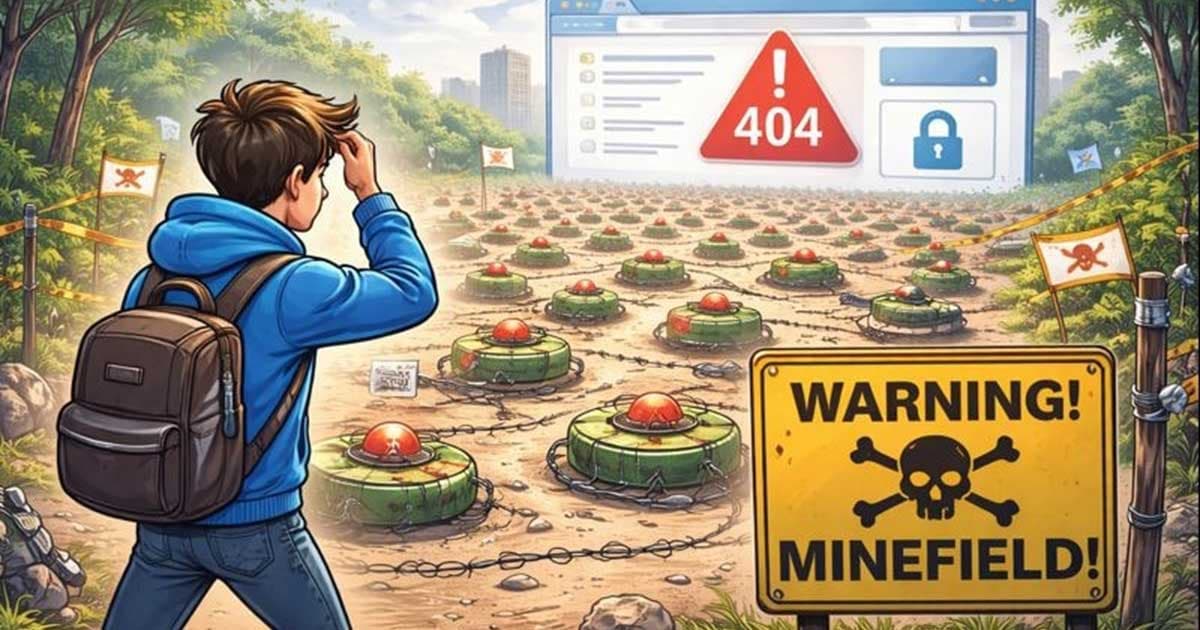
An expired domain doesn't just vanish into thin air; instead, it enters a rigid, multi-stage lifecycle dictated by registrars and global registries. The consequences, however, are immediate. Your digital presence—including your website and professional email—hit a sudden standstill, while recovery costs begin to escalate due to registry-level penalties. If this window is ignored, the domain is eventually stripped from your control and thrown back into the public pool, where it becomes fair game for anyone to claim.
Domain Expiration Timeline
Stage | What Happens | Renewal Possible | Typical Duration |
Expiration Date | Registration period ends | Yes | 0 days |
Grace Period | Registrar temporarily holds the domain | Yes (standard fee) | 0–45 days |
Redemption Period | Domain removed from DNS | Yes (extra fee) | ~30 days |
Pending Delete | Domain scheduled for deletion | No | ~5 days |
Drop / Release | Domain becomes publicly available | No | Immediate |
What Actually Happens After a Domain Expires
Once the expiration date passes, control over the domain begins to shift. Although you may still appear to “own” it in your account dashboard, the domain is no longer protected in the same way. Registrars and registries follow strict technical and legal procedures that determine what happens next, regardless of how important the domain is to your business.
The Expiration Date

The expiration date marks the end of the paid registration period. From a legal standpoint, your exclusive rights to use the domain name end here.
In practice, several things can happen almost immediately. Some registrars suspend DNS resolution, causing websites and email services to stop working. Some registrars keep the domain technically active for a brief window, but don’t let that fool you—it’s a dangerous trap. This 'temporary visibility' often misleads business owners into thinking they have more time than they actually do.
It creates a false sense of security that lures you into delaying the fix, even as the domain quietly slips deeper into the expiration cycle, where recovery becomes harder and more expensive. While you're waiting, the clock is already ticking for search engines. Google’s algorithms are quick to flag this kind of instability; the moment those crawl errors start piling up, your site is marked as unreliable, and your hard-earned indexing begins to crumble. Google’s algorithms are quick to flag this instability; as soon as the crawl errors start mounting, your site is marked as unreliable, and your hard-earned indexing begins to crumble. If your website becomes intermittently unavailable, crawling and indexing can be affected.
The Grace Period
After expiration, most domains enter a grace period. This is basically a safety net to keep registrants from making mistakes. The registrar still holds the domain for the previous owner during this time.
Usually, renewing during the grace period is easy. Usually, the cost is the same as a regular renewal, and services can be restored once the payment is processed. But the longer the domain stays expired, the greater the risk there is for the business. Emails might bounce, websites might show placeholder pages, and customers can lose trust very quickly.
Not all registrars have the same length of grace period. Some only give you a few days, while others give you a few weeks. This difference is one reason why businesses often don't see domain expiration coming.
Read More: 5 Myths About What a Website Can Do for You
The Redemption Period
If the grace period passes without renewal, the domain enters the redemption period. This is where recovery becomes difficult and expensive.
Technically, the domain is removed from the DNS zone. The website and all related services stop completely. From the outside, it appears as if the domain no longer exists.
You can still renew during redemption, but it usually costs a lot more. This fee is for the work that needs to be done by hand to restore the domain at the registry level. This cost can come as a surprise and be painful for businesses that manage more than one domain or work with small margins.
During this time, SEO damage often gets worse. If your site is down for a long time, it could lose its rankings, get de-indexed, and have broken backlinks that may never fully recover.
Pending Delete
After redemption, the domain enters the pending delete phase. This stage is final. No renewal, restoration, or recovery is possible. The domain is scheduled for deletion, and the previous owner has no remaining rights. This phase typically lasts only a few days, but by the time it begins, the outcome is already decided.
Domain Release and Drop
Once deleted, the domain is released back into the public pool. At this moment, anyone can register it. This is when domain investors, competitors, and automated bots often act. Valuable domains are frequently re-registered within seconds. For businesses, losing a domain at this stage can mean permanent loss of brand identity, traffic, and credibility.
Why Domain Expiration Is More Than a Technical Issue
Many people treat domain management as a minor administrative task. In reality, it is tightly connected to branding, security, and revenue.
From an SEO perspective, the damage is often brutal. An expired domain instantly kills your link equity. In just a matter of weeks, years of accumulated authority, content value, and hard-earned backlinks can evaporate. The reality is that search engines value consistency; even if you manage to claw the domain back later, your rankings won’t necessarily bounce back to their former positions. You’re often forced to start the uphill climb of rebuilding that trust from scratch.
If a business depends on its website for leads, sales, or customer service, the financial effects can be felt right away.
What Happens to Your Website Traffic During Domain Expiration
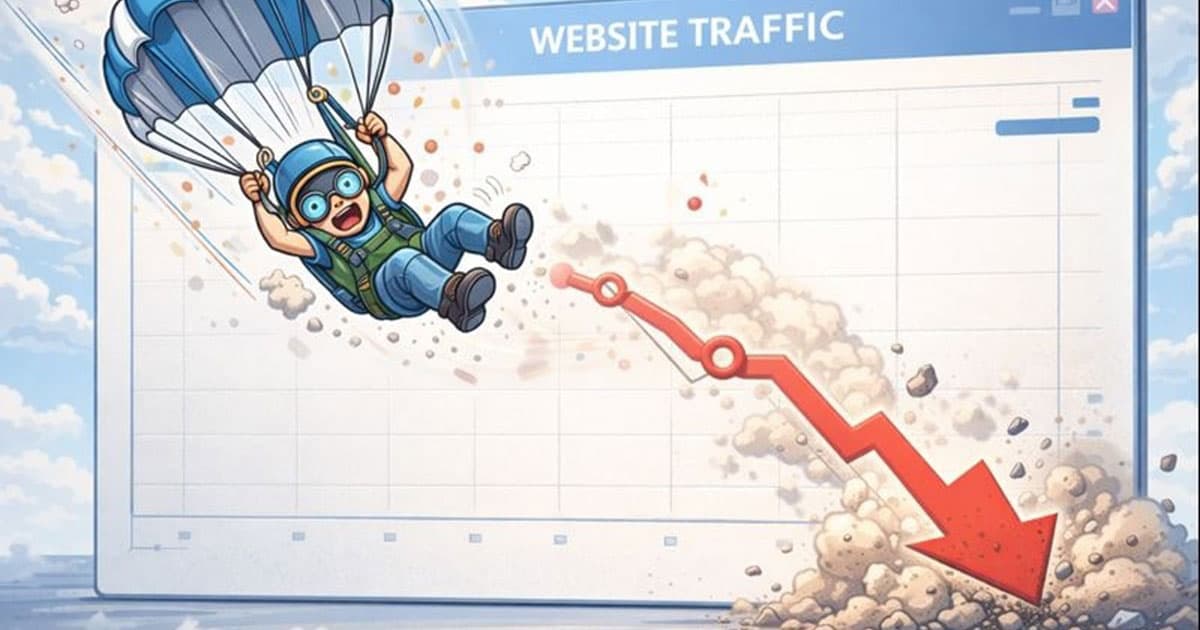
When a domain expires, traffic doesn't just stop and start up again later like nothing happened. People's behaviour changes right away, and it's often hard to change back. People who try to visit your site and get an error page, a parked domain, or a blank screen don't usually try again. Most people think the business is no longer open or trustworthy and move on.
Search engines also respond quickly. If a crawler keeps running into downtime, it may crawl less often, think the site is unstable, or temporarily remove pages from the index. Even short outages can stop a site's ranking momentum, and longer ones usually cause a noticeable drop in traffic. What makes this even worse is that losing traffic doesn't usually mean recovering. When the site goes back online, users don't automatically come back, and rankings don't go back up right away.
Traffic from referrals is also affected. Links from other websites, directories, or old campaigns still take people to a place that doesn't work anymore. Over time, this weakens the overall authority of the domain and makes those links less valuable. Domain expiration doesn't just stop traffic; it also teaches users and search engines to forget about you.
How Domain Expiration Affects Brand Trust and Perception
A domain name is more than a technical identifier. It means something to users that it is real. If you can't access a familiar domain, your first thought isn't "technical issue," but "something is wrong with this business."
For brands that deal with customers, this can feel like being left behind. The damage can be worse for businesses that sell to other businesses. Potential clients might think that downtime means that a business is unstable, poorly run, or even in financial trouble.
In industries where reliability is the baseline, lacking a functional website isn't just a glitch—it’s a disqualifying factor. Once that professional image is cracked, patching the technical issue won't automatically fix the reputational damage. Customers who hit a dead link or an error page don't usually give you a second chance; they simply move on. This "silent churn" is a nightmare for growth because it never shows up in your primary analytics, yet it directly eats away at your conversion rates, enquiry volume, and long-term brand equity.
The Hidden Security Fallout
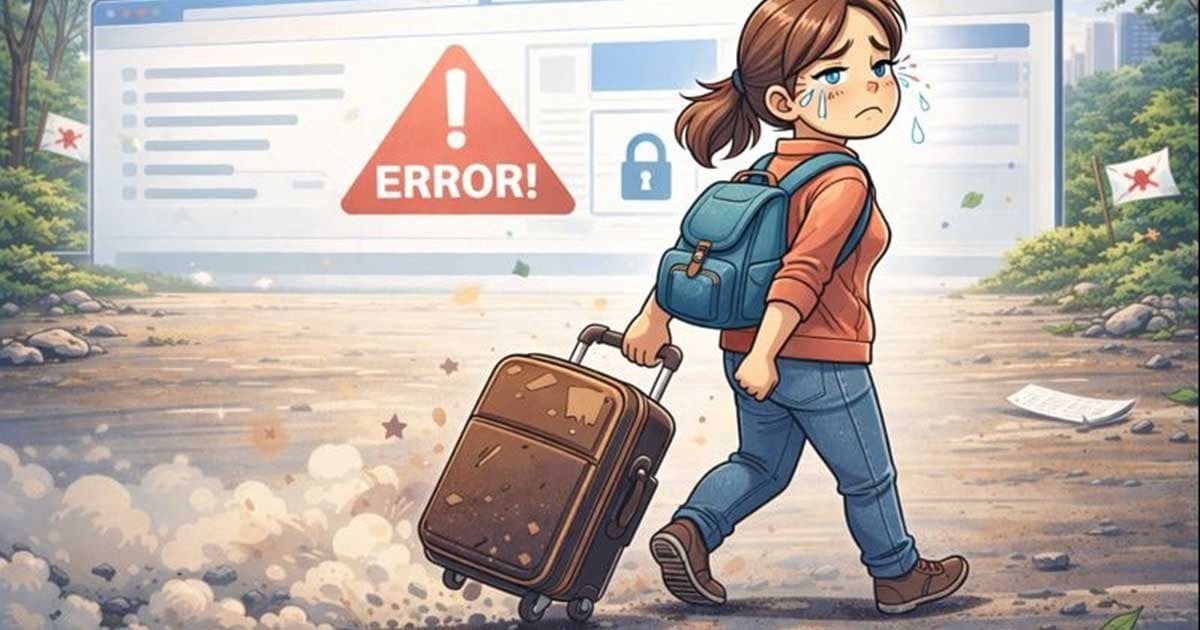
Most people assume security risks only begin once a domain is re-registered by a stranger. In reality, the danger starts the moment the domain sits in limbo. When your records are left unattended, your entire email infrastructure becomes a playground for spoofing. Attackers can exploit this gap to impersonate your brand, firing off perfectly timed, legitimate-looking emails to your partners or clients who have no reason to suspect anything is wrong.
The stakes multiply once the domain actually changes hands. A new owner doesn't just get a URL; they get your "digital legacy"—your old backlinks, cached content, and the trust you’ve spent years building. They can weaponize this authority to host phishing pages or malicious redirects that look entirely authentic to your loyal audience. These risks are particularly toxic because they target the very people who trust you most, causing damage to your reputation that a simple "we're back online" email can't fix. Customers who click on old links or reply to familiar email addresses may not know that the domain has changed hands. This can hurt the company's reputation in ways that go beyond just losing a URL.
Read More: How to secure your website from hackers
What Happens If a Competitor Registers Your Expired Domain
Not all expired domains are bought by random investors; sometimes, competitors buy them. This goes beyond a simple administrative headache. If a competitor snatches up your expired domain, they aren't just buying a URL; they are inheriting your hard-earned traffic, branded search authority, and years of backlink equity. Essentially, your past marketing budget starts paying for their growth. In some cases, it gets even more aggressive—competitors can use your own name to critique or compare your services unfavourably. Even without direct malice, the confusion is toxic for your brand. Clients often assume there’s been a merger or that you’ve been bought out, creating a reputational mess that is incredibly difficult to untangle once the domain is in someone else's hands.
Domain Ownership, Not Just Registration
A lot of problems with domains come from a simple mistake: registering a domain does not mean clearly defining ownership and responsibility.
In the beginning, developers, agencies, or other people often register domains for businesses. Over time, people forget their access codes, change their email addresses, and lose important documents. When renewal notices are sent, they go to inboxes no one monitors anymore.
True domain ownership requires clarity. Who controls the registrar account? Who receives renewal alerts? Who has the authority to make changes? Without clear answers, even well-established companies can lose critical digital assets simply because no one realized they were at risk.
Treating domain ownership as a formal, documented responsibility rather than an afterthought is one of the most effective ways to prevent expiration-related disasters.
Common Reasons Domains Expire
Domain expiration rarely happens because someone deliberately ignores it. More often, it’s the result of small, overlooked issues.
You can turn on auto-renewal, but the payment method has run out.
Renewal notices may be sent to an old email address that no one checks anymore.
The person in charge of managing the domain may have quit the company, taking with them the knowledge of how to access the account.
Sometimes, outside companies or freelancers register domains for big companies, which makes it hard to know who owns what and who is responsible for what. No one knows they need to do something until it's too late, when it's time to renew.
Can You Get an Expired Domain Back?
The answer depends entirely on timing. If the domain is still in the grace period, recovery is usually simple. During redemption, recovery is possible but costly. Once the domain reaches pending delete or is released, recovery is no longer guaranteed — and often impossible.
Even if the domain has not yet been re-registered, competing buyers may be monitoring it. The moment it becomes available, automated systems can claim it faster than any manual process.
Read More: Best Website to Book Hotels in Australia
How Businesses Can Prevent Domain Expiration

It's much easier to stop something than to fix it.
Longer registration periods lower risk by making renewals less common.
Centralised domain management makes sure that everyone can see and be held responsible.
Correct contact information makes sure that renewal notices get to the right people.
Most importantly, domains should be seen as important assets, not just background information. Clear ownership, documented access, and regular reviews can stop almost all problems that come up when things expire.
A Note From Flamicode
We are Flamicode, and we provide services including Web Development, App Development, Business Intelligence, Data Administration, and Software Consultancy. We hope you found this article helpful and informative.
Frequently Asked Questions
Does a domain stop working immediately after expiration?
Not always. Some registrars allow temporary functionality, but this should never be relied on.
How long does the full expiration process take?
It typically takes between 30 and 75 days from expiration to public release, depending on the domain extension and registrar.
Can a domain expiration affect business email?
Yes. Email delivery often fails early in the process and can cause serious communication issues.
Is SEO damage permanent after domain expiration?
It can be. While some recovery is possible if the domain is restored quickly, prolonged downtime often leads to lasting losses.
Are all domain extensions treated the same way?
No. While the general lifecycle is similar, specific rules and timelines vary by TLD and registry.

Admin
Mostafa is a Wordsmith, storyteller, and language artisan weaving narratives and painting vivid imagery across digital landscapes with a spirited pen, he embraces the art of crafting compelling content as a copywriter, and content manager.
Comments

Wow, didn't realize how messy domain expirations could get. It's like a ticking time bomb for businesses

Based in
Melbourne, Australia
Your software dev partner, smooth process, exceptional results
Contacts
contact@flamincode.com.au
© All rights reserved to Flamincode