What Is Web Development Strategy, and Why Should You Even Care?

M Chetmars
Author
Updated for 2026: This section reflects how web development strategy now extends beyond websites into integrated business systems, including booking, CRM, and customer lifecycle management.
Let’s face it—most websites don’t fail because of bad code. They fail because there was no plan.
What is web development strategy if not the difference between a good-looking site that sits idle… and one that actually does the job? Whether you’re launching a new product, running an online store, or just trying to make your business visible online, strategy is what connects your goals to the tech behind your site.
As a senior dev at Flamincode, I’ve seen it all—slick designs with no SEO structure, blazing-fast builds with no user journey, and businesses that poured five figures into a site that didn’t move the needle.
Strategy, mate, isn’t a buzzword. It’s how you avoid that mess.
Why Most People Skip Strategy (And Regret It Later)
The problem is, that strategy doesn’t feel urgent. Clients want to see colours, logos, and layouts. Devs want to code. No one wants to sit around mapping “goals” and “conversion paths.” But trust me—as someone who’s spent a decade cleaning up post-launch chaos—the time you spend on strategy is what saves your project when real-world traffic hits.
This post is about unpacking what web development strategy really means, how we use them at Flamincode, and why you should care—whether you're a startup founder, café owner, or corporate team looking to redesign.
We’ll keep it grounded, local, and practical. No fluff. No agency-speak. Just the real steps behind websites that work.
What Is a Web Development Strategy? (And Why It’s More Than Just a Buzzword)
What is web development strategy, really? At its core, it’s the thinking that happens before the building. It’s the blueprint that guides what we design, how we build, and—most importantly—why we do it that way.
It’s not just about code or design. It’s about building a site that’s aligned with your business goals, audience needs, and the ever-changing landscape of the web.
At Flamincode, we often say:
“If your website doesn’t have a strategy, it’s just digital wallpaper.”
Sure, it might look good. But if it doesn’t guide users toward action, support your marketing, or grow with your business—it’s not doing its job.
Strategy vs. Just “Making a Website”
A lot of dev projects start like this:
“We need a new website. Can you make it look modern and mobile-friendly?”
That’s a fair ask—but it’s not a strategy. It’s a surface-level goal.
A web development strategy goes deeper. It asks:
Who is this site really for?
What do we want people to do once they get here?
How will they find us?
What happens after they click?
Without answering those questions first, you’re building blind.
The Three Layers of a Web Development Strategy
Let’s break it down.
The Business Layer
What are you trying to achieve? More sales? Bookings? Brand awareness? This is your "why."The User Layer
Who are your users, what do they care about, and how can we design their journey?The Technical Layer
Which tools, platforms, and processes make sense for your goals and your budget?
A proper strategy connects all three—so your website becomes more than a brochure. It becomes a business tool.
The 5 Pillars of a Strong Web Development Strategy
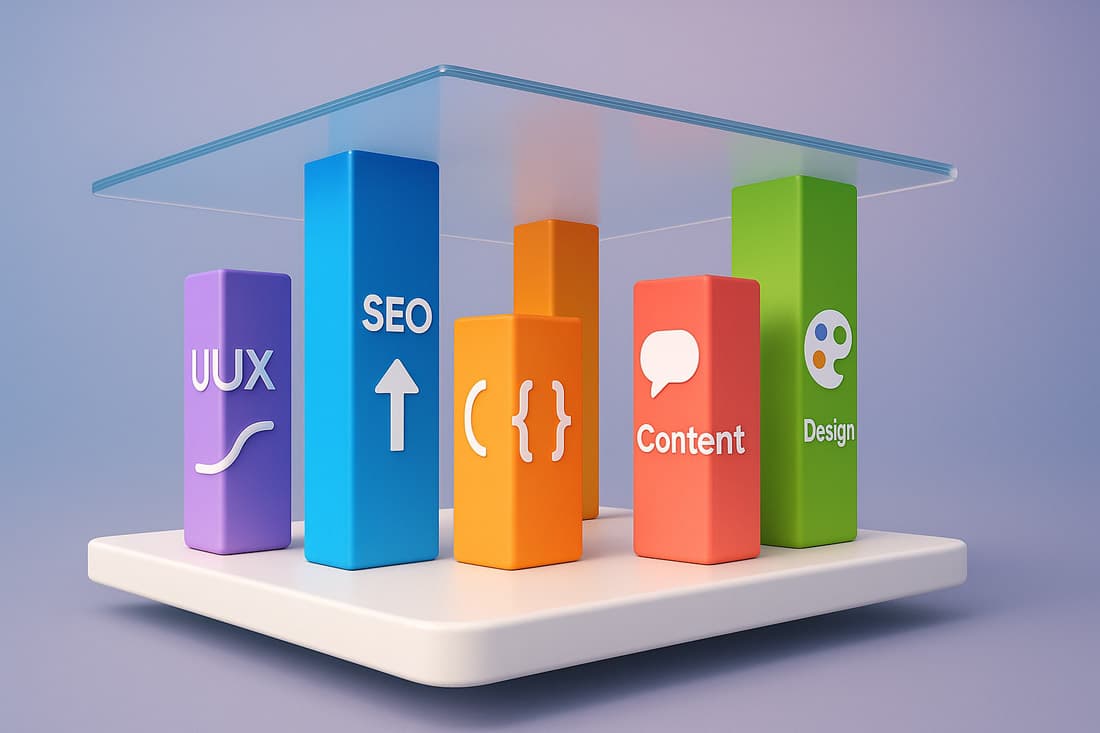
You’ve probably heard devs throw around words like “UX,” “stack,” or “SEO” like lollies at a kids’ party. But these aren't just fancy acronyms when it comes to strategy. They're the main things we use to make websites that work.
We treat every project at Flamincode like it's a custom build. Not every client needs the most flashy stack or the most complicated animations, but every client does need a plan based on these five pillars:
1. User Experience (UX) Strategy
This is where we show how people move around on your site. Where do they end up? What do they read first? How easy is it to find important information or do something?
Less friction, more trust, and better results come from good UX.
We use heatmap data, wireframes, and user flows to make something that works well, not just looks good.
2. Technical Strategy: Stack, Hosting, and Speed
This is where we show how people move around on your site. Where do they end up? What do they read first? How easy is it to find important information or do something?
Less friction, more trust, and better results come from good UX.
We use heatmap data, wireframes, and user flows to make something that works well, not just looks good.
3. SEO and Content Strategy
You could have the slickest site in Melbourne, but if no one finds it—what’s the point?
A smart content structure, keyword strategy, fast loading, mobile responsiveness, and proper semantic markup (H1s, meta tags, schema)—these all help your site get found and understood by both Google and real humans.
And we always make sure strategy starts before the content—not after.
4. Scalability & Maintenance
A good site isn’t just for now. Can it grow with your business? Can your team update it without calling us every week?
We plan for content growth, plugin updates, feature expansion, and CMS training from day one. Future you will thank us.
5. Conversion and Business Alignment
This is the bit most devs skip. Your site isn’t an art piece—it’s a tool. It should help sell, book, inform, capture leads, or guide users into your pipeline.
That means strategy needs to align with your goals. If your goal is bookings, we’ll optimise the CTA flow. If it's SEO, we’ll focus on crawlability and content clusters.
At Flamincode, we always ask:
“How does this page help the business move forward?”
Why We Use Strategy at Flamincode (And Why You’ll Be Glad We Did)

We’ve been in this game long enough to know that not every client comes to us asking for a strategy—but the best outcomes always start with one.
At Flamincode, strategy isn’t some overpriced add-on. It’s the foundation. It’s how we go from “build us a site” to “build us something that gets results.”
The Reality: Most Clients Don’t Know What They Really Need
We once had a client—a local furniture maker—come to us with a request for a “fancy homepage” and “more modern branding.” They already had a Wix site and thought they just needed a facelift.
But after a strategy session, we uncovered the real pain points:
Customers couldn’t find product specs
The mobile checkout flow was broken
No one was signing up for the newsletter
And their Google rankings had tanked
Turns out, they didn’t need “more modern branding”—they needed a new content hierarchy, SEO overhaul, and streamlined user journey.
We restructured the site, rebuilt the navigation, mapped content by product category, and tracked conversions from day one. Three months post-launch? 2x more newsletter signups, a 40% increase in mobile purchases, and organic traffic trending steadily upward.
That’s not just good design. That’s what strategy done right looks like.
Strategy Helps Us Say No (So We Can Say Yes to the Right Stuff)
Without a strategy, clients often ask for random features they’ve seen elsewhere—like sliders, pop-ups, chatbots, or overly complex animations.
But with a clear strategy in hand, we can confidently say:
“That might look cool, but it doesn’t serve your goal. Here’s what will.”
And clients love that. Because deep down, they don’t just want something flashy—they want something smart.
Strategy Changes How We Quote, Build, and Deliver
A project with a defined strategy is easier to scope, faster to build, and less prone to surprises. Everyone knows what we’re aiming for—from the copywriter to the front-end dev.
It’s not about slowing things down—it’s about doing it right the first time.
How to Build a Web Development Strategy That Actually Works
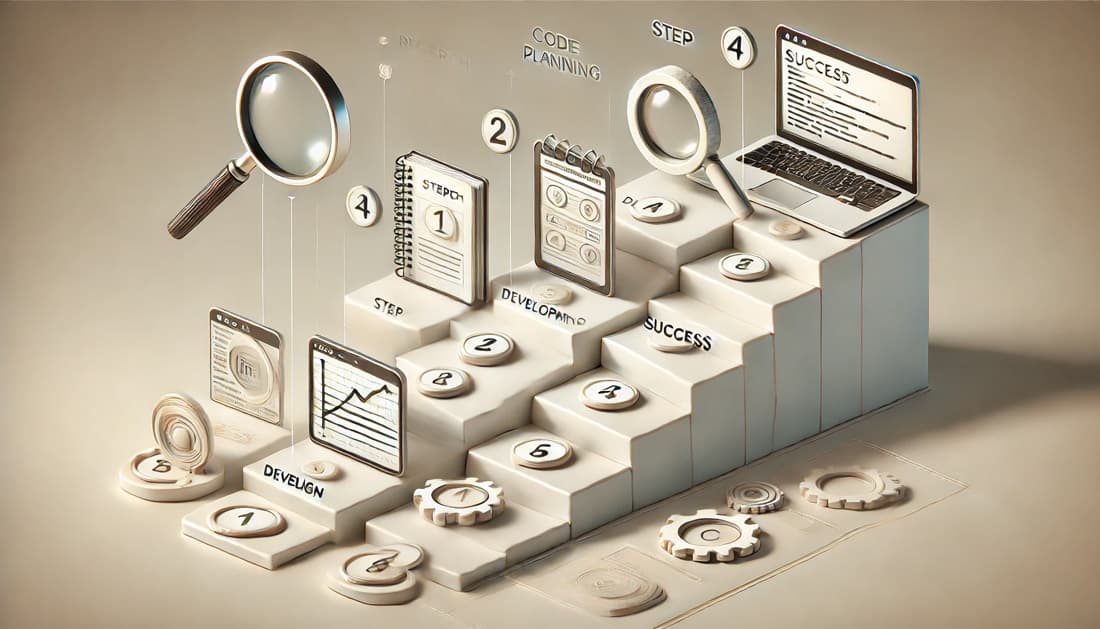
A lot of people think “strategy” means filling out a brief and choosing some colours. But real web development strategy is a process—a mix of research, planning, and technical thinking, done before the first line of code is written.
Here’s how we do it at Flamincode (and how you can, too):
1. Discovery Sessions That Go Deeper
Before anything else, we sit down (virtually or in person) and ask the real questions:
What are your business goals over the next 6–12 months?
Who are your users, and what do they need from your site?
What’s working—and what’s broken—on your current site?
This helps us see beyond features and dive into purpose.
2. Competitive and Audience Research
We dig into:
Your competitors: What are they doing well? What gaps can we fill?
Your audience: What platforms do they use? What frustrates them?
Industry trends: What’s becoming standard in your niche?
This isn’t copying—it’s planning to outperform.
3. Sitemap and Wireframes
Before we design a pixel or write a headline, we plan:
What pages your site needs
How those pages link together
What content goes where
Where users click, scroll, and convert
Wireframes let us test ideas before investing in design.
4. Technical Audit and Stack Selection
Are we starting from scratch or rebuilding? Do we need custom code, or can we optimise an existing CMS? What’s the best stack for performance, budget, and future plans?
We also check site speed, accessibility, and mobile responsiveness before launch—not after.
5. Built-In Testing and Iteration
Strategy isn’t a one-time doc you file away. It evolves.
We plan user testing, A/B tests, performance tracking, and feedback loops right into the build process—so your site gets smarter over time.
At Flamincode, we treat strategy like architecture. You wouldn’t build a house without a plan—why build a website without one?
Strategy in Action: A Real-World Flamincode Case Study

Let me tell you about a project that nearly slipped through the cracks—until we put strategy first.
A boutique physiotherapy clinic in regional Victoria came to us wanting a “simple brochure website.” Their old site was outdated, not mobile-friendly, and had zero SEO juice. They’d lost bookings to flashier competitors with smoother UX.
At first glance, it looked like a straight-up redesign job. But after our discovery call, something became clear:
What they needed wasn’t just a prettier website—it was a strategic rebuild with booking flow, trust signals, and local SEO at its core.
Our Strategy Breakdown
Here’s what our strategy looked like, from discovery to delivery:
Stage | What We Did | Why It Mattered |
Discovery Session | Mapped goals: increase online bookings, reduce phone calls | Clarified the real problem (manual workload + no visibility) |
User Research | Interviewed 5 local patients; reviewed competitors | Revealed users wanted mobile booking + insurance info |
Content Restructure | Rewrote service pages with local keywords & FAQs | Boosted SEO & answered client questions upfront |
UX Strategy | Added clear CTAs, real patient testimonials, and a booking wizard | Built trust and simplified booking in 3 steps |
Tech Stack Decisions | Chose lightweight CMS + integrated Google Calendar | The site was fast, easy to update, and synced appointments |
Testing & Iteration | Launched soft beta, tracked booking funnel, tweaked UX | Increased completions by 28% over 6 weeks post-launch |
The Results? Strategy Paid Off.
Mobile bookings up 2.5× in the first month
Organic search traffic grew 60% within 90 days
Admin time saved: ~10 hours/week
“It’s like our website finally works for us,” the clinic director told us
And guess what? The client now refers other businesses to us—because we didn’t just build a website. We built something that solved a business problem.
The Role of AI in Modern Web Development Strategy
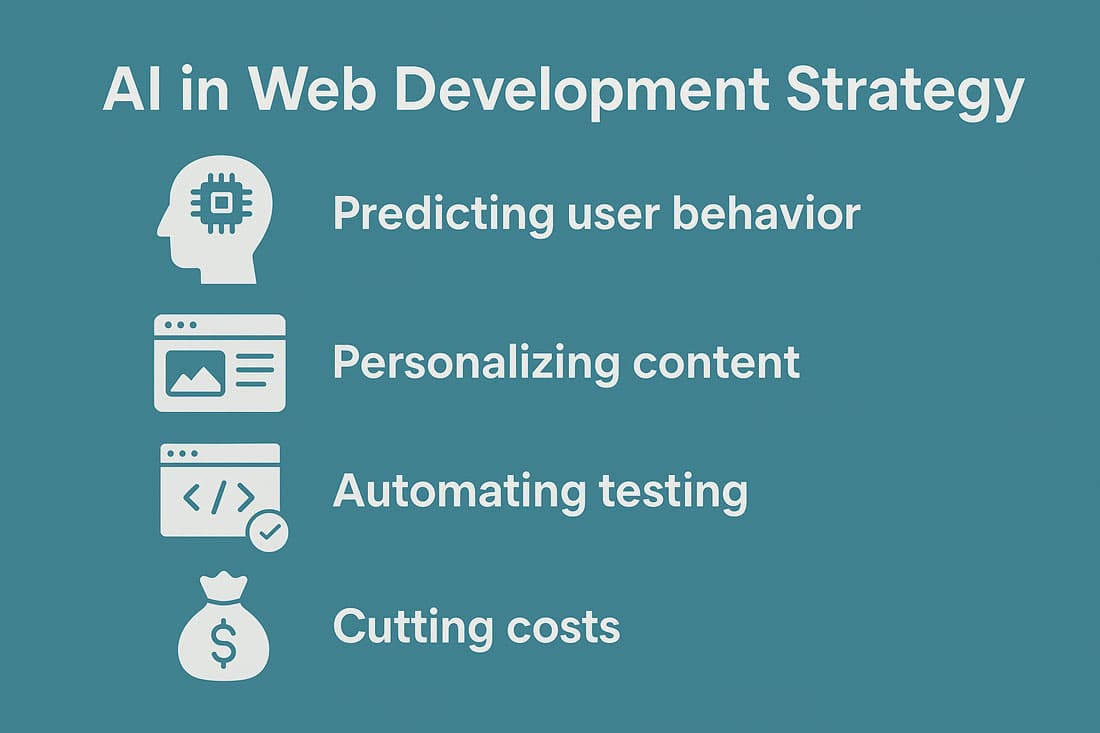
AI’s no longer just a sci-fi buzzword—it’s shaking up web development strategies across Australia. Forget slogging through manual research and endless testing; AI tools are making things quicker and smarter, helping businesses nail their digital game plan.
AI’s biggest win is predicting user behaviour. By crunching big datasets it shows how folks interact with your site. Heatmap tools powered by machine learning pinpoint what grabs attention and what gets ignored, letting devs tweak layouts, boost call-to-action buttons, and streamline navigation. A Melbourne eCommerce shop we know lifted conversions by 15% after using AI heatmaps to optimise their homepage.
Content personalisation is another cracker. AI engines suggest products or articles based on what users have browsed, driving sales in real-time. A Richmond retailer saw a 20% sales bump by using AI to tailor product recommendations, proving it’s bang on for engaging customers.
Read more: Top 9 Most Used AI Tools in Australia
AI also speeds up testing and quality checks. Automated accessibility scanners and code reviewers catch errors early, ensuring sites meet compliance standards before launch. This means faster delivery without skimping on quality, a big plus for Melbourne businesses under tight deadlines.
For businesses, AI’s not just about usability—it’s about saving cash and scaling up. Small firms can compete with the big dogs using AI analytics instead of pricey research teams. Enterprises can optimise multiple platforms at once, keeping things efficient. No worries, AI’s a fair go for businesses of all sizes to stay competitive in Australia’s digital race.
Aligning Web Development Strategy with Business Goals
A website’s not just a shiny toy—it’s a business tool that needs to line up with your big-picture goals. Without that alignment, you’ll end up with a pretty site that doesn’t deliver the goods. Here’s how to get it right in Melbourne’s cutthroat market.
Start by tying your strategy to KPIs. A Melbourne law firm chasing client leads should focus on lead forms, booking systems, and SEO-optimised pages. A government agency, meanwhile, might prioritise accessibility and compliance to keep things transparent. A Collingwood startup we know doubled its leads with a targeted lead capture system.
Cost efficiency’s a must. AI chatbots or knowledge bases can cut support costs by letting users find answers themselves. A Docklands service provider slashed call centre costs by 25% with a chatbot, boosting both user experience and their bottom line.
Plan for long-term scalability. Startups need a foundation that can grow without a full rebuild, while enterprises might need APIs or cloud services to expand into new markets. A Fitzroy retailer scaled globally with a cloud-based platform, avoiding technical debt.
Don’t skimp on brand positioning. Your site should scream your values. A sustainability-focused Melbourne business should use green hosting and eco-friendly messaging to stand out. Have a crack at aligning every design choice and line of code with your goals, and you’ll build a digital asset that drives real success.
In 2026, Web Development Strategy Is Closely Tied to Business Systems, Not Just Websites
In 2026, web development strategy is no longer limited to designing and building a website.
For many Melbourne businesses, the website has become part of a broader system that includes booking flows, CRM processes, lead management, and customer lifecycle tracking.
That means a strong web development strategy is not only about structure, design, or performance.
It is about how your website connects with the rest of your business operations.
For example, a service business without integrated booking, follow-up automation, or lead handling systems often loses customers after the first visit.
The website might attract attention, but it fails to convert or retain.
A modern strategy looks at the full journey.
From first search to final action, every step needs to be connected and intentional.
This includes:
how users discover your business
how they understand your services
how they take action
how you manage and follow up on that action
For businesses in competitive markets like Melbourne, this shift is critical.
A website without system-level thinking becomes a passive asset.
A website connected to business systems becomes a growth engine.
Final Thoughts: Why Web Development Strategies Aren’t Just Nice-to-Have — They’re Essential
Here’s the truth: building a website without a solid strategy is like setting sail without a map. You might enjoy the breeze for a bit, but sooner or later, you’ll hit rough waters.
At Flamincode, we’ve seen time and again that the smartest websites start with the smartest plans. They save money, avoid headaches, and actually grow businesses.
If you’re thinking about a new site or a redesign, don’t rush in blind. Ask your developer or agency:
What’s the strategy behind this?
How will it help my business goals?
How do you plan to measure success?
Read here: The Ultimate Guide to Choosing a Web Development Agency in Melbourne
Because a site that looks good but doesn’t deliver is just digital noise.
Strategy isn’t expensive—it’s an investment in peace of mind, clarity, and results. And if you want a website that works as hard as you do, that’s where you start.
FAQs About Web Development Strategy

1. Do I really need a strategy for a small site?
Absolutely. Even simple sites benefit from knowing what they’re trying to achieve and how users will interact with them.
2. What’s the difference between web design and web development strategy?
Design is about look and feel. Strategy is about why and how the site works to meet business goals.
3. How long does it take to build a proper strategy?
It varies, but at Flamincode, discovery and planning usually take 1–3 weeks, depending on project size.
4. Can I update the strategy mid-project?
Yes! Strategy is flexible and should evolve with your business needs.
5. How do I know if my current site lacks strategy?
If your site doesn’t generate leads, ranks poorly on Google, or confuses visitors, it probably needs a better strategy.

Admin
Mostafa is a Wordsmith, storyteller, and language artisan weaving narratives and painting vivid imagery across digital landscapes with a spirited pen, he embraces the art of crafting compelling content as a copywriter, and content manager.
Comments

Really interesting take on strategy. It's wild how many overlook this part before diving into design and coding.

Based in
Melbourne, Australia
Your software dev partner, smooth process, exceptional results
Contacts
contact@flamincode.com.au
© All rights reserved to Flamincode