App Development Ideas for Business 2024

Flamincode's Content creator
Author
So, you’ve got a business idea rattling around in your head, and someone told you, “You need an app for that!” Cue the mental image of a flashy mobile app catapulting your business to stardom. Sounds nice, right? But here’s the thing: building an app isn’t just about being cool and trendy—it’s about solving real problems and adding value. Whether you’re a tech wizard or someone still figuring out what UX stands for, let’s break down app development ideas for business in 2024 and figure out how to make your ideas a reality.
Why Melbourne Businesses Are Choosing App Development Over Web
In 2025, the business scene in Melbourne is changing quickly, and companies no longer see mobile apps as an optional investment. With mobile usage surpassing desktop by a wide margin, apps are becoming the first channel through which customers interact with brands. For Melbourne businesses, this shift has very practical reasons.
First, mobile-first customers in Melbourne expect speed and convenience. A dedicated app gives them faster access to products, services, and customer support compared to even the most optimized websites. This difference leads to more engagement and stronger customer loyalty in industries like retail, hospitality, and health services.
Second, the competition is fierce. From Chapel Street boutiques to fintech startups in Docklands, businesses are using apps to differentiate their brand. A well-designed app can show off special features that keep users coming back, like personalised recommendations, loyalty programmes, or offers based on where they are.
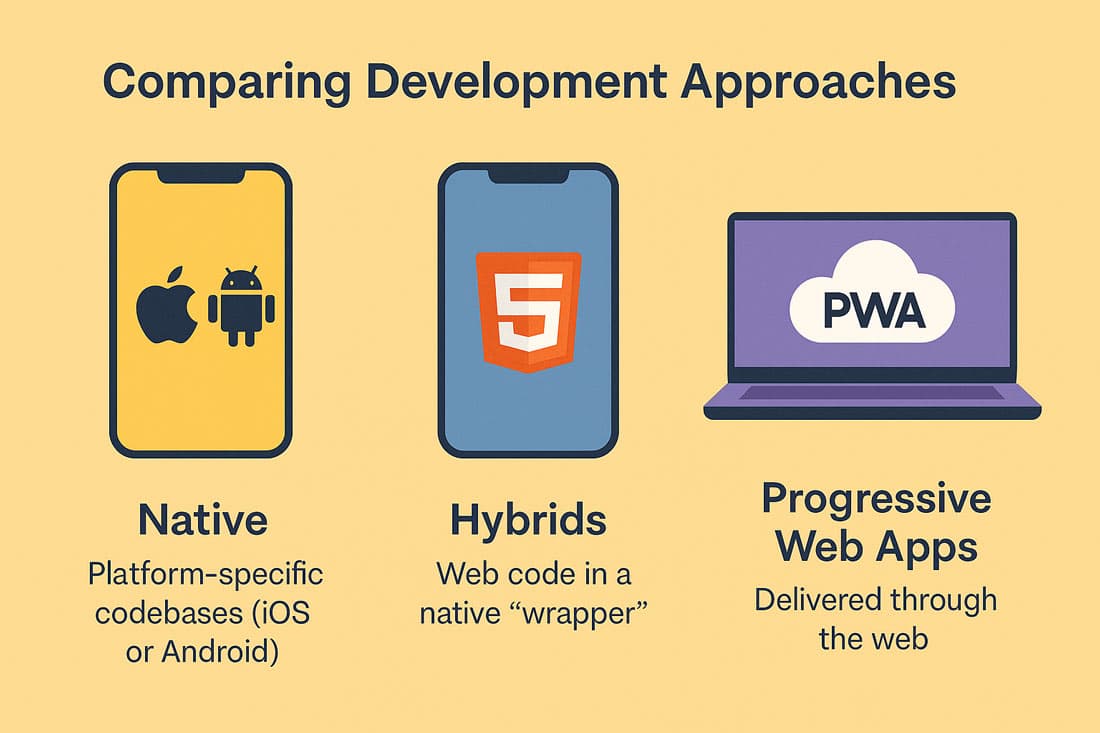
Third, people in Melbourne are open to new technology. Companies that make native apps, progressive web apps (PWAs), or hybrid platforms are putting themselves in line with a city that values new ideas. For instance, transportation apps that use real-time open data and fitness startups that add wearables are meeting a growing need for smooth digital experiences.
In the end, Melbourne businesses are choosing to make apps because they help them connect with their customers better. They are making digital tools that people use every day, instead of just another website.
How to Plan for Mobile Apps That Can Grow and Be Maintained
It's not just about the day you launch an app; it's also about what happens after that. Scalability and maintainability should be part of the planning process from the start for businesses in Melbourne that want to grow.
Begin with a modular design. It's easier to update apps that use reusable parts and an API-driven design when business needs change. Modularity helps keep development costs down over time, whether you're adding new payment gateways or AI features.
Next, think about how scalable the backend is. A lot of businesses in Melbourne are switching to microservices and serverless solutions so that their apps can grow without going down. If a store suddenly has a lot of sales, the app can automatically grow to meet the need.
CI/CD pipelines and testing are also very important. With continuous integration and deployment, customers get bug fixes and new features faster. This is becoming the norm for Melbourne's most cutting-edge tech teams.
Don't forget about support after the launch. Businesses can see how users really use their apps by using monitoring tools, analytics, and performance tracking. Regular updates based on this information help keep things up to date and trustworthy.
Lastly, make sure you understand the cost models. Whether you're building the app yourself or hiring someone else to do it, clear pricing for updates, hosting, and support will make sure your app stays an asset instead of a financial burden.
Melbourne businesses can grow in a sustainable way by planning with scalability and maintainability in mind, not just a flashy launch.
A Mobile Application is Not a Business on Its Own

First things first: a mobile app is a tool, not the entire toolbox. Think of it this way—your app is like a fancy Swiss Army knife. Sure, it’s versatile, but without a purpose, it’s just a shiny gadget in someone’s pocket. The magic lies in the service or solution your app offers, not in the app itself.
Take Instagram, for example. It’s not successful because it’s an app—it’s successful because it connects people, enables creativity, and fulfills our endless love for cat photos. The app is just the medium. The same goes for business apps. Whether it’s for e-commerce, customer support, or workflow management, the key is to focus on the service or product first.
So, before jumping headfirst into the app-building process, ask yourself: what’s the real problem I’m solving? If your app doesn’t enhance lives, boost productivity, or simplify processes, it might be time to head back to the drawing board.
When to Choose a Mobile Application

Not every business needs an app. Shocking, right? Sometimes, a mobile-responsive website or a good old email system is all you need. But how do you know if it’s time to invest in app development?
Your Customers Want Convenience
If your audience is constantly on their phones (spoiler: they are), a mobile app could be a game-changer. Whether it’s easier shopping, on-demand booking, or personalized experiences, apps thrive on convenience.
You Need to Streamline Operations
Apps can do wonders for internal processes. Think team communication, inventory management, or tracking employee productivity. If you’re constantly battling inefficiency, an app might just be the knight in shining armor your business needs.
You’re Scaling Rapidly
Are you a business on the rise? Congrats! But with growth comes growing pains. An app can help you scale efficiently, keeping operations smooth and customers happy.
Your Competitors Already Have One
Let’s face it: if your competition has an app and you don’t, you’re already playing catch-up. But don’t just build one for the sake of it. Study what they’re doing and aim to create something better.
💡 Did you know?
The world’s biggest online stores aren’t always who you think. Dive into our exclusive breakdown of top 100 ecommerce website in the world and see which brands reign supreme—and who’s climbing fast.
Concentrate on the Service, Not the Platform

Here’s a fun fact: no one cares if your app is on iOS, Android, or built for Mars. What they care about is how it works and what it does for them. A buggy, complicated app? Immediate uninstall. A seamless, intuitive experience? Now you’re talking.
User Experience is King
Apps live and die by their user experience (UX). Think smooth navigation, fast loading times, and intuitive design. If users can’t figure out how to place an order or schedule an appointment within a few taps, they’ll move on.
Functionality Over Flashiness
It’s tempting to add all the bells and whistles—augmented reality, voice commands, maybe even a feature that makes coffee. But here’s the thing: if it doesn’t add value, it’s just noise. Focus on core features that align with your business goals.
Solve a Real Problem
Remember when Pokémon Go had everyone running around parks? It was fun, sure, but the real winners are apps that solve everyday problems. Think time-saving tools, health trackers, or educational platforms. The simpler, the better.
💡Flamincode's Recommendation
Finding your next role in Australia can be simpler than you think! Explore best websites to find job in australia to see the top sites for your job hunt.
Mobile App Ideas for 2024

Now that we’ve laid the groundwork, let’s dive into some killer app ideas that could dominate the business world in 2024.
1. AI-Powered Personal Assistants for Small Businesses
AI is all the rage, and for good reason. Imagine an app that helps small businesses automate repetitive tasks like scheduling, invoicing, and customer follow-ups. It’s like having a digital assistant, minus the awkward small talk.
2. Hyper-Personalized Shopping Apps
E-commerce isn’t slowing down. Create an app that uses AI to learn user preferences and suggest products tailored to their taste. Add features like AR try-ons for clothes or furniture, and you’ve got a winner.
3. Mental Health and Wellness Platforms
Mental health apps are booming. Build an app that offers guided meditations, stress management tools, and personalized mental health plans. Bonus points if it integrates with wearables for real-time tracking.
4. Niche Marketplaces
Think of an Etsy-style app, but for a specific niche—like handmade pet accessories or custom gaming gear. The more targeted, the better.
5. On-Demand Services for Rural Areas
Urban areas already have apps for food delivery, home services, and ride-sharing. But rural communities? Not so much. Build an app that caters to underserved areas with tailored services.
6. Sustainability-Focused Apps
Create a platform that helps users reduce their carbon footprint, track eco-friendly purchases, or participate in community clean-ups. It’s good for the planet and your business.
7. Gamified Learning Platforms
Education doesn’t have to be boring. Develop an app that gamifies learning for kids or adults, whether it’s coding, languages, or financial literacy.
8. Digital Healthcare Assistants
Telemedicine is here to stay. An app that allows patients to schedule virtual consultations, manage prescriptions, and access medical records could be a lifesaver—literally.
9. Employee Engagement Tools
As remote work continues, businesses need better ways to keep employees engaged. Create an app that fosters team building, tracks progress, and rewards achievements.
10. Financial Literacy Apps
Money management is a skill we all need. Build an app that teaches budgeting, investing, and saving through interactive lessons and real-world scenarios.
FAQs About App Development Ideas for Business in 2024

1. Does every business need a mobile app?
No, but if your target audience relies heavily on mobile or if it adds value to your service, it’s worth considering.
2. How much does it cost to build a mobile app?
It depends on complexity and features. Simple apps might cost $10,000–$50,000, while advanced ones can exceed $200,000.
3. What platforms should I develop my app for?
Focus on where your audience is. Usually, it’s best to build for both iOS and Android to maximize reach.
4. How can I make my app stand out?
Prioritize user experience, solve a real problem, and ensure it’s fast, reliable, and easy to use.
5. Do I need technical skills to create an app?
Not necessarily. You can hire developers or use app-building platforms if coding isn’t your thing.
Wrapping It Up
Building an app isn’t just about jumping on the digital bandwagon—it’s about creating a meaningful tool that enhances your business and solves real problems. As you consider app development ideas for business in 2024, remember to focus on the service, prioritize user experience, and tackle real-world challenges. Whether it’s AI-driven assistants or gamified learning platforms, the opportunities are endless. So, what are you waiting for? Start sketching out your big idea, and make 2024 the year your app changes the game!

Admin
Software engineer, content creator and an idealist.
Comments

A good UX can make or break an app. I’ve uninstalled so many apps just because they’re confusing to use.
Totally agree about focusing on the service first. An app is useless if it doesn’t solve a problem.
Employee engagement tools are such a good idea, especially for remote teams. Keeps everyone connected.
Gamified apps are the future of education. Kids are way more into learning if it feels like a game

Based in
Melbourne, Australia
Your software dev partner, smooth process, exceptional results
Contacts
contact@flamincode.com.au
© All rights reserved to Flamincode