How to Plan Your Website Structure Before Design Starts

M Chetmars
Author
A website project doesn't start with design.
Analysing your opponents is not only about checking the colour palettes they have used or the homepage layouts. They haven’t started like this. But before anything, they have started thinking about branding. And that makes sense in a way. Because the design is visible, but the structure is hidden.
It’s okay if you follow the pattern—but not for too long.
The real problems start to show when they have a beautiful, functional website, but need to add a new service. And it’s not easy to add it, because the website structure doesn’t support this feature. Content doesn't feel relevant anymore. Navigation is confusing. SEO growth looks impossible. And applying any changes is frustrating.
You may blame the design. But the real problem is lying underneath it.
The website structure is not properly planned.
Website structure is a framework that sets how pages connect to each other, how a visitor sees the website and moves through it, and how the website is supposed to scale.
When the structure is not reliable, the website becomes hard to function and grow with the business.
That is why you should consider planning the website structure before designing the visuals.
The Most Expensive Website Mistakes Happen Before Design

No, redesigning a website is not only because a website looks outdated. But mostly it happens because it doesn’t support business needs properly.
For example, when the business adds a service or feature, or when they want to try publishing a new form of content, or add more marketing channels to the business. The website is the platform for all of these. It must support the changes and handle the new features.
A business may start with offering four services, and they now offer eight. Can they still work with the same navigation system? Most likely not.
Service pages start to overlap. The visitor can’t understand the differences clearly. Internal links don’t make sense anymore. New pages are created wherever there is a space for them.
The website becomes a struggling organism in the business.
The UX is not even close to what the business had in mind when they started developing it. Users spend more time searching for information than making decisions. They find content that partially gives them the answer, but not a clear step-by-step process.
You can’t blame the design.
The problem is the structure.
The real challenge here is that structural mistakes usually stay hidden until the website is growing. And fixing a structural problem after launch is way harder than planning for them before starting the development.
Business Change | What Happens With a Weak Structure | What Happens With a Strong Structure |
Adding a new service | Requires navigation changes and page restructuring | Fits into the existing hierarchy |
Expanding into new locations | Creates SEO and content organisation issues | Supports location pages more easily |
Publishing more content | Content becomes fragmented and harder to manage | Content relationships remain clear |
Launching new campaigns | Landing pages feel disconnected from the website | New pages fit naturally into the structure |
Scaling SEO efforts | Internal linking and hierarchy become difficult to manage | SEO expansion becomes easier |
Your Website Structure Determines How Easily the Business Can Grow
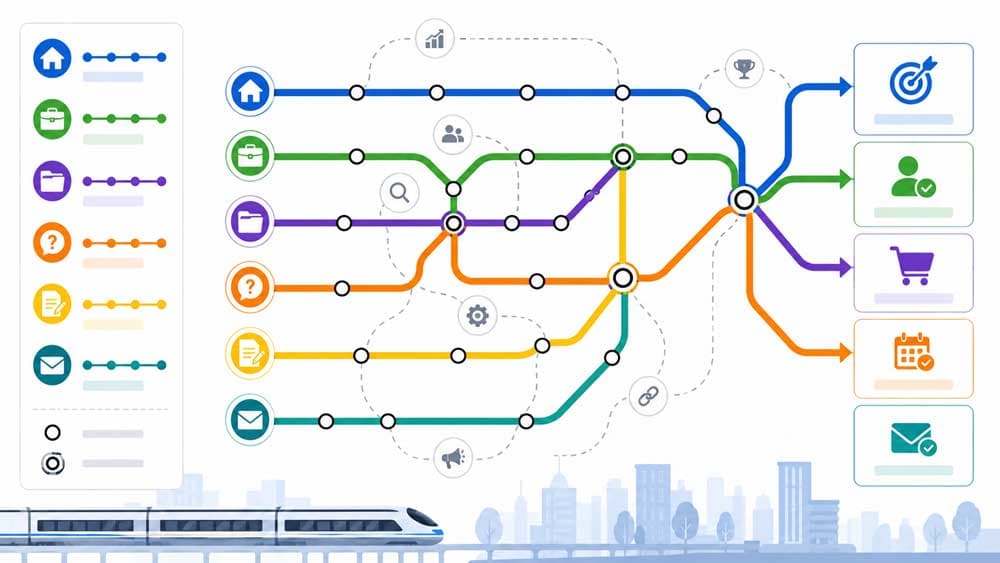
Many businesses plan their website only for their current situation instead of planning for their future.
So, their approach may work for a while. But when the business doesn’t stay the same. It usually grows and evolves. New locations are on the list now. And more marketing campaigns are needed.
Is the website ready for all ot these changes?
Since the original structure is based on the primary services and a small number of pages, expansion will be difficult.
So, the business might need the redesign sooner than they thought.
The look might still be cool, the branding might still be relevant, but the functions are not enough for their needs.
The website must reflect how a business operates, and if it doesn’t support the business growth, it is not the right one. And worse, it can become an obstacle itself.
Read More: How to Improve Your Website’s ROI
Why Most Website Rebuilds Are Structural Rebuilds
Business owners may think the first redesign that they need is going to change their website's appearance. But in reality, a huge number of redesigns are because the website no longer supports the business’s needs.
It can be about the problems with the menu and the navigation, it can be because of service overlaps, or it can be because of difficulties in content management. But these are not the only reasons. It also might be because of the need for new pages related to new campaigns. Or maybe they feel it’s hard to apply any changes to the website. And maybe they can’t easily scale their SEO.
At this point, changing the appearance of the website will not solve any problems.
The structure needs to be rebuilt.
It’s the main reason many businesses spend a lot of money redesigning their websites, while from the outside it might look unnecessary. Because the website still looks acceptable.
A good structure reduces the possibility of reaching this point and creates a clear navigation, something easier to manage, and more flexible for further evolution.
Businesses usually start rebuilding a website because the original structure doesn't support their current needs.
The Four Page Types Every Service Business Should Plan First

Most businesses rely on four basic page types:
Page Type | Primary Purpose | Typical Examples |
Service Pages | Explain solutions and generate enquiries | Web Development, App Development, Software Consulting |
Trust Pages | Build credibility and reduce perceived risk | About Us, Case Studies, Portfolio |
Supporting Content | Educate visitors and support SEO | Blog Articles, Resources, FAQs |
Conversion Pages | Turn visitors into leads | Contact Page, Consultation Booking, Quote Request |
Service Pages
These pages explain what the business is offering and help visitors to understand if the service fits their needs or not. These pages also support SEO visibility and lead generation at the same time.
Trust Pages
These types of pages have case studies, portfolios, testimonials, and other content that builds credibility. Especially for service businesses, these pages are really important because they prove the business is real and can get the task done, since it has done it before.
Supporting Content
Blogs, articles, guides, FAQs, and educational content are supporting content. They answer user questions and support long-term SEO growth.
Conversion Pages
There is a type of pages that its main job is to guide visitors to specific pages to do the desired actions. Contact pages, consultation bookings, enquiry forms, and quote requests are these pages.
Many developing projects start before these page types are planned.
So you might see on some websites that the educational content is mixed with service pages.
At this point, trust signals are hard to find, and conversion paths are unclear. Users are likely to leave the website before finishing any actions, and this is not what you want for your business.
A well-planned website makes it easier for the user to decide, and they will love it.
Plan Service Pages Around Customer Intent
Grouping too many services together is a strategic mistake.
Sometimes businesses make only one page dedicated to their services, and they explain whatever they do on that page. It makes it confusing for the user and search engines to understand what they really do.
Keep in mind that people are rarely looking for a wide range of services. They just need one, and you'd better have a dedicated page for the wanted service if you offer it.
A business that is looking for a web development agency in Melbourne has different questions from someone who is looking for API integration.
If a service solves a different problem, it is fair to have its own dedicated page.
This helps more than SEO alone. It clears the message, enlightens the user, and makes the conversion easier. The result? A better user experience.
As the business grows, these dedicated pages provide enough room for supporting content, FAQs, case studies, and related landing pages.
Overall, the clearer the separation between services, the easier it is for search engines and visitors to understand what your business actually offers. This makes SEO stronger than you may imagine.
Read More: Local SEO Checklist: 10 Tips for Small Businesses
Navigation Should Follow Decisions, Not Departments
The website should not be developed by your internal structure, but you should consider how a user would think and act.
They don’t think about how the business is organising departments and teams. They think about finding their answers, evaluating options, and deciding.
A strong navigational structure must support this idea.
When a visitor is looking for a service, all they need to see is something that assures them of your ability to get the job done. Things like case studies, supporting content, pricing info, or contact options.
The goal here is to help them naturally get there, not to show them that we have this page and this and also this.
A crowded navigation menu often shows that there is a deeper problem with the website.
Not everything is important enough to be on the menu. If it is so, there is a problem in setting the hierarchy.
Strong planning helps you have a simple navigation, causing the user to have more time to evaluate instead of searching.
Internal Linking Is a Growth System, Not an SEO Task
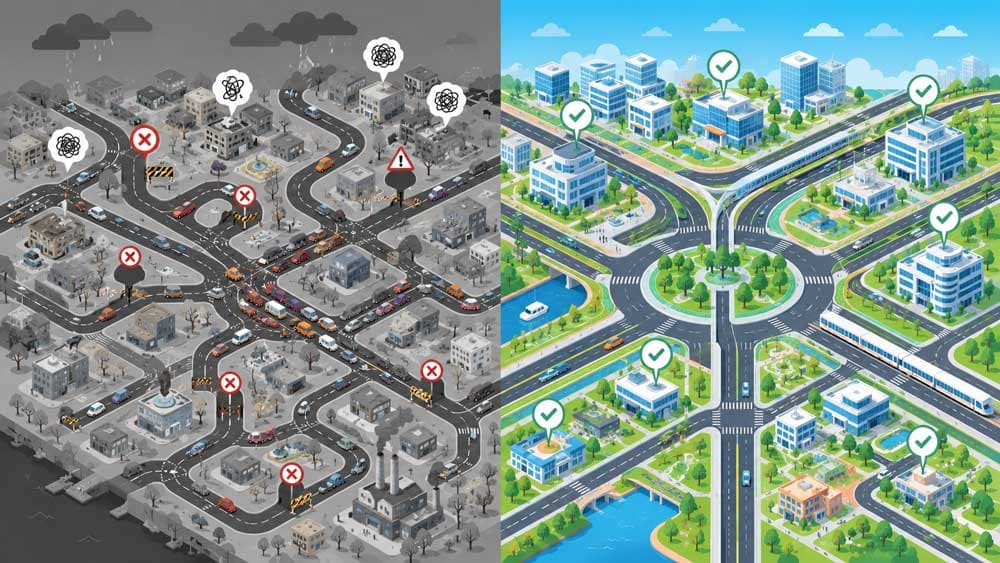
It’s too late to think about internal linking after the website launch.
Internal linking is not only an SEO tactic, but it is also the route that a user should go to find what they need.
Visitors sometimes arrive through a blog article, and then go to a linked service page, then find a case study, and at the end, they submit an enquiry.
If the connection between these pages is not clear, they will not reach where you want them to go. And it might also cause some of your valuable content to be isolated.
Businesses usually invest a lot in their blogs, service pages, and other supporting content to help the visitor decide more easily and choose them. If the visitor can’t find the content easily, it will be a waste of capital.
Good internal linking helps the visitor find the rational connection between the pages and makes it easier for the business to expand the content in the future.
Without it, the business may publish much content that doesn’t help it convert visitors to customers.
Read More: Do I Need a Website for My Local Business in 2026?
Build a Structure That Survives Growth
A website should be ready to support the business in the future, too. Let’s not make it something that looks impossible, but at least it should be able to do it for the next two or three years.
It doesn’t mean that there must be some useless pages that might be needed in the future. It just means that the structure must consider the possibility of needing these pages.
Many businesses need Additional landing pages, location-based pages, industry-focused pages, new service pages, and more case studies.
A weak structure makes it hard to have them on the website.
Having a strong structure means having a rational place for all of the needed pages in the future.
It will reduce the costs for development, make SEO easier to manage, and simplify content management.
Scalability is not about making a big website; it is about making the website easy to organise as the business grows.
Growth should increase the value of the website, not its complexity, for the business or the users.
Common Website Structure Mistakes
The structural problems of a website are not that many; however, there are usual mistakes that keep reappearing.
Creating broad service pages that try to handle too many offerings at once is one of the most common ones.
Another one is to place every service, location, and supporting page in the menu. An overcrowded menu only leads to an overconfused user.
Weak hierarchy is the next one. When pages have to fight each other to be seen, it shows that there is a problem with the structure. The user must be able to predict a page's place in your structure.
The other one is developing a website based on the business structure instead of considering the user needs.
A strong website structure is usually the simplest. A well-made structure puts effort into making everything clear, easy to navigate, and supports growth in the future.
Signs Your Website Structure Is Already Causing Problems
Warning Sign | What It Usually Means |
New pages feel difficult to add | The hierarchy is too rigid |
Service pages overlap | The structure is unclear |
Visitors struggle to find information | Navigation is not aligned with user intent |
SEO growth has stalled | Content relationships are weak |
Every change affects multiple pages | The architecture does not scale well |
A Website Structure Decision Is Really a Business Decision
A website structure is not only a technical issue. It is more like a strategic decision. It defines how new services can be added, how content can be managed, and how good SEO can scale.
Naturally, it defines how visitors can be converted to customers.
It is flexible, it gives trust signals, and it makes the user create feelings about the business.
On the other hand, a weak structure creates limitations. It makes potential customers feel the business is not trustworthy enough. This is not what you have in mind when you develop a website.
The difference might not be visible from the first day, but a website's structure is a decision that shapes how the website will support business needs in the future.
It is easy to build a website, but not easy to build a website that supports the business for years. Explore our web development service page if you have a long-term growth mentality for your business.
Frequently Asked Questions About Planning a Website Structure Before Starting the Design
Why should website structure be planned before design?
Because the website structure sets how everything on the website should be organised. Planning it before the design supports the business's future goals and doesn’t let it become a limitation later.
How many service pages should a business website have?
For any service that solves a different problem, you'd better have a dedicated page. This signals the best to the customers and search engines.
Can poor website structure affect SEO?
Yes, absolutely.
Weak internal linking and unclear hierarchy make it hard for users and search engines to understand your website. In the long run, it can cause problems with SEO scalability, and you’ll lose customers.
How do you know if your website structure is holding the business back?
A good structure makes everything easier. If you’re facing problems adding new pages, or you have a confusing navigation, or SEO is not growing fast enough, then your structure has some crucial problems.
When should a business consider restructuring its website?
Restructuring is necessary when your current website no longer supports your business's current needs. It can also be considered when you are planning to add new services or expand to new locations, and you know your current website will not be able to cover your needs.

Admin
Mostafa is a Wordsmith, storyteller, and language artisan weaving narratives and painting vivid imagery across digital landscapes with a spirited pen, he embraces the art of crafting compelling content as a copywriter, and content manager.

Based in
Melbourne, Australia
Your software dev partner, smooth process, exceptional results
Contacts
contact@flamincode.com.au
© All rights reserved to Flamincode