Template Website vs Custom Website Development: Which Is Right for Your Business?

M Chetmars
Author
“It’s a practical decision”—this is what many businesses tell themselves when they decide to use a template website.
It somehow makes sense. Because the launch is faster, the upfront costs are lower, and the setup process is so simple that they can start using it right away without spending a large portion of their budget.
It works well—well, sometimes.
The problems usually start to appear later. The business grows, the marketing gets more competitive, and the website doesn’t meet the business's needs.
At this point, the business faces different challenges. It’s no longer about cheap and expensive; it’s about flexibility, scalability, lead generation, and long-term growth.
Yes, a template website is indeed easier and cheaper to launch, but a custom website gives you more SEO control and offers more flexibility, scalability, and a better conversion system.
So, the right choice depends on the role of the website for the business. If it needs to become a more important part of the business in the future, you might need to consider your other options, too.
Let’s compare a template website vs. a custom website for a growing business
Factor | Template Website | Custom Website |
Launch Speed | Faster | Slower |
Upfront Cost | Lower | Higher |
Scalability | More limited | More flexible |
SEO Structure | Restricted by platform | Fully customisable |
Integrations | Platform dependent | Easier to expand |
Conversion Flexibility | More limited | Built around business goals |
Long-Term Adaptability | Lower | Higher |
What Is a Template Website?

A template website is built on a pre-designed framework that can be used for a wide range of industries. If you’re not planning to build a website from scratch, platforms like Wix, Shopify, Squarespace, and WordPress can help you make a website really fast and easily.
For small businesses, it usually works, especially in the early days. They don’t need much of an online presence; they offer very limited content, and they work on a service or two.
So it makes sense if they want something fast to launch, easy to handle, and with limited functionalities and flexibilities.
It gets complicated when the business starts to grow.
Now, at this point, the business needs more control over SEO, service structures, and maybe some integrations. Those simple platforms become a headache because it’s not easy to adapt them to the new needs.
The business has to migrate to a new website or shape itself around the limitations of the current website.
Sadly, both of the options damage the business and cost so much.
What Is a Custom Website?
The business knows that it has some marketing and operational needs that might expand in the future. So, they decide to work with something more suitable for their needs.
This platform is developed based on their goals, workflows, services, and conversion needs. This one is designed only for them. So, if they need a new feature, they can have it. If they want to use something that has never existed before, they still can have it.
This personalised structure helps them to have overall control over SEO, enquiry flow, user experience, content structure, and long-term scalability.
If the website is a crucial part of the business, these options give the business an upper hand compared to businesses that use pre-made templates.
It also helps the business run its campaigns in a more practical way, spend wisely, and become more flexible.
All these being said, using a custom website needs more investment, and it takes more time to launch.
A fair trade-off for a future-focused business.
Read More: Can AI Build a Business Website That Actually Sells?
Template Website vs Custom Website: Key Differences
The most significant differences usually happen after launching the website.
For the users, they might both look and work similarly. But over time, differences are not easy to ignore for the business. Especially in scalability, flexibility, and supporting the business goals.
Factor | Template Website | Custom Website |
Initial Cost | Lower upfront cost | Higher upfront investment |
Launch Speed | Faster setup and launch | Longer planning and development process |
Flexibility | Limited by platform structure | Built around business requirements |
SEO Control | More restricted | Fully customisable |
Integrations | Dependent on platform limitations | Easier to expand and customise |
Scalability | Harder to scale long term | Designed for future growth |
Performance Optimisation | Limited technical control | Greater optimisation flexibility |
Conversion Optimisation | Restricted layout flexibility | Custom conversion-focused UX |
Long-Term Maintenance | Easier early management | More strategic long-term control |
Best Fit | Small or early-stage businesses | Growth-focused businesses |
Cost
Template websites need less upfront investment because the main structure is pre-made. After buying the template, the business needs to pay only for the theme setup, subscription, and maybe some moderate customisation.
On the other hand, custom websites need more planning, strategy, design, development, and technical and functional testing.
But eventually, the business may need extra and different sections, new content fields, and new functionalities. Sticking to a template website may cost more for the business at this point. Wise move? Predicting the possible scalability before launching the website.
Speed
Of course, a template website launch takes less time than a customised one because they work around a pre-built structure.
So, for an early-stage business, a template website is a practical option. If they want to run a temporary campaign, need a simple online presence, or just want validation as a startup, it’s the best option for them.
Launching a custom website takes longer at the beginning because it should consider the business needs, UX architecture, integrations, and technical setup for every action in the development.
Scability

Maybe the biggest difference between a template website and a customised website is scalability.
Template websites are a really fair choice when the business is simple. But when the complexities rise, they should either have or hire a team to rebuild the pages manually. It usually costs a lot and takes a considerable amount of time.
The SEO structures, special functionality for landing pages, custom lead workflow, and integrations become a challenge, too. Efficiency drops, and the business comes to the conclusion that maybe it was not worth it.
But custom websites are more flexible, more growth-friendly, and they also let you set the bar wherever you want.
Limitations? What limitations?
Ownership and Platform Control
Template platforms make everything easy when it comes to hosting, updates, and infrastructure. This feature is like gold when the business is small and simple functions are expected.
But some businesses need more space for future evolution.
When you own the structure, and it is made based on your needs, you have the power to apply the changes exactly the way you want.
Sometimes the difference between selling thousands and tens is just a small feature that you can’t easily add to the pre-made platform. But if the platform is yours, you can’t be satisfied with anything but the thousands.
Conversion Flexibility and Performance
While template websites are developed to work across many industries, custom websites are built for one business with specified needs and goals.
This difference can end up having plenty of functional differences that lead a customer to take the desired action or not.
Businesses that have invested heavily in SEO and other channels of advertising benefit more from these flexibilities.
When is a Template Website a Good Idea
Companies in their early stages, small businesses with limited potential growth, small local services, companies with a tight budget, and companies that need to run an online campaign in a short time are the best examples of when a template website is a better option.
Read More: When Should You Redesign Your Website?
When Custom Website Development Is the Better Option
When the website is supposed to support the business growth, when the company has complex services, when the business needs a multi-location SEO strategy, when it needs an advanced lead generation system, and when they need large-scale content structures, it is the best time to work on a custom platform.
The businesses with complex service structures, consultation bookings, or CRM workflows enjoy having a custom website.
In these scenarios, operational flexibility and scalability create more value than lower upfront launch costs.
The Hidden Cost of Choosing the Wrong Option
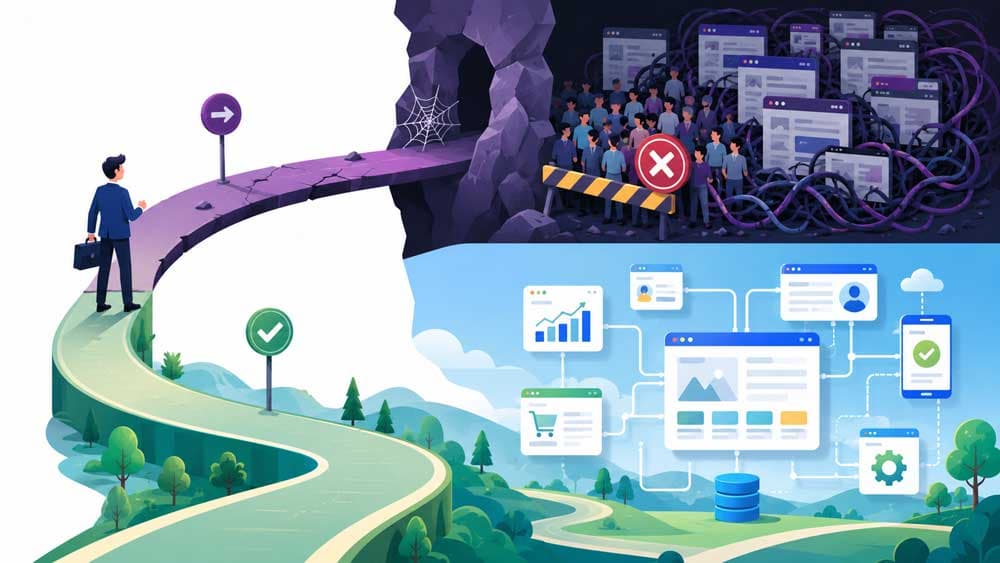
Sometimes the biggest website costs are hidden until it’s been a while since launching the website.
A template platform might seem cost-effective at the beginning, but the limitations they have can cause business problems later, when it comes to expanding the project.
SEO growth becomes harder, conversion rates aren’t ideal, the marketing team faces challenges with tools, and everyone comes to the conclusion that the website needs a full redesign.
What comes next? Migration costs, SEO restructuring platform replacement, or a complete rebuild.
Only one part of the problem is the cost. The business is losing time, efficiency, marketing chances, and internal resources.
All that being said, we still can’t claim that custom website solutions are the best option for every business. It can only be translated to this: the website structure must fit with the business needs from the beginning, while it grows, and when it gets complicated.
The Website Has to Match Its Business Role
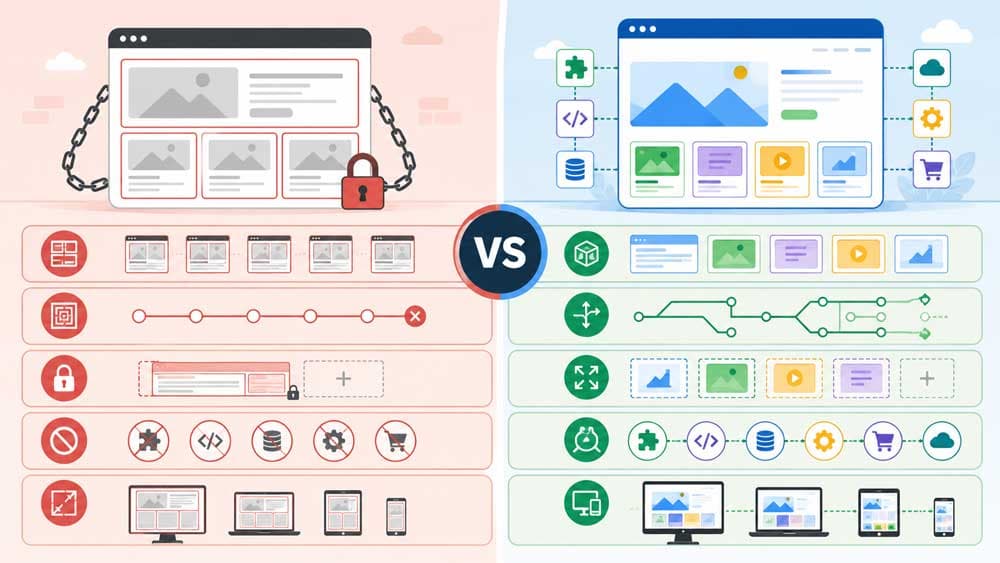
Any website has a different level of responsibility.
Template websites suit businesses with simple needs. These websites promote the offer, build trust, show services, and give the user a way to contact the business.
For many businesses, it’s enough. But the problem starts when the business expects more from the website.
Growing businesses usually need SEO pages, paid campaigns, landing pages, CRM connections, lead sorting, booking flows, or reporting systems. When they get to this point, the website is more than just something for a basic online presence. It's a part of the business growth system.
At this point, a custom website makes more sense. Because it is planned around the business needs, not limited by what a pre-made website offers.
A growing business that, for example, offers a service needs a clean page structure. A business that covers different customers in different cities needs local, scalable SEO pages. A sales team needs an automatic workflow for the enquiries.
SEO Debt Gets Expensive Later
By default, template websites can’t be considered a weak option in terms of SEO.
They cover all the basic needs for SEO, like page title, headings, meta descriptions, and image alt text. For a small website, it’s all you need for SEO.
But when the business grows and becomes competitive, SEO will be an important lead channel. This is where the business needs to have control over page hierarchy, service pages, internal linking, URL structure, loading performance, and other technical optimisations.
If the structure is not SEO-friendly, expanding the website will be full of fatal problems like cannibalisation, orphan pages, and weak signals.
This is SEO debt. And believe me: you don’t want this to happen to your website.
Lead Generation Needs More Than a Contact Form
A simple contact form works for many businesses. But if a business really wants to sell, they need to design a journey. For example, a visitor who has arrived from a paid ad might need a tighter structure on the landing page to become a real lead for your business. On the other hand, if the user has come from a blog post, they are more likely to do the desired action for the business.
Here is another difference between a template website and a custom website. A custom website gives you the freedom to have more control over these important pages. They support better routes to get the viewer to the calls to action. They also make the business able to have lead qualification, CRM connections, booking systems, and follow-up workflows.
This is how the business not only gets more enquiries, but also gets better enquiries. Manual work is minimised, responses become faster, trust grows, and sales increase.
Choose Based on the Role of the Website
There is no pure right or wrong in this. Considering that template websites are offering many options while being cheaper and easier to manage, they are the better option for many small to mid-sized businesses.
Things only get complicated when you have more complex needs for your business. When you need lead generation, SEO growth, integration, and long-term scalability.
Most advanced options are not for every business. You should choose what works better for your business with the least cost in the beginning and in the future.
So, if your website is a crucial part of the business and it is supposed to bring you most customers and revenue, you should consider many factors that might lead you to choose a custom website.
If you are comparing template and custom options, our web development team can help you assess which structure fits your current business model and future growth plans.
Frequently Asked Questions
Is a custom website worth it for a small business?
You can only answer this question based on the role of the website for the business.
If it is only for online presence, credibility, and a little bit of SEO to generate limited leads, a template website will be enough.
But if the website is the main platform to make leads and bring customers to your business, you may need to consider something to support your needs.
Are template websites bad for SEO?
Not necessarily.
They offer many features for basic SEO needs. But when business is more competitive, you probably need more customisation, and here you should think of a better option to survive against your opponents.
When should a business move from a template website to a custom website?
Usually, when things are too complicated to handle with a template platform. Integrations, new features, and SEO are the main things that can be enhanced by a custom website.
Will I lose SEO rankings when moving to a custom website?
There is this risk that if you don’t prepare yourself for this correctly, you’ll face serious challenges in SEO. But if you plan everything in advance and have a good SEO team, you probably can safely move to your new website.
How much does a custom website cost compared to a template website?
Template websites usually need lower initial spending because much of the structure already exists.
But it is not like this in custom websites. Many things must be prepared before developing. Planning, strategy, workflows, designing, graphics, testing, and many other things should be done before the launch. And they all cost you. Yet the final price depends on how complex your website is and how many features it offers.

Admin
Mostafa is a Wordsmith, storyteller, and language artisan weaving narratives and painting vivid imagery across digital landscapes with a spirited pen, he embraces the art of crafting compelling content as a copywriter, and content manager.

Based in
Melbourne, Australia
Your software dev partner, smooth process, exceptional results
Contacts
contact@flamincode.com.au
© All rights reserved to Flamincode